Smart City Memphis
 

Sign up or Login

The Fall and Rise of Great Public Spaces

by SCM (RSS) | September 14th, 2012 3:02pm CDT

Tweet

From citiwire:

It’s a dark andark and wintry Thursday night in Copenhagen, and the streets are bustling. The temperature stands above freezing, but winds blow hard enough to knock down a good share of the bicycles parked all around. Scandinavians are known for stolid reserve, but it’s all smiles and animated conversation here as people of many ages and affiliations stroll through the city.

A knot of teenage boys swagger down the main pedestrian street. Older women inspect shop windows. An accomplished balalaika player draws a small crowd in a square as he jams with a very amateur guitarist. Earnest young people collect money for UNICEF. Two men pass, pushing a piano. Candlelit restaurants and cafes beckon everyone inside.

“Cultures and climates differ all over the world,” notes architect Jan Gehl, “but people are the same. They will gather in public if you give them a good place to do it.”

Cut, now, to scenes from the Republican National Convention in Tampa the past week, and the Democrats’ upcoming convention in Charlotte next week. Love them or hate them, those people packing the convention halls – convening from different places and backgrounds – have come together to take part in rituals that, for better or worse, help perpetuate our democracy. What does that have to do with a cold Copenhagen street? Only this: Democracy requires public places where people can congregate. Further, people are drawn to public places where they find other people. We all need those public places – good public places.

Architect Gehl, an urban design professor emeritus at the Danish Royal Academy of Fine Arts and international consultant, describes how Copenhagen’s central pedestrian district opened in 1962. Back then, cars were overrunning the city, and the pedestrian zone was a way to bring vitality to a declining urban center. “Shopkeepers protested vehemently that it would kill their businesses,” he recalls, “but everyone was happy with it once it started. Some now even claim it was their idea.”

The pedestrian district is now the thriving heart of a reinvigorated city.

Copenhagen’s comeback gives hope to people around the world who want to make sure lively public places don’t disappear, even in this era of rampant traffic, proliferating privatization and commercialization.

A century ago streets almost everywhere were crowded. Now many are nearly empty. Walking through the center of certain North American communities can be a profoundly alienating experience, as if the whole place had been evacuated for an emergency no one told you about.

The decline of public places represents a loss far deeper than simple nostalgia. “The street, the square, the park, the market, the playground are the river of life,” explains Kathleen Madden of the New York-based Project for Public Spaces, which works with people around the world to improve communities.

Public spaces are favorite places to meet, talk, sit, relax, stroll, flirt, girl-watch, boy-watch, read, sun and feel part of a broader whole. They are the starting point for community, commerce and democracy.

Numerous studies have proved that nothing grabs people’s attention more than other people, especially other faces. We are hard-wired with a desire for congenial places to gather. That’s why it’s so surprising how much we overlook the importance of public places today.

“If you asked people 20 years ago why they went to central Copenhagen, they would have said it was to shop,” observes Jan Gehl. “But if you asked them today, they would say, it was because they wanted to go to town.”

That change of phrase represents the best hope for the future of public spaces.

Historically, Gehl explains, public spaces were central to everyone’s lives. They were how people traveled about town, where they shopped and socialized. All that changed in the 20th century. Cars took over the streets, making walking and biking dangerous. Towns and cities spread out, with houses on big yards. Merchants moved to outlying shopping malls. Inventions like telephones, television and computers transformed our lives. People withdrew from public spaces. Many new developments neglected to include sidewalks, parks, downtowns, transit and playgrounds. Today, many wonder if public spaces serve any real purpose.

“Some places have gone down the drain and become completely deserted,” Gehl notes. “But other places have decided to do something about it. They fight back.” He ticks off a list of places that revitalized themselves by creating great public places, including Copenhagen; Portland, Ore.; Bogota, Colombia, and Barcelona.

Barcelona best illustrates the power of public spaces. Once considered a dull industrial center, it’s now widely celebrated as a sophisticated, glamorous place, mentioned in the same breath as Paris and Rome. The heart of Barcelona – and its revival – is Las Ramblas, a beloved promenade.

The key to restoring life to public places and to our communities as a whole is to understand that most people today have more options. A trip to downtown, the farmers market or the library is recreational as much as practical, a chance to have fun, hang out and enjoy the surroundings.

“People are not out in public spaces because they have to, but because they love to,” Gehl explains. “If the place is not appealing they can go elsewhere. That means the quality of public spaces has become very important.”

“There is not a single example of a city that rebuilt its public places with quality that has not seen a renaissance.”

12 steps to a great public space,

  1. Protection from traffic
  2. Protection from crime
  3. Protection from the elements
  4. A place to walk
  5. A place to stop and stand
  6. A place to sit
  7. Things to see
  8. Opportunities for conversations
  9. Opportunities for play
  10. Human-scale
  11. Opportunities to enjoy good weather
  12. Aesthetic quality

– Jan Gehl & Lars Gemzoe


Citistates Associate Jay Walljasper is author of The Great Neighborhood Book and All That We Share: A Field Guide to the Commons. His website: www.JayWalljasper.com


Categories: Downtown Revitalization, Livability

Comments RSS Feed

Comments are closed.

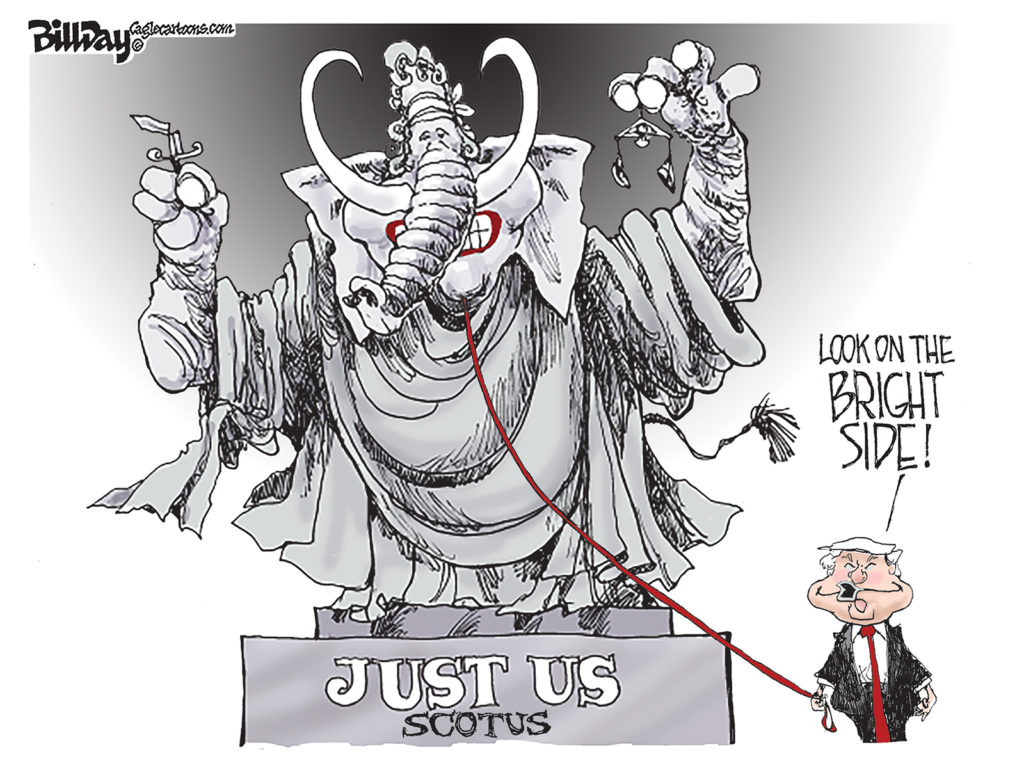
Kidnapped Women, A Bill Day Cartoon

by Bill Day. Memphian Bill Day is two-time winner of the RFK Journalism Award in Cartooning. His cartoons are syndicated internationally by Cagle Cartoons. Cartoons Archive →

Photograph by Amie Vanderford

More Images

This ongoing series of photographs is intended to show the daily lives of these single mothers in order to invoke recognition of their similarities to all mothers, along with understanding and empathy from the viewer of the strengths that these single mothers possess within the challenging situations they face. My hope is that newfound empathy with these mothers’ lives will give people some pause before they condemn single mothers when discussing issues such as welfare and other politically charged hot buttons.

  • Subscribe to Posts via Email

    You can get Smart City Memphis posts right in your e-mail box. Just sign up below to begin receiving them.


  • RSS

    • Weaving people back into the urban fabric

    • How clean is the air we breathe in cities?

    • Friday Fun: Self-driving automobile + Bus + Taxi = Otobuxi

    • Q&A with Hernan Navarro: Lima’s El Metropolitano BRT

    • Should the speed limit on arterial roads increase?

    • Promoting ridesharing for the daily commute in Mumbai

  • RSS

    • Eight Guidelines to Keep Creativity at the Heart of Cities

    • Infographic: Cities Embracing the Green Revolution

    • The Economic and Educational Value of Retrofitting Schools

    • Greening Cities with Better Bike Lanes

    • Texas and Bangladesh: Tragedies of Placeless Economics

    • Urban Ideology in Obama’s Brand of Regionalism

  • RSS

    • Airline Perk of the Day: A Book That Lasts Precisely the Length of Your Flight

    • Imagining Syracuse Without Its Elevated Highway

    • Where Do Schools Spend the Most Per Kid?

    • The Surprising Reason Oklahoma Doesn't Have Enough Tornado Shelters

    • Atlanta's Getting a Ferris Wheel

    • Quantifying the Cost of Sprawl

  • Search Posts

  • About Smart City Memphis

    This is Smart City Consulting's blog and its purpose is to connect the dots and provide perspective on events, issues, and policies shaping Memphis and its future. Smart City Memphis was named one of the most intriguing blogs in the U.S. by the Pew Partnership for Civic Change, it was voted the best Memphis blog in About.com's Reader's Choice Awards, and The (Memphis) Commercial Appeal wrote: "Smart City Memphis provides some of the most well-thought-out thinking about Memphis' past, present, and future you'll find anywhere." Our blog's editor is Tom Jones, principal at Smart City Consulting and an editorial contributor at Memphis magazine, where he writes the monthly column, City Journal. Submit blog posts, ideas, suggestions, and emails to tjones@smartcityconsulting.com.
  • Archives

    • May 2013 (21)
    • April 2013 (34)
    • March 2013 (27)
    • February 2013 (31)
    • January 2013 (30)
    • December 2012 (29)
    • November 2012 (31)
    • October 2012 (33)
    • September 2012 (29)
    • August 2012 (33)
    • July 2012 (26)
    • June 2012 (33)
    • May 2012 (33)
    • April 2012 (31)
    • March 2012 (37)
    • February 2012 (32)
    • January 2012 (35)
    • December 2011 (29)
    • November 2011 (30)
    • October 2011 (34)
    • September 2011 (33)
    • August 2011 (39)
    • July 2011 (36)
    • June 2011 (41)
    • May 2011 (36)
    • April 2011 (57)
    • March 2011 (39)
    • February 2011 (45)
    • January 2011 (56)
    • December 2010 (44)
    • November 2010 (30)
    • October 2010 (28)
    • September 2010 (24)
    • August 2010 (22)
    • July 2010 (23)
    • June 2010 (34)
    • May 2010 (28)
    • April 2010 (32)
    • March 2010 (35)
    • February 2010 (31)
    • January 2010 (43)
    • December 2009 (49)
    • November 2009 (17)
    • October 2009 (24)
    • September 2009 (23)
    • August 2009 (18)
    • July 2009 (22)
    • June 2009 (28)
    • May 2009 (23)
    • April 2009 (23)
    • March 2009 (26)
    • February 2009 (25)
    • January 2009 (36)
    • December 2008 (15)
    • November 2008 (22)
    • October 2008 (21)
    • September 2008 (25)
    • August 2008 (23)
    • July 2008 (32)
    • June 2008 (27)
    • May 2008 (35)
    • April 2008 (26)
    • March 2008 (25)
    • February 2008 (29)
    • January 2008 (33)
    • December 2007 (20)
    • November 2007 (19)
    • October 2007 (32)
    • September 2007 (25)
    • August 2007 (25)
    • July 2007 (26)
    • June 2007 (16)
    • May 2007 (21)
    • April 2007 (25)
    • March 2007 (18)
    • February 2007 (16)
    • January 2007 (17)
    • December 2006 (16)
    • November 2006 (14)
    • October 2006 (18)
    • September 2006 (21)
    • August 2006 (20)
    • July 2006 (20)
    • June 2006 (17)
    • May 2006 (12)
    • April 2006 (19)
    • March 2006 (20)
    • February 2006 (23)
    • January 2006 (16)
    • December 2005 (23)
    • November 2005 (21)
    • October 2005 (23)
    • September 2005 (19)
    • August 2005 (27)
    • July 2005 (23)
    • June 2005 (16)
    • 0 (2)
  • Categories

  • Contributors

    • Aaron Shafer
    • Andrew Trippel
    • Anthony Siracusa
    • Barry Chase
    • Brad Leon
    • Brian Stephens
    • CEOs for Cities
    • Charles Santo
    • Chris Sanders
    • Crosstown Collaborative
    • David Williams
    • Doug Imig
    • Elizabeth Alley
    • Elizabeth Lemmonds
    • Emily Trenholm
    • Eric Mathews
    • Gene Pearson
    • Gene Pearson and Louise Mercuro
    • George Lord
    • Greg Thompson
    • Gwyn Fisher
    • Janet Boscarino
    • Jim Strickland
    • Jimmie Covington
    • John Kirkscey
    • John Lawrence
    • Jonathan Flynt
    • Josh Whitehead
    • Julie Ellis
    • Kenya Bradshaw
    • Laura Adams
    • Leah Wells
    • Louise Mercuro, AICP
    • Lurene Cachola Kelley
    • Margot McNeeley
    • Mark James
    • Matt Farr
    • Matt Timberlake
    • Melissa Petersen
    • Natashia Gregoire
    • Ray Brown
    • Rev. Steve Montgomery
    • Robert Bain
    • SCM
    • Scott L. Newstok
    • Smart City Memphis
    • Smart City Radio
    • Steve Bares
    • Steve Lockwood
    • Susan Adler Thorp
    • Tom Jones
    • Tomeka Hart
    • Tommy Pacello
    • Women Unite
    • Zach Hoyt

© 20111-2013 Smart City Memphis. All rights reserved.

  • Register
  • Log in
  • RSS
  • Smart City Radio
  • Smart City Consulting