
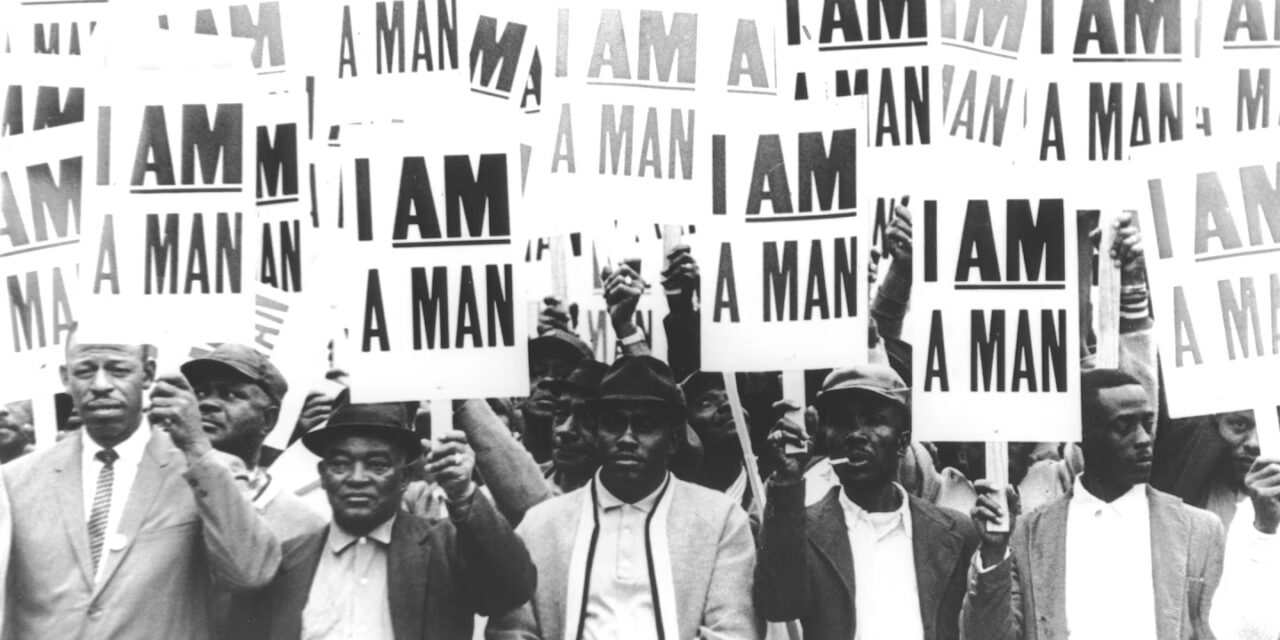
Memphis Is Worth Fighting For.
There is an idea held by some people that talking about the city’s problems is somehow a betrayal of Memphis.
Point out population loss, and you are accused of being negative. Talk about poverty, and you are told that you are giving Memphis a bad name. Raise questions about the economy, public schools, crime, downtown, or the city’s ability to attract and retain people, and the response can be remarkably predictable: Why are you always so negative about Memphis?
But identifying problems is not naysaying. It is the beginning of caring enough to do something about them.
Memphis is worth fighting for. In fact, because that is so, we need to be willing to talk honestly about its challenges.
For some, it may seem like tough love, but the key word is love.
Loving Memphis Means Expecting More
Memphis has always had an outsized capacity to inspire affection.
People love its music, its parks, its food, its neighborhoods, its history, and its unique personality. They love the people who have stayed, built businesses, created neighborhoods, started nonprofits, taught children, made art and music, and invested their lives into making their city the best it can be.
But loving a place does not require pretending everything is fine and only accepting happy talk.
That’s not saying that Memphis doesn’t have enormous assets. But assets do not automatically produce a successful city. A great river does not solve poverty. A remarkable musical heritage does not create enough living wage jobs. Beautiful parks do not reverse population loss. A strong business community does not guarantee that children will receive a good education.
Assets matter. But what we do with them matters more.
The Hard Truths Are Not the Enemy
All of us know Memphis has some difficult challenges.
Half of Memphians are living in poverty or are part of the working poor. Too many children grow up without opportunities. The city and county are losing population, and the metropolitan area is struggling to retain population. Economic strategies have not reached enough neighborhoods to increase investments there and create jobs that mean that one-third of Black workers are making more than $15. Downtown continues to have enormous potential but remains a collection of assets that too often function as disconnected islands.
Our public institutions frequently work in silos. We have too many plans that never become action and too many initiatives (think Mayor Wharton’s Blueprint for Prosperity) that disappear when leadership changes. And perhaps most troubling, Memphis has struggled to develop a shared vision of where it wants to go.
None of these observations means Memphis is a bad city (despite what you read on social media or in Daily Memphian comments). They mean Memphis has work to do.
It’s a rare city that doesn’t have work to do. But holding up another community as having deeper challenges than ours is cold comfort. After all, we’re not living there. We’re living here and our love for it is a passion that calls on us to help it be the best community that it can be.
To respond to concerns by holding up another city as worse is reminiscent of the years when Memphis’s murder rate first started increasing and City Hall and some business leaders answered with the names of other cities. It shut down criticism and while it accomplished that, the murder rate climbed until Memphis was labeled the murder capital of the U.S.
That’s why the choice should not be between cheerleading and criticism. The choice should be between avoiding reality and confronting it. Positive rhetoric is welcome, but usually, it is boosterism rather than positive comments that then pivot to leverage action on challenges.
In particular, young Memphians’ questions should be encouraged, if not celebrated, and should never be called pessimistic and negative.
We Cannot Solve What We Refuse to Name
Every successful city has had moments when its leaders decided the old way of doing things was no longer good enough.
Detroit confronted bankruptcy and decades of massive population loss. Pittsburgh confronted the collapse of its industrial economy. Atlanta confronted racial and economic divisions that threatened its future. Chattanooga acknowledged that its riverfront and downtown were liabilities before they could become assets.
None of those cities improved because someone wrote a more flattering description of them. They improved because their citizens recognized their problems and decided they were solvable. They improved because there was an expectation of civic responsibility.
Coherence of Belief
Seattle Businessman Michael Hatch’s May 16 Substack post, “Civic Seattle and the Standard That Built It,” was especially relevant for Memphis:
“…the energy that built Seattle: disciplined, interconnected, and personal. It produced a city that was not only economically dynamic but culturally rich and civically coherent – a place where institutions reinforced one another and where success carried with an expectation of responsibility.
“That coherence is harder to find now. Seattle remains a global center of innovation and a place of extraordinary wealth and influence, but the dense, locally rooted network of leadership that once defined its civic life has thinned. Leadership is more transient, institutions feel more distant, and the expectation of participation is less clearly understood. What has diminished is not capacity.
“Cities do not sustain themselves on momentum alone. They require people who believe, without qualification, that they are responsible for them – and who act accordingly. Seattle did not become what it is by accident. It became what it is because a generation of people lived their belief. That standard built the city.”
Memphis needs the degree of cohesion he wrote about. Memphis does not lack for talent but it falls short in making the circle big enough to include everyone and where everyone can speak candidly.
We should be able to say that population loss matters without suggesting Memphis is doomed. We should be able to say that poverty is unacceptable without suggesting Memphis has nothing to celebrate. We should be able to question economic performance without diminishing the people who are working to improve it. We should be able to ask whether downtown is working without dismissing what has been done for it to be better.
And we should be able to say that Memphis needs a vision for the future without disrespecting the people who have spent decades trying to move the city forward.
Criticism and commitment are not opposites.
Naysaying Is Saying Nothing Can Be Done
There is an important distinction between criticism and cynicism.
Cynicism says nothing will change. Naysaying says the problems are so overwhelming that trying is pointless.
Constructive criticism says something different: This is not working, but we can do better.
That is the conversation Memphis needs. We can be relentlessly optimistic about Memphis’s capacity to change while being relentlessly honest about the work required to change it.
Those two things can co-exist. In fact, they must. Optimism without realism becomes boosterism. Realism without optimism becomes cynicism.
Memphis needs neither.
Memphis is worth fighting for.
***
Join us at the Smart City Memphis Facebook page and on Instagram where these blog posts are published along with occasional articles, reports, and commentaries that are relevant to Memphis.