

The Memphis region is the victim of a languishing economy that is the logical result of a lack of imagination by the usual suspects and calcified agencies that have failed to improve our economic trajectory.
That, in a sentence, sums up the responses to last week’s post that the Milken Institute ranks the Memphis MSA #205 out of 206 regions for economic vitality. The reactions conveyed a high level of frustration with the status quo and the need for a new generation of economic strategists.
The consensus: the old economic model is producing diminishing returns, and if Memphis is seeking a new direction, it makes little sense to rely exclusively on the people who built and managed the old one.
One suggestion: Memphis needs a “Marshall Plan” based on the democratization of the decision-making to end the current system that has overseen the loss of more than 30,000 jobs in the past six years in Shelby County.
Last Century Economic Strategies
For decades, Memphis has been living off an economic strategy that was largely developed in the last century. We have celebrated logistics advantages, promoted low costs of doing business, offered excessive tax incentives, and pointed to our central location as the foundation of our economic future.
Those strengths remain real. But increasingly they feel insufficient.
The evidence is difficult to ignore.
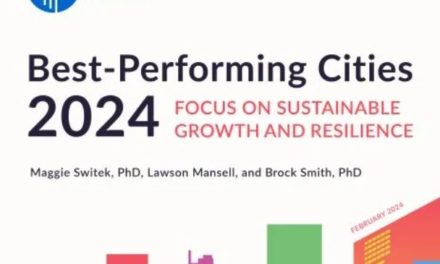
Memphis continues to lag peer cities in income growth. Too many talented young people leave after college. Population growth remains sluggish. Poverty rates remain stubbornly high. Large sections of Memphis continue to experience economic distress despite decades of development initiatives. Recent rankings, including the Milken Institute’s Best-Performing Cities Index, have reinforced the fact that Memphis is not generating the level of economic vitality needed to compete with successful metropolitan areas.
More Than Logistics
The problem is not that Memphis lacks assets.
The problem is that Memphis has not fully adapted its economic strategy to a changing economy.
For decades, Memphis leaders have promoted logistics as the city’s economic engine and future. The presence of FedEx, the world’s busiest cargo airport, major rail connections, interstate highways, and distribution centers created a powerful competitive advantage. That strategy generated jobs and investment and transformed Memphis into one of America’s most important supply chain hubs.
But logistics alone cannot produce widespread prosperity in the twenty-first century.
Many logistics jobs pay modest wages. Automation continues to reduce employment growth in warehousing and distribution. Economic development increasingly depends on attracting knowledge workers, technology companies, research institutions, entrepreneurs, and industries built around innovation rather than simply location.
Innovation Economy Possible?
Cities that are thriving today are not merely moving products. They are creating ideas.
Memphis must answer and act on a core question: What will it take for the city to develop a true innovation economy?
Successful innovation ecosystems create pathways that transform discoveries into companies. They attract venture capital. They support entrepreneurs, which should be a priority, according to Urban Institute’s report for Start Co. They encourage collaboration between researchers, investors, and business leaders.
Urban Institute wrote: “Shelby County hosts nationally recognized firms yet faces a trend of economic stagnation…Shelby County is underperforming compared with its peers in supporting prospective entrepreneurs and young, small firms, for which job growth is limited and firm survival is declining…The small and midsize firms of today may be the regional growth engines of tomorrow. But without adequate resources, their ability to reach their potential may be stifled.”
Quit Talking About Talent and Do Something
At the same time, Memphis must address a longstanding weakness: talent retention.
Too many economic development conversations focus on companies while overlooking people. Businesses increasingly locate where talented workers want to live.
That means economic development and quality-of-life investments are no longer separate conversations. Parks matter. Neighborhood revitalization matters. Public transit matters. Public safety matters. Arts and culture matter. Downtown vitality matters.
A city that struggles to attract and retain educated workers will struggle to attract the employers seeking them.
Memphis cannot build a twenty-first-century economy with a twentieth-century understanding of economic development.
The city must also become more aggressive in supporting entrepreneurship.
Start With Entrepreneurs
Innovation often begins with entrepreneurs rather than corporations. The next FedEx is unlikely to arrive from somewhere else. It is more likely to be created by someone already living here.
Memphis’ own history proves it.
It requires access to capital, mentorship, networking opportunities, startup support, and a culture that celebrates risk-taking, innovation, and entrepreneurs.
Successful cities do not merely react to circumstances. They define what they want to become and organize resources around that vision.
Nashville decided to become a healthcare powerhouse. By fostering young talent, creating networking ecosystems, and spinning off entrepreneurial ventures, emerging professionals have continuously modernized the industry’s talent pipeline
Austin pursued technology. Growth was driven not by protecting existing power structures but by welcoming new ideas, industries, and leaders.
Pittsburgh reinvented itself around robotics, medicine, and advanced research after the collapse of steel. Younger civic leaders helped push the city beyond its steel-era identity.
Detroit is attempting to build a future beyond automobiles. Entrepreneurs, neighborhood activists, and new business leaders became important voices alongside traditional institutions.
What story are we writing?
What is Memphis’ equivalent story?
At present, it’s hard to say, because Memphis lacks a unifying economic narrative that connects those strengths to a future-oriented vision.
Economies evolve. Strategies that worked fifty years ago cannot automatically sustain prosperity fifty years from now.
The fundamental question is whether Memphis will shape its own next chapter or wait for circumstances to force change upon it.
Cities that thrive make deliberate choices about their future. Memphis has reached a moment when such a choice can no longer be postponed.
Calling for a Marshall Plan
Darrell Cobbins’ call for a “local Marshall Plan” is powerful because it suggests that Memphis’s challenges are not isolated problems requiring small fixes by an isolated group of individuals and organizations. Rather, as he said, it demands an “all hands on deck” approach that casts off the local power groupthink that leads to stagnation.
The original Marshall Plan – formally called the European Recovery Plan, the American program to help rebuild Western European economies devastated by World War II – was not simply an aid program. It was a coordinated investment strategy designed to rebuild economies, modernize infrastructure, increase productivity, and restore confidence. The lesson for Memphis is that piecemeal initiatives are unlikely to reverse decades of economic underperformance. A local Marshall Plan would need to be large, coordinated, and sustained over many years.
It Matters Who’s At The Table
It likely is less about money than it is about who gets to shape the future.
Memphis has never lacked plans, studies, task forces, strategic visions, or major investments. The city has produced stacks of reports identifying the same challenges: poverty, low educational attainment, stagnant population growth, neighborhood disinvestment, and economic underperformance. The problem is not a shortage of ideas.
The problem is that decision-making has often remained concentrated among a relatively small group of institutional leaders, major employers, elected officials, and established civic organizations.
That model has produced some accomplishments. But it also helped create a city where many residents – particularly younger people, entrepreneurs, neighborhood leaders, artists, and emerging professionals – feel disconnected from the decisions that shape Memphis’s future.
The Big Question
The original Marshall Plan restored confidence as much as infrastructure.
Memphis often appears trapped between pride in its history and pessimism about its future.
A local Marshall Plan would require a different mindset: Not simply preserving what exists, not merely managing decline, not settling for incremental improvement, but pursuing growth aggressively and unapologetically.
The biggest obstacle is not money. Memphis has attracted billions in public, private, and philanthropic investment over the years. The bigger challenge is fragmentation. Too many organizations pursue worthy goals independently without a common framework.
A local Marshall Plan would bring those efforts together to answer a single question: what would it take to make Memphis one of America’s most economically dynamic and equitable metropolitan areas within a generation?
The Echo Chamber
A first step in a Memphis Marshall Plan requires democratizing civic leadership.
One of Memphis’s persistent challenges is that many major initiatives emerge from the usual suspects – the same organizations. The same leadership circles. The same perspectives.
The result is a kind of civic echo chamber.
Meanwhile, younger Memphians often see opportunities and challenges differently. They tend to think more about talent attraction, entrepreneurship, public space, urban design, transit, sustainability, technology, and quality of life. They are less attached to traditional assumptions about what Memphis is and more interested in what Memphis could become.
That perspective is valuable precisely because it is less invested in defending the status quo.
Getting Serious About Young Talent
Memphis often talks about retaining young talent. Yet retaining talent requires more than jobs and entertainment districts. It requires influence.
Young professionals are more likely to stay when they believe they can help shape the city.
The question is not simply, “How do we keep young people in Memphis?” The question is, “How do we give them meaningful authority?”
A Memphis Marshall Plan should not simply ask younger leaders to participate. It should ask them to co-lead.
The most successful Marshall Plan for Memphis might therefore look different from what many imagine. It would not simply be a massive investment strategy. It would be a civic restructuring strategy.
It would ask not only, “What should Memphis do?”
It would ask, “Who gets to decide?”
Open Up Seats At The Table
Because if the answer emerges from the same small circle that has dominated civic decision-making for decades, Memphis may get new projects but not necessarily a new future.
A genuine Marshall Plan would expand the table, invite new voices into the room, and create pathways for the next generation of leadership to help write Memphis’s next chapter.
The city’s greatest untapped asset may not be its location, its logistics network, or even its aquifer. It may be the talent, energy, and ideas of people who have never before been given a meaningful seat at the table.
***
Join us at the Smart City Memphis Facebook page and on Instagram for daily articles, reports, and commentaries that are relevant to Memphis.





This is really a tough problem. The Marshall Plan analogy probably doesn’t work, since the probability that Nashville or Washington will step in to help us is low. It will probably take a lot of re-evaluations of current strategies. Logistics just has to be part of it. Memphis has been a transshipment town all the way back to its beginning — FedEx came here because it was already the place to be. Beyond that, Memphis has traditionally not been a strong engineering or science town, so attempting to get on the modern AI/IT bandwagon may be difficult. We have small high wage centers, largely in medically science. Neither the UT Medical Units nor UM have a tradition of being economic development oriented. Memphis has always (in my fifty years) had a strong and vibrant small business sector — restaurants, services and hospitality. But these sectors have also had a tendency to be low-wage, low education sectors. Plus, these sectors do not result in large numbers of people outside Memphis buying our services or products (except logistics). I think the problems are great for the transformation of Memphis. That is a reason our leadership does not head in new directions — it is unclear what fork in the road to take.
It’s clear the fork in the road we’ve taken is limited since we are losing significant jobs. How about adding a fork toward knowledge jobs? As you’ve said before, we failed to transition from Jobs Conference jobs to.jobs of the future economy. Are we doomed to have that fork forever closed to us?
That is a tough question. I think some of the tines on the Memphis fork are gone forever. But I am guessing that you are correct — we lose a lot of talent to our rival cities because young professionals see a better future in Nashville or Atlanta. And leadership might change that. What we need are services/products produced/delivered in Memphis that bring value ($$$) back to the city. Logistics and warehouses are what we do well — and that is not doing the job needed,