Just when we think there’s nothing worse than Sheriff Floyd Bonner’s management of the Shelby County Jail, Mayor Lee Harris comes up with two ideas even worse: getting the State of Tennessee involved or possibly hiring a private prison company.
Mr. Bonner is right in pushing back although it’s clear to most of Shelby County that something dramatically has to be done to stop the death toll of the jail. Mr. Harris is right in contending there should be a better option. There is one but it would require them both setting aside their political posturing long enough to consider it. More about that later.
As for state involvement in the Shelby County Jail, it is an incredibly bad idea.
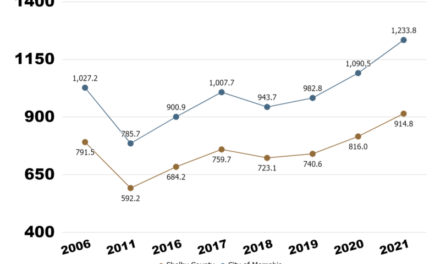
Ten state-operated and four privately-run prisons in the state system have a history of mismanagement and a human toll even worse than Shelby County Jail. While the death toll for the county jail is 68 fatalities since 2019, the privately-managed Trousdale Turner alone had 98 deaths with 30 of them from overdoses between 2019-2023. In prisons managed by CoreCivic, 282 inmates died in the same years.
Private Prisons Disaster
CoreCivic was formerly Corrections Corporation of America, founded in 1983 by political operators who leveraged their Republican connections and contributions to gain contracts for prison management. The founders said that the business plan was to better manage prisons and “make a lot of money.”
The latter emphasis has never changed, and its business model continues to be about targeting and heavy lobbying of Republican politicians for prison contracts with false claims that the company has a good record of prison management.
In truth, CoreCivic’s record is marred by significant controversies, including consistent problems with understaffing, violence, inmate deaths, and a federal civil rights investigation. State audits have repeatedly found severe and persistent understaffing leading to high rates of staff turnover and safety concerns. For failing to meet contractual requirements, CoreCivic has paid more than $29.5 million in fines (liquidated damages) to the state since 2022.
On the other hand, prisons run by State of Tennessee Department of Corrections (TDOC) has no reason to brag. Multiple state audits have criticized TDOC for failures, including the mishandling of sexual abuse allegations and poor documentation of inmate deaths and injuries. There are also reports of gang violence, extortion, and drugs being delivered into facilities via drones, with some inmates’ families alleging that gangs effectively control parts of the facilities.
Prison Problems
Tennessee’s prison management record shows a mix of significant challenges, like high recidivism (around 46% within three years), overcrowding in some facilities, as well as the need to improve reentry, job training, and mental health programs.
In defending his jail management, Mr. Bonner has pointed out that four people have died at Shelby County Correctional Center, the prison that is part of the Harris administration; however, there’s actually been six deaths since FY2022, which makes its rate of fatalities roughly 30 times lower than the jail.
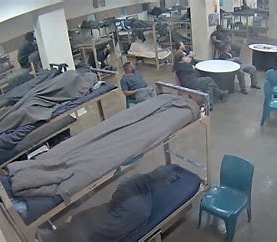
The county jail has a certified capacity of 2,400 but today it averages about 3,250 men with arrests from the Memphis Safe Task Force sending the numbers to record levels. The Shelby County Correctional Center, according to the FY26 budget, can house 2,665 inmates but average daily population is about 1,100.
Perhaps Mr. Harris’ confidence in state intervention in the jail results from his administration’s relationship with TDOC. Its reimbursements, along with those from the U.S. Marshal Service, is the primary source of revenue for the Harris administration’s prison. However, that reimbursement rate from state and federal sources do not cover all operating costs for county government and it’s been that way for many years.
A State-Sized Prison System
Cumulatively, the Shelby County Jail and the Shelby County Correctional Center have more prisoners than the systems of 10 states, which should be reason enough to consider another operational model. Rather than turf wars, a different model would put both systems in the same entity with a single management structure with a highly qualified professional corrections professional with deep experience.
The sheriff says his department is constitutionally required to manage the jail, but that does not mean that he cannot participate in a different arrangement by contract. Of course, it also requires the mayor’s administration to relinquish its territorial impulses and do the same.
It’s hard to see the present occupants of either office agreeing to such an arrangement. Their political hostility runs too deeply and too many harsh words have been exchanged, but with elections next year for a new sheriff and mayor, a better way to manage the corrections by county government should be a top campaign priority.
**
These commentaries are also posted on the Smart City Memphis Facebook page and on Instagram along with occasional articles, reports, and commentaries that are relevant to Memphis.