
At Stand TN, we urge you to VOTE NO on all three Tennessee Constitutional Amendments this November. Constitutional changes should be carefully considered, because they are difficult to fix when problems emerge. Each one locks in a permanent change whose real costs will fall on our communities, our children, and future generations.
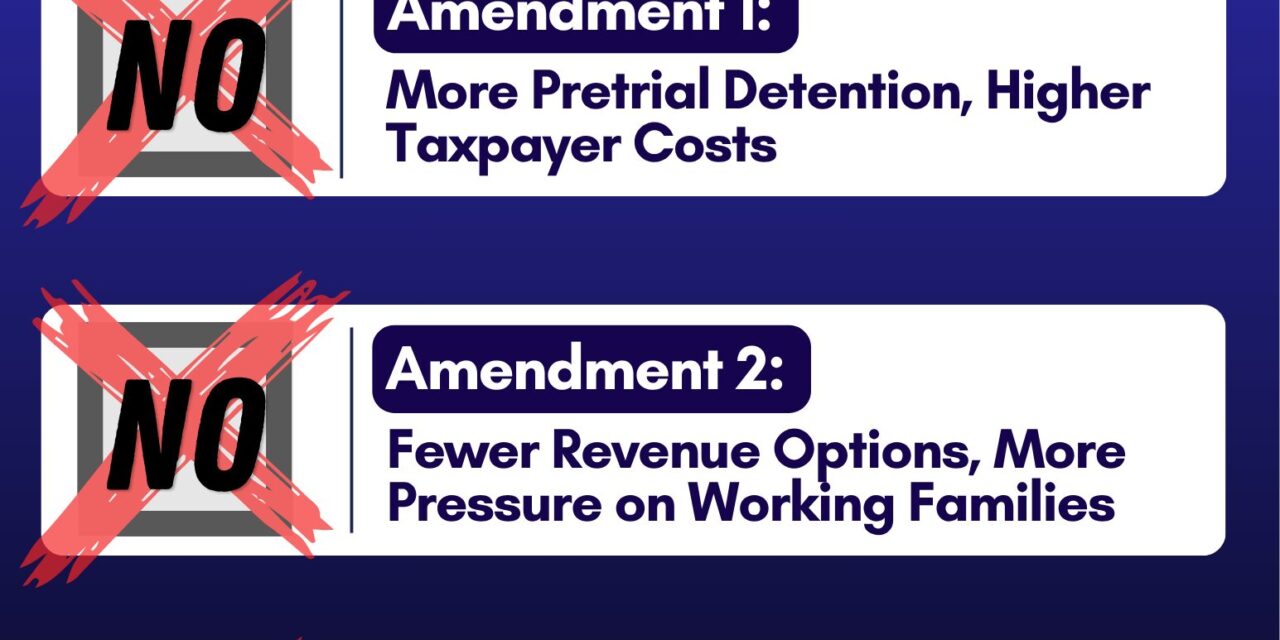
Amendment 1: More Pretrial Detention, Higher Taxpayer Costs
Amendment 1 would allow judges to deny bail for more than 70 criminal charges, meaning more people could be held in jail while waiting for their day in court. Most of those charges are not listed on your ballot.
- People could spend more time in jail without being convicted of a crime. Everyone accused of a crime is presumed innocent until proven guilty. Yet spending weeks or months behind bars can cost people their jobs, homes, and ability to care for their families, even if their charges are eventually dismissed.
- Keeping more people in jail costs taxpayers more money. Every additional day someone spends in jail comes with costs for staffing, medical care, food, and housing. If more people are held before trial, counties could face higher jail expenses, and local taxpayers would be left footing the bill.
- Our jails are already overcrowded and struggling. In Shelby County, where jail conditions have raised serious safety concerns, holding more people before trial could put even greater strain on an already expensive and troubled system.
- More money spent on incarceration means less money available for other priorities. As jail costs rise, local governments could have fewer resources to invest in schools, mental health services, youth programs, and other efforts that help build stronger, safer communities.
- The amendment doesn’t provide any additional funding. It would give judges more authority to deny bail, without providing counties with the resources to cover any resulting increase in jail costs.
Tennesseans deserve to know how much this change could cost, who would pay for it, and whether it would actually make our communities safer. Vote NO on Amendment 1.
Amendment 2: Fewer Revenue Options, More Pressure on Working Families
Amendment 2 would permanently prohibit Tennessee from creating a statewide property tax. Here’s what voters should know:
- This wouldn’t lower anyone’s current tax bill. Tennessee hasn’t collected a statewide property tax since 1949, so the amendment wouldn’t provide any immediate tax relief.
- It would limit how Tennessee can raise money in the future. If our state needs more revenue for schools, roads, or essential services, lawmakers would have fewer options available.
- Banning a property tax could mean higher sales taxes. Tennessee already relies heavily on sales taxes to fund public services. Taking another revenue option off the table could put more pressure on lawmakers to raise sales taxes instead.
- Working families would carry a heavier burden. Higher sales taxes mean higher costs for everyone, but they hit people with lower incomes the hardest because they spend a larger share of their earnings on everyday necessities.
Our state needs the flexibility to invest in public education, healthy communities, and opportunities for our children. Permanently eliminating a potential revenue source could make it harder to meet those needs, and could shift more of the cost onto working Tennesseans. VOTE NO on Amendment 2.
NO on 3: Could Put Fair Trials at Risk
People harmed by crime deserve information, support, respect, and a meaningful voice throughout the justice process. They deserve a system that takes harm seriously, provides services when they need them, and holds the right people accountable.
Tennessee’s Constitution already protects victims’ rights. Amendment 3 (Marsy’s Law) would repeal that section and replace it with a much longer set of rules that reach into nearly every stage of a criminal or juvenile case.
Here’s what voters should know:
- Fair trials protect victims, too. The amendment gives victims a right to a speedy resolution, which could create pressure to move cases forward too quickly before all the evidence has been reviewed. Rushing cases increases the risk of mistakes, and mistakes serve no one.
- Being accused of a crime is not the same as being guilty. The amendment would increase victims’ participation before guilt has been determined, raising questions about how courts will protect the presumption of innocence and ensure the right people are held accountable.
- More people could remain in jail before trial. Victims would have a constitutional right to be heard during release hearings. Their input could influence decisions about detention, although the amendment would not expand judges’ legal authority to deny bail.
- More young people could end up in detention instead of getting the support they need. The amendment also applies to juvenile cases, where expanded victim participation could put more pressure on judges to detain young people instead of connecting them with rehabilitation and community-based services that could help them get back on track.
- Some of the language leaves important questions unanswered. Courts and lawmakers would have to determine how these rights work in practice, potentially creating conflicts, delays, and unintended consequences.
- Other states have encountered problems with similar measures. South Dakota later revised its Marsy’s Law amendment, while Montana’s version was struck down over a procedural problem with how it was placed on the ballot.
Victims deserve strong support, a meaningful voice, and real accountability. Fair trials are essential to ensuring the right people are held accountable. Tennessee can strengthen protections and services for victims while safeguarding the constitutional rights that make our justice system fair for everyone.