Compared to the aspirations when it was created, the Shelby County Joint Economic and Community Development Board is today just another underwhelming government committee.
In 1998, Tennessee’s Growth Policy Act (Public Chapter 1101) was created with the intention of eliminating annexation or incorporation out of fear, establishing incentives to annex or incorporate where appropriate, closely matching the timing of development and the provision of public services, stabilizing each county’s education funding base and establishing an incentive for each county’s legislative body to be more interested in education matters and minimized urban sprawl.
The overall purpose of the act was to further growth planning statewide. It required all counties to areas to manage 20 years of projected growth by establishing urban growth boundaries, planned growth areas, and rural growth boundaries. The carrot for the process was that the growth plans were required for local governments to become eligible for some state grants.
The first step in developing a plan was creation of a coordinating committee that included representatives from each of the cities, the county mayor, representatives of the soil conservation district, utilities, school systems, chambers of commerce and others representing environmental, construction, and homeowner interests.
The growth plan negotiated by the Shelby County Coordinating Committee was based on annexation reserve agreements negotiated between the county’s cities that set the maximum future boundaries for each of them. It was signed in 1998 and to end controversy and recriminations about which city could annex which area.
However, in 2014, the Tennessee Legislature upended the historic agreement by passing a law annexations could only be approved if residents agreed to it. It brought to an end Memphis’s decades of aggressive annexation and even led to deannexations that removed 11,000 people from Memphis.
Overpromising
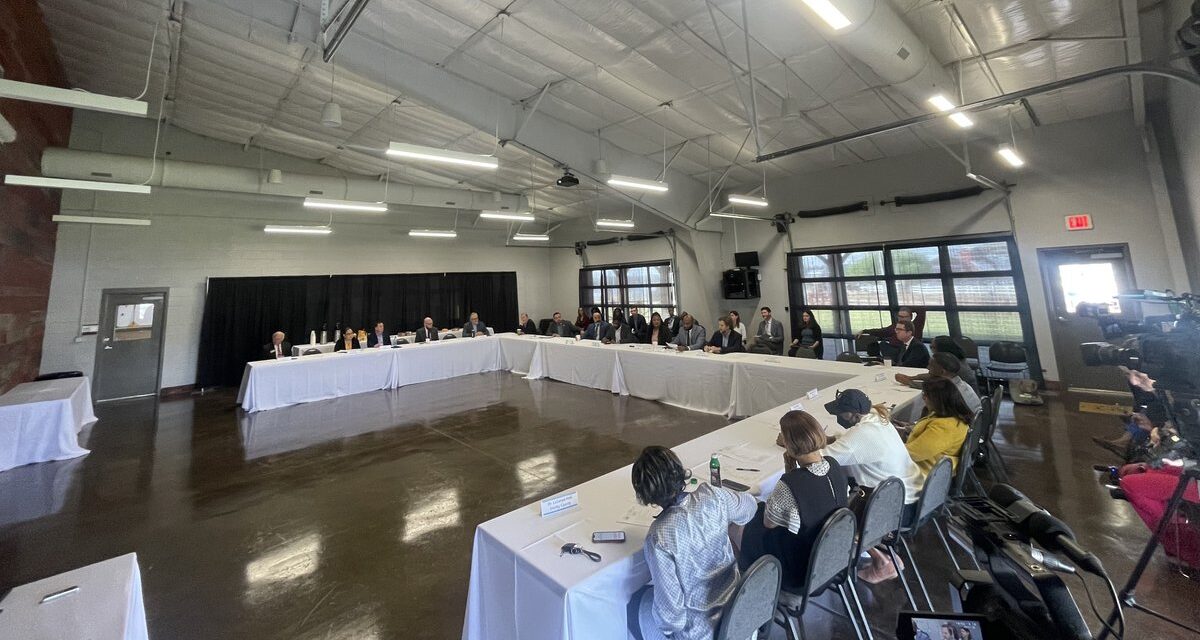
But all that is the back story. The Shelby County Joint Economic and Community Development Board’s creation was mandated by Public Chapter 1101 and it began the quarterly meetings required by law.
It all began with such promise. Unfortunately, today, it’s largely become a “check the box” meeting that is perfunctory and superficial. That’s despite an email from EDGE (Economic Development Growth Engine), the city-county agency that staffs the board, that its meetings are “to make sure the work happening in each community is connected to a broader regional strategy rather than moving in silos…this is what powering progress through partnership looks like in practice.”
Ms. Joann Massey, president and CEO, lists her email address in her regular EDGE Express email blasts, but despite two requests over two weeks for her to explain the “broader regional strategy” and provide any materials relating to it from the meeting, there was no response.
As a result, I emailed he same question to Germantown Mayor Mike Palazzolo, who chairs the Joint Economic and Community Development Board. As is customary for him, he answered immediately, explaining that no materials were distributed and Ms. Massey was reaffirming the board’s purpose to share information and collaborate on opportunities. In response to another question I asked, he said the Mid-South Development District (MDD) has a broader mission stipulated by TCA and its bylaws.
Mayor Palazzolo also chairs MDD, which is a serious and comprehensive process to develop collaborative regional strategies. He has been a force for regional collaboration and his leadership will be missed when it ends December 20.
In some Tennessee counties, their Joint Economic and Community Development Boards have been more active in setting policies, developing specific programs and marketing plans, and even seriously considering growth plans for the future.
Checking the Box
When the Public Chapter 1101 Growth Policy Act was passed in 1998, it required every Coordinating Committee to develop a growth plan for 20 years. That first planning period passed without an update or exploration of how the population projections were overstated or why they were.
Now, every city in Shelby County has its own plan for growth and development. What’s missing is a body that brings all of them together to identify any competing strategies or conflicts in the plans and to coalesce them into a single document that could act as the vision for the county .
It seems unlikely that will happen in our Joint Economic and Community Development Board meetings. Only 30 minutes are allotted for 22 people from various cities and organizations to give updates that are limited to one to two minutes apiece.
All in all, it feels that more than anything, its intent is to check the box for meeting the state requirement for our meetings a year. Apparently, there are no committees, no shared subject or strategy to be explored in the comments, and no minutes. A Google search for the minutes is a link to the notice of the meeting.
Perhaps there is more taking place at these meetings that are relevant to the challenges, opportunities, and collaboration of our economic development entities, but my emails for more information were not answered.
Real Regional Thinking
Meanwhile, the MidSouth Development District (MDD) continues its work in order “to strengthen relationships and foster collaboration across the MidSouth.” It provides “essential resources—ranging from regional data to access to federal grants—that help communities grow; and we advocate for best practices and shared priorities.
“By working with mayors to speak from a unified regional platform, we amplify our collective voice and ensure the MidSouth is positioned for long-term success. Our Economic Development Framework is the foundation of everything we do. It aligns our efforts across the region by focusing on the core priorities that drive growth: Infrastructure built for the future, fluid regional transportation, quality and affordable housing, and coordinated workforce development. Grounded in the regional data and employment forecasts, this framework helps us set clear goals for investment and ensures that our strategies are responsive to both local needs and national opportunities.”
Now, that’s the kind of process that promises the greatest results.
**
Join me on Facebook, Instagram, and Linkedin where these blog posts are published along with occasional articles, reports, and commentaries that are relevant to Memphis.