
Memphis has a streak of gullibility that springs up from time to time from a lack of self-worth.
That’s why we even have a Memphis word for it – Shlenkered.
The jury is out, but the question for Memphis today is whether it will be Shlenkered when it comes to data centers.
That’s why it’s admirable that Mayor Paul Young – more than Memphis City Council – is taking the time to consider thoughtfully what guardrails and protections should be created in the face an “anything goes” attitude by economic developers toward data centers.
Indeed, it’s smart for Memphis to take a step back. A temporary moratorium on new data centers gives the city something it rarely seems to make time for: the opportunity to understand what is at stake before making a decision that may be difficult to reverse.
A moratorium is not a rejection of technology, economic development, or artificial intelligence. It is recognition that decisions of this magnitude deserve more than a rush to capitalize on the latest economic opportunity.
The question is not whether Memphis should participate in the AI economy. It is whether Memphis can do so on terms that serve the public interest.
Data centers are promoted through the familiar language of economic development: billions of dollars in investment, construction jobs, technological innovation, and the promise of positioning Memphis for the future. Those benefits deserve consideration, but investments alone do not tell us whether a project represents a good deal for the community.
If the voices pushing as many data centers as possible sound familiar, it’s because we heard much of the same language about investment, progress, and construction jobs years ago when it was referring to the sprawl that almost bankrupt county government.
Not A Political Game
Councilman J.B. Smiley’s gratuitous but flippant reaction was to contend the mayor is “a little late to the party.”
Make no mistake about it, this is not a party.
It is a solemn decision that should be made thoughtfully and with the help of additional intellectual capital from experts from outside Memphis in order to consider all options and courses of action. It is not a political game and if reports that Mr. Smiley is considering a run for mayor against Mr. Young next year, he should set aside his personal ambitions for now in support of a serious evaluation of data centers.
Councilwoman Pearl Walker made more sense, expressing her interest in hearing the results of the mayor’s thorough study to answer her questions and to obtain the advice of industry experts.
The Council should ignore the voices that attack them for even considering the moratorium in the first place.
After all, they are hardly alone. Approximately 500 to 600 local jurisdictions (cities, towns, and counties) across the U.S. have enacted temporary moratoriums or bans on data centers, while 14 states are considering outright bans.
The Public IsWatching
There are reasons the public is concerned.
Council Planning and Zoning Committee Chair Philip Spinosa released a rushed schedule that does little to assuage public skepticism. In 10 days, he wants an answer to this complex, complicated issue in three meetings. He claims public participation is welcome but then he schedules his sessions from 1 – 3 p.m. when a wide swath of Memphians cannot attend and when topics deserve more than two hours of attention.
He announced an October 19 two-hour meeting about Environmental Protections and Neighborhood Infrastructure will examine potential impacts involving noise, water, air quality, and neighborhood infrastructure, including existing safeguards, regulatory responsibilities, and questions requiring expert guidance; the October 22 meeting is about community voices and public engagement to share information and provide a dedicated opportunity for residents to ask questions and express concerns; and October 29 is for final review and next steps to review the series’ findings, goals, and progress.
It feeds suspicions for many that “the fix is in.” Mr. Spinosa needs to go an extra mile to prove his objectivity. As a former executive at the Greater Memphis Chamber – which has acted as cheerleader for xAI to the point of obfuscation and stridency and which has opposed the moratorium – there will be a close watch on his role as chairman.
Meanwhile, he has said that City Council Attorney Allan Wade is hammering out possible new regulations for data centers. It’s an action that is premature and if City Council is serious about this work, it would hire an outside attorney with expertise in data center regulations to draft any changes that come out of the process.
It is a curious feature of city government that the City Council attorney – who has held the position for 34 years while the people he serves have term limits – appears to elbow City Attorney Tannera Gibson out of processes despite – or because – she is more objective
The Right Track
The mayor’s academic background and experience as a planner is reflected in his more methodical, thoughtful approach to the issue of our times. There are some in City Hall who will pursue more property taxes to the exclusion of challenging the happy talk from economic development officials about the need for Memphis to welcome – if not chase – as many data centers as possible.
The mayor has been defensive at times in explaining his position on xAI and that experience suggests he’s carefully walking a fine line on the data center moratorium. In addition, the mayor has an entire office full of planners in the Division of Planning and Development; however, activists will be looking for any sign of his thumb on the scale.
It’s hard at this point to quibble with his comprehensive approach. It is far superior than the one outlined by City Council. It will consider land use and neighborhoods, infrastructure, air quality, water and aquifer protections, energy and utility costs, and noise.
There should also be evaluations of tax base benefits compared to real costs such as accelerated wear on public roads, grid updates, and utility price hikes; any strain on local power grids; how much nitrogen oxides and greenhouse gases are released by backup generators; determine any stress on the aquifer and wastewater treatment infrastructure; calculate noise pollution for adjacent residential areas; the potential of limiting data centers to industrial zones and eliminating any development that bypasses public review; and mandate minimum property line or residential setbacks such as 500-foot buffers.
To his credit, Mayor Young has pledged to hear from more than the usual suspects in the forum of “subject matter experts” to add science to his report. Of course, who is selected as experts requires careful consideration to involve both proponents and opponents for a thorough discussion. In addition, rather than the City Council’s approach requiring the public to come to them, the mayor’s process will take the question to the community with public meetings.
His executive order establishes 90 days for the administration to deliver recommendations to City Council. That timeline makes much more sense than the perception of the rush job by the legislative body. In addition to the involvement of experts, the mayor should consider involving experienced professional facilitators who have worked with governments and can shape the appropriate questions, encourage honest discussions, and forge consensus moving forward.
Get It Right, Not Fast
Hopefully, the two branches of city government can find a way to work together on this process, so it doesn’t turn into a political tug-of-war.
As the research and evaluation begin, it’s worth remembering that not all data centers are a monstrosity like xAI. According to Memphis Light, Gas and Water, it serves 16 data center operations in Shelby County, ranging from under 1 megawatt (MW) up to massive high-capacity installations.
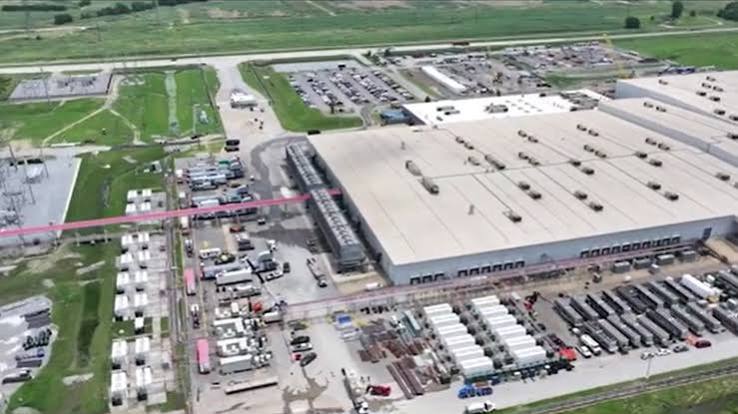
The largest footprint belongs to xAI, which runs massive high-power AI supercomputer clusters that include the primary Colossus facility in southwest Memphis (drawing 150 MW to 300 MW of power) and additional expanding sites like Colossus 2 and border facilities.
Memphis is also home to enterprise and colocation data centers supporting major organizations like FedEx, AutoZone, AT&T, and the IRS, with prominent facilities operated by providers such as EdgeConneX, Expedient, DataBank, and Lumen.
These are not arguments against data centers. They are basic questions that should be answered before Memphis commits public resources and infrastructure to private development. Memphis has too much at stake to confuse the size of an investment with its value to the city.
The rush to build AI infrastructure creates pressure on cities to move quickly for fear of losing investment to competing communities. But speed is not the same as strategic thinking, and attracting a company is not the same as securing a good deal.
No city has more compelling reasons to proceed carefully. Its water resources, economic challenges, and need for a coherent long-term development strategy make the stakes too high for decisions driven primarily by the promise of investment and new taxes.
Memphis has too often approached economic development with insufficient attention to a larger question: What kind of economy is Memphis building and who benefits from it?
Before approving more data centers, Memphis should pause, examine the evidence, establish firm standards, and insist on a fair public return. That is not standing in the way of progress. It is how a city protects its interests while deciding what progress should mean.
**
Join me on Facebook, Instagram, and Linkedin where these blog posts are published along with occasional articles, reports, and commentaries that are relevant to Memphis.





Mr. Jones, I agree this is the right approach. However, what I think Councilman Smiley was really responding to was the Mayor’s headlong rush into these data center deals as a source of revenue without the answer to these questions. In previous public community meetings, he was downright dismissive of community concerns. So, while late, I, too, am glad that he is finally onboard. He should go a step better and encourage the City Council to vote for the moratorium to give his process a chance to explore these issues.
MEMPHIS MUST PROTECT ITS PEOPLE – NOT JUST ITS AQUIFER An ounce of precaution is always wise—even when a city is already behind the eight ball. And Memphis is. If Memphis allows Elon Musk’s Colossus facility to use a graywater recirculating cooling loop, we risk continued aquifer withdrawals, potential Legionella exposure, heavy-metal contamination, and thermal impacts on surrounding wildlife. These risks demand serious scrutiny before it’s too late. For 20 years, I’ve designed and implemented water treatment systems in this region. St. Jude Children’s Research Hospital, UT, Smith+Nephew, Drexel Chemical, and Hardy Beverages have operated under my water designs. Yet Memphis seems determined to handle Musk without meaningful input from experienced industrial water professionals. How’s that working out? I raised these very concerns on the Earle Farrell Show and repeatedly invited local leaders to engage. The response? Crickets. Now, after the controversy has exploded, Memphis suddenly wants to take a closer look. Musk has led Memphis down a dangerous path, and our leaders have been all too willing to follow. Let me be clear: installing a graywater recirculating cooling loop near residential neighborhoods without adequately addressing the health and environmental risks would be profoundly irresponsible. Look at the credentials of the local voices guiding Memphis’s water decisions. How many have actually designed, implemented, or operated industrial water treatment systems? Why are we relying on people without demonstrated hands-on experience in this highly specialized field to negotiate with Musk? I also question the sudden alarm over Colossus potentially using 1.3 million gallons of water daily. For decades, Cargill reportedly pumped 6 million gallons per day. Where was this same level of concern then? Memphis mourned Cargill’s departure but now treats Colossus as an existential threat. Consistency and sound science—not political theater—should guide our decisions. Mayor A.C. Wharton’s Blue Stream Task Force brought diverse water and business expertise to the table. It was a mistake not to continue that effort. Memphis needs qualified professionals, not self-appointed experts more interested in promoting their credentials than solving real-world problems. Memphis industry gave me the opportunity to build my career, and I’ve spent decades helping protect its operations and water systems. It’s frustrating to watch decisions unfold that could put public health and the environment at risk. Here is the bottom line: Colossus’s greatest water-related threat may not be how much water it uses, but how its cooling system is designed and operated. Memphis must stop focusing exclusively on protecting our aquifer and start prioritizing protecting our people. Those are two very different objectives. Our next water decisions must be guided by professionals with proven, practical experience in industrial water treatment—not politics, personalities, or promises. Learn More About Recirculating Cooling Loops https://wateristhenewgold.com/vicious-super-computer-secrets-that-will-vaporize-our-water-2/