Overton Park, the grande dame of Memphis parks, is 125 years old this year, transcending a history that includes pivotal chapters that defined and reflected the city it served.
It was a special place from the beginning.
In the 1912 Standard History of Memphis, J.P. Young wrote of Lea’s Woods, the farm which would become Overton Park:
“Rare wild plants, vines, grasses and flowers spring up in bewildering luxuriance and infinite variety to attract the scientist and lover of nature and where children can roam next to Mother Earth and her own immediate handiwork, as in the days of our first parents…Trees that were here when DeSoto came rear their mighty heads at intervals, and one buried in the great wilderness can discern no evidence that despoiling civilization exists anywhere near.”
It’s remarkable that the narrative can still be applied to Overton Park’s 342 acres.
A Progressive Darling
When the city bought the land, Memphis was a darling of the U.S. Progressive Era and the park was proof that the city deserved to be on that list. Its milestones as it rebooted after the decimation of the yellow fever epidemics ranged model sewer system, public ownership of the water company and movement to do the same with electricity and street cars, improved street car service (they finally got rid of the mules), and a modern plan of road construction to replace the mud roads that passed for major thoroughfares and the deep holes and ruts that capsized unwary drivers (and even led to the report of a mule drowning on Main Street).
But, of all the milestones of the era, the self-confidence of the city in itself was seen in the adoption of the ambitious plan for parks and parkways as part of the Greater Memphis Movement of the Progressive Era. Lea’s Woods was purchased on October 26, 1901, and renamed Overton Park. It was generally based by George E. Kessler of Kansas City on New York City’s Central Park.
City of Memphis purchased the land for $110,000, roughly $4 million in today’s money. In the recently approved budget by city government, the amount of operating funding for Overton Park was little more than the purchase price 125 years ago.
The park, once segregated, is today testament to Memphis in the fullness of its diversity.
Few public spaces in Memphis has as many important chapters to its hsitory There was the zoo’s meager beginnings five years after the land was bought, the opening of the Beaux-Arts arts museum building in 1916, Overton Park Shell opening in 1936, desegregation of the park in 1963 at the insistence of Black students, the 1971 landmark Supreme Court ruling that prevented Interstate 40 from splitting the park, and the more recent greensward controversy and resolution.
By 2011, Overton Park needed TLC and the Conservancy was born. The park felt tired and lacked a vision for the future. Although it was the canvas for beloved city facilities, the park itself was largely ignored.
The Conservancy made a seminal operating decision: the better version of Overton Park would be co-created with the public.
Co-creating a Park
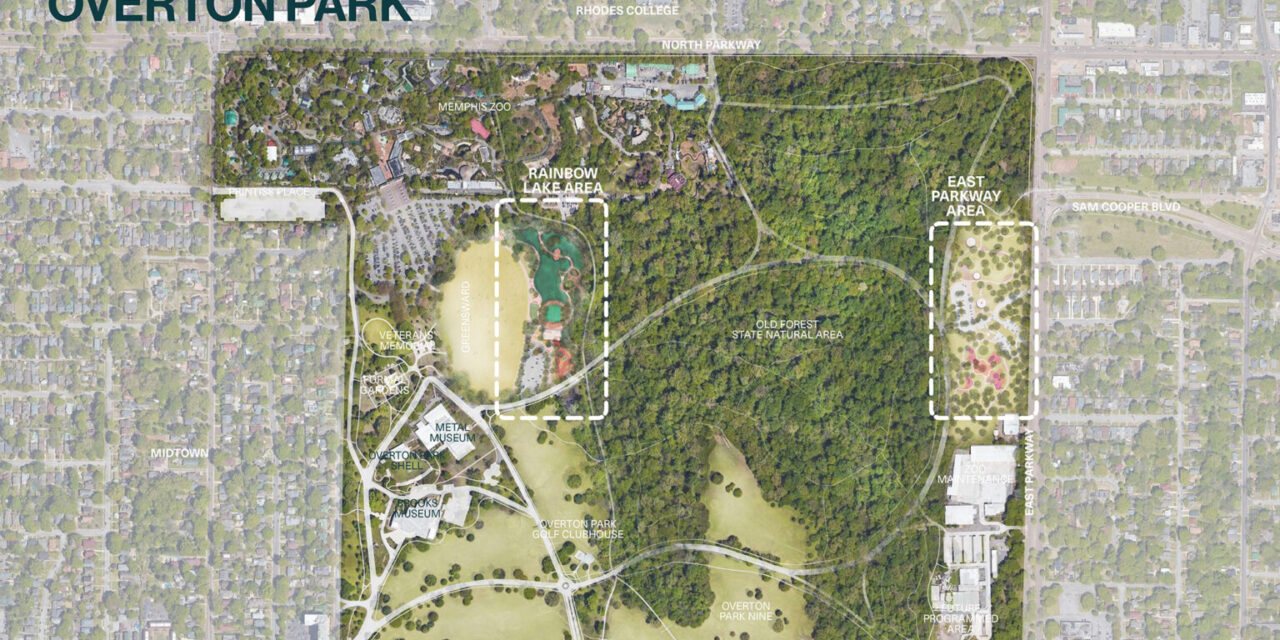
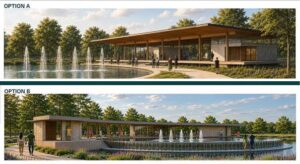
Following through, the Conservancy has regularly asked Memphians for their preferences and opinions. It is now asking for input again – this time about two areas of the masterplan: one, design of a new pavilion near Rainbow Lake and improvements to the playground and boardwalk, and two, the open space on East Parkway, a favorite picnic and family reunion spot with improvements on the pavilion there, a reimagination of the playground, and more seating.
Take the survey at overtonpark.org/blog/2026survey.
Over the years, the public has spoken loudly and clearly: it wants the Conservancy to protect and enhance nature on our doorsteps, particularly the Old Forest Natural Area, one of the city’s most intriguing green spaces, and it wants the free and open spaces to be managed and programmed with an emphasis on activation and quality upgrades.
The conservancy has followed through with improvements throughout the park. There are greensward restoration projections, restrooms, Old Forest Trail, playground, the iconic East Park entry and bike sculpture, wayfinding and trail markers, welcome gateways, renovation of the nine-hole golf course, safety enhancements, invasive plan management, community programming, and more.
To make sure park users are kept up-to-date, the conservancy has the best communications of any park in Memphis. The e-mail newsletter has personal stories of the commitment by the staff and the essential work of volunteers, fascinating features about plants and animals, and even the soap opera of the red-shouldered hawks and their on and off-again relationship.
Overachieving in Overton Park
Overton Park Conservancy has raised over $22 million to reverse decades of underfunding and to transform key areas of the Midtown green space.
The impact of the Conservancy has been nothing short of amazing under the dedicated leadership of executive director Kaci Murley and her predecessor Tina Sullivan. Considering the size of its budget, the Conservancy’s ROI is outstanding and suggestive of the progress that it could make in the park with city funding and a budget more in keeping with its responsibilities and importance.
The Overton Park Conservancy has had a transformative impact on Memphis’s most beloved public space, ensuring it remains a vibrant, welcoming, and ecologically rich destination for over 1.2–1.3 million visitors annually.
Put simply, the Overton Park Conservancy’s impact is both environmental and social: it has restored and protected a historic green space, expanded access for diverse communities, and strengthened Memphis’s cultural and ecological identity.
In achieving these goals, Overton Park is a gift Memphis gave itself, and at a time when the city is fighting population loss, it acts as an asset that proves not only the value of this great park but of Memphis itself.
***
Join us at the Smart City Memphis Facebook page and on Instagram for daily articles, reports, and commentaries that are relevant to Memphis.