Smart City Memphis
 

Sign up or Login

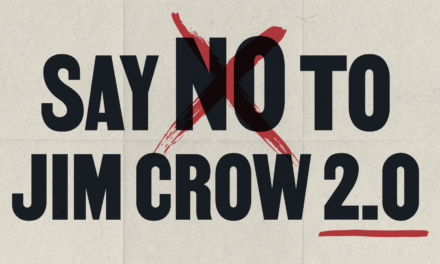
Voter Suppression: Politics At Its Most Cynical

by SCM (RSS) | August 18th, 2012 3:00pm CDT

Tweet

From The New Republic:

THE GOP IS supposed to pretend that its 2012 strategy doesn’t include the systematic disenfranchisement of lower-income blacks and Latinos. But in June, Mike Turzai, Republican majority leader of the Pennsylvania House, blew his party’s cover by blurting out: “Voter ID, which is going to allow Governor [Mitt] Romney to win the state of Pennsylvania? Done.” The press was jubilant. It was as if Koch Enterprises had acknowledged global warming.

Since at least 2008, when minority voters gave Barack Obama his victory margin––Obama won only 43 percent of the white vote––Republicans have increasingly relied on voter suppression to counterbalance the steady shrinkage of America’s white majority. Former Florida GOP Chairman Jim Greer (currently under indictment for stealing party funds) stated in a deposition released in July that a 2009 party meeting included discussion of “voter suppression and keeping blacks from voting.” In December, Paul Schurick, a top aide to former Maryland Governor Bob Ehrlich, was convicted of election fraud for using automated phone calls to suppress the African American vote during Ehrlich’s unsuccessful 2010 bid. “The first and most desired outcome is voter suppression,” stated one consultant’s memo entered into evidence. It described a “Schurick Doctrine” to “promote confusion, emotionalism and frustration among African American Democrats.”

Most of the disenfranchisement is less obviously crude and presented to the public as hygienic electoral reform. But the pathogens it seeks to remove are African Americans, Latinos, and other lower-income folks who resist voting Republican. You’ve probably heard something about it, but Turzai’s gaffe invites us to review, with open eyes, how this racket actually works. It’s an obscenity no longer hiding in plain sight.

Voter ID. The preeminent tool. Attorney General Eric Holder has correctly likened voter ID laws, which have passed in 33 states, to poll taxes. Their popularity derives from their reasonableness. Why shouldn’t we prevent imposters from committing electoral identity theft? Because it solves a nonexistent problem. New York University Law School’s Brennan Center for Justice calculates the incidence of individual voter fraud to be literally equivalent to the incidence of individual Americans getting struck by lightning.

What voter ID laws are useful for is reducing voter participation by you know who. Requiring an unexpired government-issued ID, a bank statement, or a utility bill is good. Requiring an unexpired government-issued photo ID, such as a driver’s license or a passport, is better, because about 25 percent of African Americans and 16 percent of Latinos don’t have any––as against 11 percent of the general population. The nine states with the strictest photo ID requirements are mostly rural, which means the government offices where such ID can be obtained are likelier to be far away and to keep irregular hours. The Woodville, Mississippi office is open only on the second Thursday of every month. Wisconsin’s Sauk City office is open only on the fifth Wednesday of every month, and since eight months in 2012 don’t even have a fifth Wednesday, the office will open its doors only four days this year.

Voter registration. Before you vote, you have to register. Five states now require proof of citizenship with an unexpired passport (something fewer than one-third of Americans possess) or a birth certificate or a naturalization certificate (to which about 7 percent lack easy access). Since acquiring these documents can easily cost as much as $100, this requirement has the virtue of weeding out both legal immigrants and the native-born poor. The ostensible target is undocumented immigrants, but they have even less incentive to commit voter fraud than American citizens do: In addition to steep fines and imprisonment, they’d risk deportation.

Another tactic, favored in Texas and Florida, is to target nonprofit groups that conduct voter-registration drives (the League of Women Voters, the National Association for the Advancement of Colored People). This is achieved by imposing onerous new training, registration, and/or liability burdens on the groups’ volunteers. The proportion of African American and Latino voters who register through third-party drives is about twice what it is for whites.

Closing the polls. Since lower-income voters more often work early in the morning or late at night, Republicans tend to favor shorter polling hours. They justify this with feigned concern about the stamina of (often elderly) volunteers. A similarly motivated opposition has mobilized against early voting arrangements that let people vote on weekends. Sunday voting is a particular target. The stated reason is that it’s impious. (Glenn Beck: “This is an affront to God.”) The actual reason is that Sunday voting allows black churches to provide “souls to polls” transport after services. Ohio and Florida have eliminated it.

Purging. States have to update their voter lists, right? Federal law requires certain safeguards, such as notifying those found ineligible so they can dispute erroneous removals. But many such formalities go unobserved, especially if you purge close enough to Election Day. (In this, as in many other subcategories, the gold medal goes to Republican Florida Governor Rick Scott, who has been doing battle with the Justice Department over the legality of his planned purge of noncitizens.) A variation on purging is caging, wherein nonforwardable letters are sent to voters in African American neighborhoods. Whichever letters get returned unopened occasion instant purges. The Republican National Committee got caught doing this in the 1980s, and now the party is not allowed to under a consent decree. But considerable evidence suggests the GOP has quietly resumed the practice anyway.

Robocalls. Automated phone calls aimed at discouraging people from going to the polls. Before the failed June vote to recall Wisconsin Governor Scott Walker, a robocall said anyone who signed a recall petition didn’t have to vote (which wasn’t true). Maryland’s Schurick put out a robocall in 2010 assuring voters in African American neighborhoods that his candidate’s Democratic opponent, Governor Martin O’Malley, was well ahead (and thus unlikely to need more votes).

The GOP has other, similarly repulsive schemes afoot, but these are the most egregious. As for the Republican nominee: Don’t hold your breath waiting for Mitt Romney to condemn something his party sees as essential to victory.


Categories: Politics and Government

Comments RSS Feed

Comments are closed.

Kidnapped Women, A Bill Day Cartoon

by Bill Day. Memphian Bill Day is two-time winner of the RFK Journalism Award in Cartooning. His cartoons are syndicated internationally by Cagle Cartoons. Cartoons Archive →

Photograph by Amie Vanderford

More Images

This ongoing series of photographs is intended to show the daily lives of these single mothers in order to invoke recognition of their similarities to all mothers, along with understanding and empathy from the viewer of the strengths that these single mothers possess within the challenging situations they face. My hope is that newfound empathy with these mothers’ lives will give people some pause before they condemn single mothers when discussing issues such as welfare and other politically charged hot buttons.

  • Subscribe to Posts via Email

    You can get Smart City Memphis posts right in your e-mail box. Just sign up below to begin receiving them.


  • RSS

    • Friday Fun: Self-driving automobile + Bus + Taxi = Otobuxi

    • Q&A with Hernan Navarro: Lima’s El Metropolitano BRT

    • Should the speed limit on arterial roads increase?

    • Promoting ridesharing for the daily commute in Mumbai

    • iBus, a new BRT changing the transport landscape in Indore, India

    • Architect of possible dreams

  • RSS

    • The Economic and Educational Value of Retrofitting Schools

    • Greening Cities with Better Bike Lanes

    • Texas and Bangladesh: Tragedies of Placeless Economics

    • Urban Ideology in Obama’s Brand of Regionalism

    • The DIY Disaster Plan

    • Healthy Communities at the Placemaking Leadership Council

  • RSS

    • Engineering Feat of the Day: A 7-Million Pound Building on 40-Foot Stilts

    • Does Living Near Fast Food Restaurants Increase Your Risk of Obesity?

    • New Hampshire Town Sues Parking Meter Vigilantes

    • Terrifying Images of the Damage Wrought by the Texas Tornadoes

    • The Heart of a New York Park Is for Sale in Stadium Deal

    • Did Toronto Mayor Rob Ford Smoke Crack on Video?

  • Search Posts

  • About Smart City Memphis

    This is Smart City Consulting's blog and its purpose is to connect the dots and provide perspective on events, issues, and policies shaping Memphis and its future. Smart City Memphis was named one of the most intriguing blogs in the U.S. by the Pew Partnership for Civic Change, it was voted the best Memphis blog in About.com's Reader's Choice Awards, and The (Memphis) Commercial Appeal wrote: "Smart City Memphis provides some of the most well-thought-out thinking about Memphis' past, present, and future you'll find anywhere." Our blog's editor is Tom Jones, principal at Smart City Consulting and an editorial contributor at Memphis magazine, where he writes the monthly column, City Journal. Submit blog posts, ideas, suggestions, and emails to tjones@smartcityconsulting.com.
  • Archives

    • May 2013 (18)
    • April 2013 (34)
    • March 2013 (27)
    • February 2013 (31)
    • January 2013 (30)
    • December 2012 (29)
    • November 2012 (31)
    • October 2012 (33)
    • September 2012 (29)
    • August 2012 (33)
    • July 2012 (26)
    • June 2012 (33)
    • May 2012 (33)
    • April 2012 (31)
    • March 2012 (37)
    • February 2012 (32)
    • January 2012 (35)
    • December 2011 (29)
    • November 2011 (30)
    • October 2011 (34)
    • September 2011 (33)
    • August 2011 (39)
    • July 2011 (36)
    • June 2011 (41)
    • May 2011 (36)
    • April 2011 (57)
    • March 2011 (39)
    • February 2011 (45)
    • January 2011 (56)
    • December 2010 (44)
    • November 2010 (30)
    • October 2010 (28)
    • September 2010 (24)
    • August 2010 (22)
    • July 2010 (23)
    • June 2010 (34)
    • May 2010 (28)
    • April 2010 (32)
    • March 2010 (35)
    • February 2010 (31)
    • January 2010 (43)
    • December 2009 (49)
    • November 2009 (17)
    • October 2009 (24)
    • September 2009 (23)
    • August 2009 (18)
    • July 2009 (22)
    • June 2009 (28)
    • May 2009 (23)
    • April 2009 (23)
    • March 2009 (26)
    • February 2009 (25)
    • January 2009 (36)
    • December 2008 (15)
    • November 2008 (22)
    • October 2008 (21)
    • September 2008 (25)
    • August 2008 (23)
    • July 2008 (32)
    • June 2008 (27)
    • May 2008 (35)
    • April 2008 (26)
    • March 2008 (25)
    • February 2008 (29)
    • January 2008 (33)
    • December 2007 (20)
    • November 2007 (19)
    • October 2007 (32)
    • September 2007 (25)
    • August 2007 (25)
    • July 2007 (26)
    • June 2007 (16)
    • May 2007 (21)
    • April 2007 (25)
    • March 2007 (18)
    • February 2007 (16)
    • January 2007 (17)
    • December 2006 (16)
    • November 2006 (14)
    • October 2006 (18)
    • September 2006 (21)
    • August 2006 (20)
    • July 2006 (20)
    • June 2006 (17)
    • May 2006 (12)
    • April 2006 (19)
    • March 2006 (20)
    • February 2006 (23)
    • January 2006 (16)
    • December 2005 (23)
    • November 2005 (21)
    • October 2005 (23)
    • September 2005 (19)
    • August 2005 (27)
    • July 2005 (23)
    • June 2005 (16)
    • 0 (2)
  • Categories

  • Contributors

    • Aaron Shafer
    • Andrew Trippel
    • Anthony Siracusa
    • Barry Chase
    • Brad Leon
    • Brian Stephens
    • CEOs for Cities
    • Charles Santo
    • Chris Sanders
    • Crosstown Collaborative
    • David Williams
    • Doug Imig
    • Elizabeth Alley
    • Elizabeth Lemmonds
    • Emily Trenholm
    • Eric Mathews
    • Gene Pearson
    • Gene Pearson and Louise Mercuro
    • George Lord
    • Greg Thompson
    • Gwyn Fisher
    • Janet Boscarino
    • Jim Strickland
    • Jimmie Covington
    • John Kirkscey
    • John Lawrence
    • Jonathan Flynt
    • Josh Whitehead
    • Julie Ellis
    • Kenya Bradshaw
    • Laura Adams
    • Leah Wells
    • Louise Mercuro, AICP
    • Lurene Cachola Kelley
    • Margot McNeeley
    • Mark James
    • Matt Farr
    • Matt Timberlake
    • Melissa Petersen
    • Natashia Gregoire
    • Ray Brown
    • Rev. Steve Montgomery
    • Robert Bain
    • SCM
    • Scott L. Newstok
    • Smart City Memphis
    • Smart City Radio
    • Steve Bares
    • Steve Lockwood
    • Susan Adler Thorp
    • Tom Jones
    • Tomeka Hart
    • Tommy Pacello
    • Women Unite
    • Zach Hoyt

© 20111-2013 Smart City Memphis. All rights reserved.

  • Register
  • Log in
  • RSS
  • Smart City Radio
  • Smart City Consulting