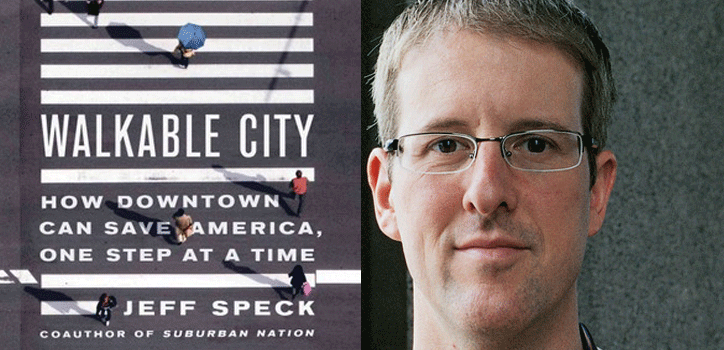
Note: This is the second of two posts. The first on September 21 was Part One: Revisiting Jeff Speck’s 12 Modest Proposals which recapped planner and urban designer Jeff Speck’s recommendations for Memphis which he made 18 years ago. This post grades each recommendation based on Memphis’s progress on each of the recommendations. The grades are by a Memphis urbanist with in-depth planning and architectural experience and expertise.
The following are the grading scale:
| A: Suggestion addressed, Implementation quality ≥ “High”/”Great”; Implementation well & consistently maintained (where applicable) |
| B: Suggestion addressed (≥”perceived” majority of occurrences); Implementation quality ≈ “Moderate”/”Good”; Maintained at an acceptable & moderately consistent level |
| C: Suggestion undertaken; Implementation quality ≈ “Mediocre”/”OK”; Implementation maintenance and quality inconsistent |
| D: Suggestion undertaken; Implementation quality ≤ “Poor”; Implementation maintenance and quality absent or so inconsistent as to be perceived as lacking |
| F: Suggestion not addressed; Condition persists and/or has deteriorated |
**
Recommendation #1 – Build Memphis for humans, not just cars.
Grade: C
Pro: The city has demonstrated a continued commitment to road diets and bike lanes. Park Avenue is an example of this commitment as is the Overton-Broad cycle track and the National Street improvements. MEMFix, the scattered use of Tactical Urbanism, Highland Streetscape, G’town Streetscape, Marshall Ave. and more should all be commended for what they represent even if the specific design solutions are not always A+. Much has been implemented in an era when multi-modal travel was supported at the federal level. That has now changed, and thus, the true test of the City’s commitment is yet to come but there are good reasons to be optimistic about the long-term prospects.
Con: The pace of implementation has still lagged behind the nation in general. Most new private development does not embrace the approach or the intent unless required to do so. Outside of a few efforts and interventions, adoption and implementation of appropriate ‘universal’ standards by local municipalities is still lacking. The City has shown an uncomfortable laissez-faire attitude regarding the closing of public streets in favor of super-blocks. Memphis and its Metro is ranked as the deadliest in the United States for pedestrians. Despite stagnant growth, the MPO’s 2050 RTP still describes at least $3 billion worth of new and widened roadways over the next 20 years. It defies common sense.
Specific to the locations in the report: the grade remains the same. The 40 ft. mid-block narrowing via curb relocation on Peabody Place is praiseworthy. However, even where we acknowledged the issue via new paint, the travel lanes remain 12 ft. or wider along the rest of the street is the same lane width found on Germantown Parkway. Pro: The number of lanes on Poplar Avenue at Legends Park was reduced to make way for a landscaped median. Con: the lane widths are, again, 12 ft. in width. While the difference between 12 or 18 in. of lane width may seem trivial, we know from decades worth of research that every inch matters as it relates to the resulting average vehicle speeds. Even where there was opportunity to reconfigure streets in conjunction with construction projects and/or mandated ADA improvements at intersections, we see that the overriding issues remain the same.
**
Recommendation #2 – Stop demolishing your economic advantage.
Grade: B
Pro: In general and since the Speck report, there have been continued interest and success built around the renovation and repurposing of historic structures across the City. Examples are well known: South Main (as a whole), Chisca, Snuff Dist., Crosstown, the Pyramid, TN Brewery, Central Station, Northside- the list could go on. I could even be convinced to upgrade to a B+, but I can’t ignore the cons…
Con: However, there are too many examples of demolition since the report: Union Avenue Methodist, UT Med, Nylon Net, 328 S. Front, 339 S. Front. As well as an ongoing crime: in a demonstration of history repeating itself (reflecting on the former Bellevue Baptist sanctuary), we now have the demolition of the former Temple Israel synagogue on Poplar after years of arguably purposeful neglect. Future generations will condemn Mississippi Baptist (and us) for this outcome. In other cases, it’s not simply a matter of demolition of historic structures, but what replaced them, an example being the former Wiles-Smith drugstore block demolished to make way for a string of highly suburban, drive-thru operations. Meanwhile, renderings associated with the proposed reinvestment in Beale Street at one point appeared to completely ignore what little remains of the street’s historic roots in an effort to create what can most easily be described as a generically sanitized “lifestyle-center”. Should implementation follow the concept renderings, the Disney-esque arched sign may become the primary means to distinguish Beale St. from any number of the nation’s increasingly common “Sports & Entertainment” destinations. I can only hope the design has evolved since.
**
Recommendation #3 – Plant trees.
Grade: D
Pro: I’ll ask for leeway from in my “grasping for straws” a bit on this one. Kudos for the inclusion of a few street trees on the short section of the promenade adjacent to the new Union Avenue Overlook at the Cobblestones. I am forced to look largely beyond Downtown for albeit limited positive examples often associated with specific buildings such as the Ballet Memphis at Overton Square, the Art Lofts on Poplar, Kroger on Union, as well as streetscape improvements on Highland, in Germantown, and a few similar investments.
Con: Even where tree wells exist or street trees were planted as a component of new construction, we see a lack of replanting. There are also instances, such as on Cooper along the Memphis Drum Shop, where street trees within the public right-of-way were proactively removed (by “someone”) and the tree wells subsequently capped in concrete. There is a general lack of effort to enforce maintenance of landscape minimums after initial implementation that would potentially address issues such as replanting trees as they age out. The ‘gold standard’ of oversight or dedicated responsible effort/party would reflect a serious commitment to the issue.
Specific to the report and Downtown: as with Cooper Street and other instances, where there were once street trees, said trees have been allowed to die and have not been replaced. In other instances, street trees were simply not incorporated into the design of new investment even where no existing hurdle (such as below grade utilities) existed.
**
Recommendation #4 – Organize neighborhoods around schools.
Grade: C-
This is perhaps the most complicated issue given the impact that socio-economic context has on education outcomes. While I am only a little better than ignorant regarding the issue, I would not expect significantly improved outcomes resulting from neighborhood-centered schools where not paired with substantial investment in social and support services. In my defense, I’ll note that the original report does not address income disparities and the impact on education outcomes. An interesting notion would be to reinvest in existing facilities by incorporating appropriate and much needed wraparound services in now unused or underutilized footprints without displacing the day-to-day classroom space. I’m giving it a C- but I could just as easily note that there is not yet enough physical evidence to draw a conclusion one way or another.
Pro: We have seen new construction replace facilities in their existing locations within the hearts of a few neighborhoods. Without speaking towards program implications, MCSC states that addressing deferred maintenance necessary to supporting existing neighborhood schools is a matter of policy and is evident in decisions such as diverting some funding for new facilities to said maintenance.
Con: However, other recent policy statements, described as “‘fewer, stronger campuses” run counter to the “Pro” strategy noted above. There remains a continued push for school consolidation and closings in light of declining enrollment.
**
Recommendation #5 – Fix downtown first.
Grade: C-
This grade is based on the “downtown core” as defined in the Speck Report and not Downtown as defined by the Downtown Memphis Commission (DMC) for reasons that will be noted below.
Pro: Much progress has been made Downtown since 2008 in regards to the principles of successful cities (as outlined in Part 1 of the report). An example of where we see this in the continued diversification of Downtown’s land use portfolio both in terms of extent and quality. These noteworthy strides should be enough to demonstrate the worthiness of the goal as well as our capacity to achieve it, sometimes despite a lack of clear intent or consistency in applying those same Principles Downtown.
Con: Specific to the report: Whether something is “fixed” depends first on defining the terms of success and that often depends on who is defining it. There is good reason the recommendation called for focusing efforts in the “downtown core” as defined in the report as opposed to “Downtown” as defined by the DMC and the City: the sprawling footprint of the DMC is far too large given the scale of necessary investment amidst the widely varying character and associated future goals of a dozen unique neighborhoods. The result is that we continue to apply too thin a coat of paint to too large an area. It’s little wonder that while the vibrancy of specific smaller areas within the “downtown core” improved since 2008, others have degraded and, in some cases, dramatically so. Economic and census data indicates that as an average, decline has kept pace or outpaced improvement. It’s difficult to counter real estate and market professionals when they note that Downtown has effectively collapsed as a Central Business District even if the term and fundamental idea has outlived its usefulness. Stagnating and declining hospitality performance, lackluster growth in the number of new residences and their rental rates, and muted retail performance, some of which appeared on the radar well in advance of COVID, is cause for additional concern. New and/or enlarged highly-visible vacant “dirt lots” located along Union, Front, 2nd, Beale, and within the Med. Distr. are symptoms of the above. Our own inconsistencies reflect the fact that we have yet to truly embrace the full measure of this still highly relevant recommendation. It is no accident that dynamic regions and metropolitan areas are anchored by exceptionally dynamic downtowns as well as a host of scattered yet similarly urban vibrant urban districts. Fortunately, the time is always “now” to correct our course and we’ve never had more tools at our disposal to do.
Note: The same reasoning that enabled the much-needed establishment of the CCC/DMC and its bloated footprint also enables the City to not dedicate bandwidth or additional resources to Downtown. While the City acknowledged Downtown’s outsized impact on our shared prosperity, it delegated the responsibility for not just implementation but also defining the conditions, benchmarks, solutions, and measures of success to the same entity largely without question. The City stepped back to allow “specialists” the room and freedom to operate without much in the way of accountability.
Recommendation #6 – Practice urban triage.
Grade: D
Pro: Specific to the areas noted in the A/B Street Assignment, the Orpheum is pulling its weight. The new Mobility Center Parking Garage technically fills a gap. As a whole, the Canopy Hotel does a good job of engaging B.B. King and I would suggest offers improved activation of the adjacent frontage and intersection, but this frontage was already shaded as “green” in the report. Many of the better improvements have been the result of good/great urban design that was present in its earliest forms and was not forced by public oversight, thus they are even more deserving of praise.
Con: First and foremost, despite being a relatively simple task, no ‘A/B Street’ evaluation has been performed (and/or was made available to the public) at least to my knowledge. Aside from the instances noted above, all other areas shaded red in the report remain so. Instead of alleviating interruptions, we have allowed new investment to expand them and, in a few instances, made them more permanent. Examples: the as-built design of the Aloft Hotel is inexcusable. This should not be misconstrued as a criticism of Aloft Hotel as a brand or local ownership for having proposed said design but on our willingness to approve it. 50% of the overall frontage of the Mobility Center consists of ‘dead zones’ and deals a significant blow to connecting Beale Street to the Riverfront while the same building’s Main Street colonnade and adjoining streetscape shows a lack of understanding or appreciation regarding how buildings and storefronts engage the street (and neighborhood) in truly great urban places. Perhaps the most disappointing: the new Memphis Art Museum pours a concrete canvas on Union Avenue (further breaking the connection between Front St and the Riverfront) but I suppose we should take solace in the sidewalks being wider and the great space being created inside (and atop) the new facility. I for one am not ready to accept the premise that we are unique in not being able to have both great assets AND a great urban neighborhood. Taken together, the good outcomes are not informed by a consistently implemented vision but are seemingly random in their distribution. The City/DMC are nearly universally accepting of the justifications for why each public and private project’s unique circumstances prevent contributing towards improved outcomes such as addressing the gaps noted in the report.
Note: The approval of the Aloft Hotel design is enough to seriously question the competency of those serving on the Design Review Board.
**
Recommendation #7 – Fix the Third Street Promenot.
Grade: F
Pro: While the vacancy rate has increased along B.B. King (Third Street at the time of the report), the physical condition has not deteriorated.
Con: As the grade depends on addressing the issue, then there is no way around an F. The one new investment in the area described (Handy Park renovation) missed the opportunity. However, there is still justification: Immediate action may help address (a component of) the decline of AutoZone Park-related experiences as well as encourage the benefits of Forum programming to permeate beyond Beale Street.
**
Recommendation #8 – Heal the Main/South Main knuckle.
Grade: C
Pro: A large parking lot was replaced with a parking garage (of mediocre urban design) + the Orpheum’s of a parking lot with the Halloran Center and its more recent and ongoing investments. Design critique aside, the Orpheum’s recent investments signal that the organization recognizes the importance of how its facilities engage with the street and surrounding neighborhood, not simply as an aesthetic public benefit, but to the long-term health of the organization itself. The Chisca on Main has been renovated and reactivated in such a way that the lack of street level activation beneath the annex can be forgiven (at least in my opinion).
Con: Unfortunately, the overall condition remains essentially unchanged. Where one gap was filled, a building was demolished on the same block to make way for a new parking lot. MLGW’s approach to leaving its aging facility poisoned the conversation and the inherent potential by implying a relocation outside of Downtown, thus making it a “damned-if-you-do/don’t” proposition. Given that the report specifically states, “the infill opportunities presented in this report were chosen for discussion over all other such opportunities in the entire city of Memphis”, and that 50% of said sites remain as they were in 2005, a C might be considered generous by some.
**
Recommendation #9 – Build the missing monument.
Grade: B
This point illustrates a fundamental truth that may be undervalued or forgotten at times but justifiably underscores half of the report’s proposals. Speck recognized that in Memphis – as is the case everywhere – available resources are always limited. To keep the proposals “modest,” we must seek to maximize their impact which is dependent on our consideration of the components “what” (the investment), “how” (the method), and “where” (the physical location) often in equal measure.
Pro: (Design critique aside) Founder’s Park was redesigned and the NCRM takes pride in the result.
Con: The recommendation recognized the enormous value that the process itself could deliver to the NCRM, Downtown, and the City as a whole. This time, the opportunity and its potential were missed.
**
Recommendation #10: You deserve just a little urban waterfront.
Grade: B+
Revised context: In the case of the Riverfront, the grade is tantamount to a mid-semester review of the area defined roughly by the new Flyway Observation Deck on the south, the River/Harbor edge on the west, I-40 on the north, and the Bluffwalk/toe-of-slope on the east. The ultimate grade will be dependent on continued execution and implementation towards the goals defined in the report.
Con: Beale Street Landing: not for the typical reasons repeated on social media but what I struggle to describe as the City’s reluctance to really embrace the facility and perhaps a healthy dose of bending-over-backwards communication. Despite remarkable fiscal performance, maintenance of the facility suffered, no doubt due in part to an amalgamation of issues.
Riverside Drive: Recent investments from Beale to Court, while a step in the right direction, still indicate less than a full embrace of the recommendations just at the moment when they could have the greatest impact – restoration of the Cobblestones + Memphis Art Museum (MAM) opening. I’ve worked closely with enough traffic engineers over the years that, when looking at the high-end Annual Average Daily Traffic (AADT) counts for Riverside (outside of those years impacted by Tom Lee and/or the I-55 interchange construction), I see volumes that translate to no more than a 3-lane cross section (one lane in each direction with a left turn lane). The case for said section is made even stronger thanks to the total lack of individual driveways. Once someone wraps up their time at MAM, won’t they feel compelled to walk down to the river itself? I understand that street sections are as subject to politics as any other design element, but the underlying data is not as easily influenced. Maybe worth repeating: as with the entirety of the assessment, this is based on what we’ve done to date, not on what we say we intend to do.
The I-40/Riverside Interchange: TDOT’s seismic retrofit of the Hernando DeSoto Bridge presented an opportunity to reconfigure the I-40/Riverside Drive-Front Street interchange in a way that would reduce the footprint of the junction, the need for which has been defined in studies, plans and reports over the last two decades. The interchange was built to accommodate the Riverside and Mud Island Expressways that were (thankfully) never built. Unfortunately, given the relatively recent nature and scale of the effort, it may be many years before the issue can be addressed. Fortunately, the potential and the opportunity remain to improve connectivity and redevelopment between the Downtown core and the Wolf River Harbor… and we have time to be fully prepared for that opportunity when it arises.
**
Recommendation #11 – Put cars back on Main.
Pro: We are not really precluding cars on Main Street (pause for laughter). Reintroducing cars to at least a short segment of Main St. was a component of the ill-fated Loews Hotel design. This is a hopeful sign in that it demonstrated but the understanding and the feasibility of the concept, even if it was limited to short segment of Main Street.
Con: Given the recommendation, it’s hard to assign something better than a D+. A lack of consistent enforcement coupled with a lack of investment/programming (the state of Civic Center Plaza is deplorable) has slowly allowed Main Street to be utilized; however, individual needs to use the space at that moment. Poorly considered ADA ramp easements project from adjacent properties, private vehicles still utilize the Mall occasionally as a street, convenience parking is a regular occurrence, along with the regular appearance of party carts, motorized golf-carts, and off-road vehicles, etc. I am reminded of images of Main Street at the dawn of the 20th century when pedestrians, streetcars, horse drawn carriages, and the first automobiles all vied for space on Main. The contemporary mix of uses greatly erodes the justification for the existing pedestrian mall as does the lack of intentional programming. While the lack of clarity regarding the intent and purpose of the pedestrian mall is unlikely to be the primary discouragement to private investment, it certainly does little to encourage it.
**
Recommendation #12 – Stop the Outer Loop.
Grade F+
Pro: Fortunately, a combination of purposeful policy decisions (in a very limited number of instances and areas) + a lack of fiscal means + slowing market demand + the enormous costs associated with expanding sanitary sewer infrastructure has limited sprawl (so far). Thank goodness. In this instance, the “+” is built on hope: there is still time to address the negative impacts of the outer-loop in a way that better ensures a sustainable outcome for both the individual communities along its path and the region as a whole.
Con: It exists; thus F grade.
**
Final Note: Whether a Central Business District (CBD) definition is antiquated, useful, or even applicable anymore, is really besides the point. A balanced portfolio of uses and activities was (and remains) very much a goal and achievable. A more useful observation is that overall employment trends indicate that Downtown is not living up to a critical potential benefit: the economic advantage for employers and employees that is unique to vibrant urban neighborhoods and the shared environment they populate. To negate or minimize the role employers play risks the ability to consistently populate a downtown at a density per sq. ft. of building space that residential and hospitality uses simply cannot achieve. This in turn supports potential pedestrian numbers necessary for a vibrant (“busy”) urban neighborhood.
**
Join me on Facebook, Instagram, and Linkedin where these blog posts are published along with occasional articles, reports, and commentaries that are relevant to Memphis.