
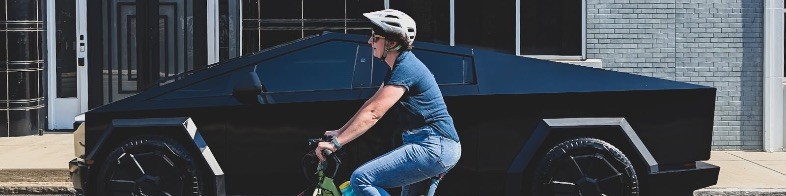
You may have seen Kelsey Huse on her bike. You may have seen her advocating in public meetings for better transportation planning and for safe bikable and walkable streets, or you may have seen her asking the pertinent and insightful questions about MATA at Memphis City Council meetings. Or you may be one of the 13,500 followers on her memphisurbanism Instagram account, where her videos are provocative, energizing, and always on point.
She was recently featured on the outstanding Substack account Jesus Urbanist, whose over-arching philosophy is accurately summed up: “We don’t build cities for human flourishing and we all suffer for it.” At Jesus Urbanist, Rev. 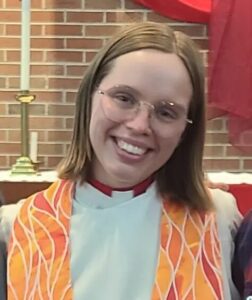
Robin L. Owen connects theology to urban design, housing, public transit, and environmental care. Her essays are generally Nashville-focused but often applies to all cities, Memphis included.
With her permission, I am posting her recent conversation with Ms. Huse, whose sanguine views of Memphis have shaped some definite perceptions about the city that we should all pay attention to.
Here’s the post, Why the Fight for Human-Centered Cities Starts in Memphis, by Robin Owen:
For urbanists, Tennessee, my home state, is a state ripe with possibility, though it’s perhaps not the first one we think of. Like many states in the southern half of the US, Tennessee is seeing a lot of growth. We rank number ten in the population growth rate, and number twelve in the approved new homes per one thousand existing ones.
But not only is Tennessee growing significantly, it’s also a place that is in desperate need of greater density and diversity of homes, urban in-fill, functioning transit systems, and activating spaces for pedestrians and cyclists. Even as it is seeing exciting new growth, Tennessee is the 11th most dangerous state to be a pedestrian, according to Smart Growth America’s recent Dangerous by Design report, and Memphis is the most dangerous metropolitan area for people on foot, with 5.5 deaths per 100,000 residents.
Cities Built for People (All People)
Urbanism, despite how it is sometimes cast, is not a politics of elitism. Its goal is not high-end coffee on every street corner (though I love a good coffee shop), but a political lens that says that cities should be built for people. This means everyone, not just the rich who seek to exclude different forms of housing, and not just for those who move through in cars. But if we want to see successes in states like Tennessee, we have to take the time to understand them.
I’ve sat down with urbanists in Tennessee’s four largest cities – Memphis, Nashville, Chattanooga, and Knoxville – to discuss the place they call home. For the next four weeks, I’ll publish deep dives into each city with people who have been doing the work on the ground to love and improve their city. In each conversation, I wanted to hear the good, the bad, the beautiful, the challenges, the wins.
Jesus Urbanist is a reader-supported publication. Subscribe to get updates about the Tennessee series as they come out.
Today, I’m sharing my conversation with Kelsey Huse, who you might know on Instagram as @memphisurbanist.
I am beginning with Memphis because it has so much to teach us about the state as a whole. If Nashville often dominates conversations about Tennessee’s future, Memphis forces us to confront Tennessee’s present. Questions of racism and segregation, transit, environmental justice, housing quality, and pedestrian safety are not abstract debates here, but realities that have to be dealt with on the ground. None of this even begins to mention the recent disenfranchisement of Memphis, which only amplifies these conversations.
These questions are not limited to our westernmost city, but as our only majority black city, this is the one that we allow ourselves to define by these issues.
About Kelsey
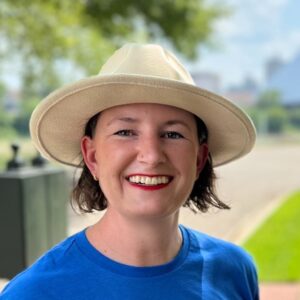
Kelsey Huse
Kelsey Huse is an activist known as “Memphis Urbanism” on Instagram. Her experiences range from fighting the 22-lane freeway expansion and protecting bike lanes in Austin, TX, to advocating for clean air and transportation options and safety in Memphis TN. She is a fierce believer in the power of social media to influence public opinion on housing and transportation and has found success under her Instagram account @memphisurbanism (@buttercreamgang on TikTok). She is a May 2026 graduate from the Masters of City & Regional Planning program at the University of Memphis.
Five Takeaways from My Conversation with Kelsey Huse
- There are Two Memphises.
One of the first things Kelsey emphasized is that Memphis feels intimate despite its size. Neighborhoods are small, relationships are strong, and you’ll often run into people you know. But Memphis also remains profoundly shaped by segregation and disinvestment.
Throughout our conversation, Kelsey returned to the idea that there are often “two Memphises,” one which benefits from greater investment and wealth, and another still living with the consequences of redlining, highway construction, and decades of neglect. Understanding Memphis requires holding both realities together.
- Transit is in crisis.
Every city I interviewed raised concerns about transportation, but Memphis’s challenges stood out.
Bus service suffers from unreliable schedules, routes with extremely long headways, and a lack of stable leadership and funding. Memphis’s transit board is not full and they do not have a full-time director.
While many residents have written transit off as a lost cause, Kelsey reminded me that tens of thousands of people still rely on the system every week. A weak transit system serves to make the lives of the most vulnerable people more difficult (and makes things like traffic worse for everyone else).
- State routes are the most dangerous roads.
Like Nashville, Memphis is crisscrossed by oversized arterial roads that function as barriers between neighborhoods, and these are owned by the Tennessee Department of Transportation. This is true across Tennessee (and the country): the deadliest roads are owned by the state, not local municipalities.
Kelsey pointed repeatedly to roads like Poplar Avenue and Union Avenue—wide, high-speed corridors that make walking, biking, and even everyday neighborhood life more difficult, and are responsible for Memphis’s spot as the most dangerous metropolitan area in the country for pedestrians.
- Memphis offers a different model for neighborhood investment
One theme that surprised me was how often Kelsey spoke about revitalization without displacement.
Places like Cxffeeblack, National Street’s Heights Line, Crosstown Concourse, and the redevelopment of Northside High School all reflect efforts to strengthen neighborhoods while preserving community identity. Memphis’s history makes residents especially sensitive to questions of who benefits from new investment. This tension isn’t unique to Memphis, but the city often seems more willing to name it directly.
- Memphians are hopeful people.
The easiest story to tell about Memphis is one of decline or frustration, but Kelsey didn’t focus on these stories. Instead, I heard about Memphians gathering together to fight pipelines and data centers, cyclists gathering weekly to distribute burritos to the hungry, transit riders advocating for better service, and residents transforming parks and public spaces.
Ultimately, these are acts of hope that things can still change, even when all seems lost. No matter the story we hear in the rest of Tennessee, Memphis remains full of people who believe their city can be better than it is today.
Tom Lee Park in Memphis; Photo by Sean Davis on Unsplash
Our Conversation
Tell me about your relationship to Memphis. Are you from there?
KELSEY HUSE: I actually grew up in Enid, Oklahoma. I’ve lived in Kansas City, Philadelphia, and Austin. In Austin I was involved with Rethink35, fighting the expansion of I-35. That’s where I really started connecting housing, transportation, and urban planning.
When I decided to leave software engineering, I applied to the University of Memphis largely because my sister lived here. Honestly, I didn’t come because I wanted to live in Memphis. I came because I wanted to be near family.
And then I fell in love with the city.
Does Memphis feel like home now?
KELSEY: It does. Memphis is a surprisingly intimate city. I know people at my neighborhood diner. I run into friends almost everywhere I go in Midtown. Community forms quickly here if you show up consistently.
If Memphis were a person, how would you introduce me?
KELSEY: That’s hard because I think there are really two Memphises.
There is Black Memphis and White Memphis, and those communities often experience the city very differently because of decades of disinvestment and segregation.
But if I were introducing someone to Memphis, I’d start at Cxffeeblack. It’s a neighborhood coffee shop that’s become nationally known while remaining deeply committed to the surrounding community. Their whole approach is revitalization without gentrification.
Then I’d take you to the Heights Line, a pedestrian-focused transformation of what was once a streetcar corridor. I’d take you through Overton Park and Crosstown Concourse. Those places tell the story of Memphis: community, creativity, resilience, and people fighting for a better city.
What’s it like to get around Memphis without a car?
KELSEY: Transit is terrible.
Half the time the bus just doesn’t show up to take you back home, and the on time performance monthly hovers in like the high 50s to 60% range, so that means if you ride the bus 10 times a week, it’s only showing up on time six of those times.
If one of those times is the last time the bus is supposed to run at night, you’re stranded, or if it doesn’t show up on a route where it’s only a two-hour frequency, you are stranded for four hours.
The busses’ reputation is so bad here that people have given up, and they think it’s a joke, but 40,000 people a week do ride the bus, and it’s not a joke to them.
What about biking and walking?
KELSEY: Better than people might expect, but still difficult.
The biggest barriers are our major roads. Crossing roads like Poplar or Union can feel dangerous because they are dangerous. I talk to parents who say they would love to let their kids walk to a friend’s house, but they have to cross one of these roads, so they don’t.
What are the biggest urban issues facing Memphis right now?
KELSEY: Transit is a huge one. We’re still cutting service and things aren’t getting better. There’s not a full-time CEO, and there’s not a full board anymore either. So, we’re in the state where there’s not dedicated leadership, and there’s not dedicated funding.
Pedestrian safety is another. Memphis is consistently one of the most dangerous places in America to walk, and I think that’s because of these, mostly the state-owned roads, the stroads, if you will, that’s probably the biggest reason.
Then there’s affordability. People see damaged cars held together with duct tape and assume people are being irresponsible. What I see is families doing everything they can to survive in a place where a car is required for daily life.
And housing isn’t just an affordability issue. It’s also a housing quality issue. We have a problem with affordable, safe, healthy housing, so we have a slumlord problem, we have a code enforcement problem, we have a problem with landlords, and then, because of the poverty issue, a lot of people are evicted, and they can’t get quality housing after that.
How does Memphis’s culture shape its built environment?
KELSEY: Memphis is a sprawling and segregated city.
Like I said earlier, there are two Memphises, in a sense, so the historically disinvested Memphis, or Red Line Memphis. The Red Line Memphis is really still suffering. People in East Memphis who aren’t from those communities don’t step foot in them. There’s not any investment in them, and so then when we have someone like Elon Musk come along who wants to put in a data center. The mayor is so excited, because that means there’s investment in this community for the first time in a long time, but with that investment comes externalities like pollution.
But on the flip side, we’ve seen community investment. For example, North Side Square is a new investment opening soon, and it used to be North Side High School.
North Side High School was the first integrated high school in Memphis. It opened the year before I-40 opened, and as soon as I-40 opened and all of the higher income people left, both middle class black and white people, Northside High School was all black, and the graduating classes just started becoming smaller and smaller and smaller, to the point where they just couldn’t justify having the school anymore.
So that school shut down, and now it’s being reopened as a mixed-use community center, so there will be affordable housing, small business incubators, and health clinics. So it’ll be interesting to see if the community there feels like this is for them or not.
Our population is declining, but the county’s population is not declining as much, so it’s kind of like development is pushed further east. Families move further east when they have children, because that’s where the good schools are, and that really affects us in the city.
In what ways does your city resist change, and in what ways is it open to it?
Even before the data centers, there was the [Byhalia Connection crude oil pipeline project], and that’s how Justin J. Pearson kind of rose to fame. There’s a history of the civil rights movement, resisting environmental racism continued in this project. It’s been hard to make other communities care about that, so that’s kind of the tension between the disinvested community that’s trying to stop bad change, versus East White Memphis that sees it as investment in property tax income and therefore as a good change. How people feel about change depends on where they are in Memphis.
There is this feeling of we can’t have nice things or don’t try to ask for too much, because it’s never going to happen. After decades of not being given what you needed, it’s hard to fight for something, so there is this kind of pervasive, “nothing’s gonna change, nothing’s ever gonna get better, don’t even bother,” — but it’s not everyone.
Tom Lee Park is right on the river. It used to be just this barren landscape, and once a year there would be barbecue fest there, so then people would drive down, park their cars there, do the barbecue fest thing. That’s a very core memory for a lot of Memphians, and they had this huge park plan to change it into a real community space with a park, and now it is a world-class park.
Anytime I’m there, I do see people of all ages, but there is a sect of Memphis that hates this park, and they hate the person who did it because of their feelings of nostalgia for what it used to be. It is a very controlled street now, and can be a little inconvenient, but anytime I’m there, I see all ages of people, all races of people, kids playing basketball, little kids on the playground
It’s like this park is used every single day by so many people, and something that Memphis loves to complain about is like the kids need something to do — the kids are bored, kids need to be doing something after school. Every time I’m at that park, they’re there playing basketball, they’re there playing in the park.
What’s one small change that could make a big difference?
KELSEY: Lower speeds.
We need to stop designing roads solely around how fast people are already driving. Speed kills. If we want safer streets, we need road designs and policies that prioritize people over vehicle throughput.
Something that I want to see happen is allowing speed limits to be lower than the 85th percentile. In Memphis 3.0 [the strategic plan for the city], part of that is changing the road typology, and so a lot of our big roads — especially state-owned roads — are classified as arterials, but they don’t function as that. They’re also these neighborhood streets that have a lot of businesses and so trying to classify those as connector roads and places where pedestrians should be prioritized, I think will make a big difference.
What do you hope Memphis looks like in ten years?
KELSEY: I want fewer oversized roads, more protected bike infrastructure, lower traffic fatalities, and a transit system that’s actually healthy and reliable.
Right now we’re trying to maintain more road infrastructure than we can realistically support, and so I’d like to see [fewer total miles of paved roads]. I’d rather see us invest in streets that work for people.
Lightning Round: Memphis in Five Questions
What is your favorite street in Memphis?
KELSEY: Madison Avenue, especially around Overton Square.
It’s not even a perfect street design, but it feels comfortable because everything is compressed together. There are businesses, parking, bike lanes, people walking around. Cars naturally move slower because the street feels active.
I was just there recently to see The Devil Wears Prada at the theater, and afterward we walked to a nearby bar. That’s the kind of experience I want more of: being able to park once—or not park at all—and spend the evening moving around on foot.
What’s the best third place in Memphis?
KELSEY: Cxffeeblack (Coffee Black).
It’s great because it works on multiple levels. You can schedule a meeting there. You can sit by yourself and read. You can strike up a conversation with someone at the counter.
It’s deeply connected to the neighborhood while also drawing people from across the city.
What’s the most underrated neighborhood in Memphis?
KELSEY: Uptown.
It’s just north of Downtown near St. Jude, and there are some really exciting things happening there.
One project I love is Malone Park Commons, developed by Andre Jones. It’s the first cottage-court style development built in Memphis since World War II. The homes are beautiful—duplexes, quadplexes, smaller-scale housing that fits naturally into the neighborhood.
The challenge is that Uptown still carries a reputation that scares some people away. But there are new businesses opening, breweries, local shops, and a lot of thoughtful investment happening there. It’s one of the places where Memphis is trying to revitalize without displacement.
What’s something Memphis needs that doesn’t exist yet?
KELSEY: A public swimming hole.
I know that sounds random, but I’m serious.
I moved here from Austin, where you have places like Barton Springs and other public swimming spaces that are affordable and open to everyone. Memphis has very few public pools and almost no equivalent gathering spaces around water.
I’d love to see a safe, public, low-cost place where anyone could cool off during the summer.
What do you want Memphis to look like ten years from now?
KELSEY: Fewer roads.
Or maybe more accurately, fewer lane miles.
We have more road infrastructure than we can maintain. The potholes are everywhere. The roads are dangerous for pedestrians and often unpleasant for drivers too.
I’d like to see fewer oversized roads, more protected bike infrastructure, lower traffic deaths, and a transit system that’s healthy and reliable.
If we can make progress on those things, Memphis will be a much stronger city.
***
Join us at the Smart City Memphis Facebook page and on Instagram where these blog posts are published along with occasional articles, reports, and commentaries that are relevant to Memphis.




Thanks for highlighting me, Tom! I greatly appreciate it.