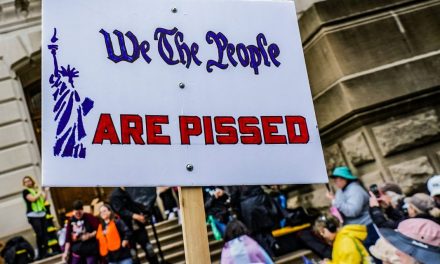
Later this year, in December, Protect Our Aquifer will celebrate the 10th anniversary of its formation.
Although the purpose was to create an organization, it did in fact create a movement.
From its roots to halt new deep wells that would cool the TVA’s new gas-fired Allen Combined Cycle power plant, Protect Our Aquifer has become a reliable, authoritative source of facts and a respected voice expanding knowledge of the crucial role that our water source plays in our economy and quality of life, but most of all, in our future.
While Protect Our Aquifer won the TVA issue, its role as a watchdog remains just as important today as questions arise about whether xAI will build the water recycling facility it promised in the face of deep public concerns about its impact on the aquifer.
It’s that motivation to preserve and protect our most important natural resource – exceptionally clean, abundant, and naturally filtered water – that should rally all of us to support Protect Our Aquifer’s mission.
Water has routinely been taken for granted here, and it’s an attitude that Protect Our Aquifer set out to remedy by focusing attention on the importance – and the threats – to the Memphis Sand Aquifer, a vast underground reservoir that has sustained generations of Memphians’ homes and businesses.
We all grew up knowing one fact about water: 100% of our drinking water came from artesian wells, but we were lacking any sense of urgency about protecting it.
Setting Off Alarms
Led by highly capable executive director Sarah Houston and founder Ward Archer, and a committed board, Protect Our Aquifer is not driven by abstract environmentalism. It is grounded in a growing body of evidence that the aquifer is far more vulnerable than previously believed – and that Memphis has been operating without a coherent, long-term plan to protect it.
That reality was brought into sharp focus by recent reporting by the Institute for Public Service Reporting, which highlighted a sweeping new proposal known as “The Blue Print,” developed by Protect Our Aquifer.
The central message of that report is as stark as it is sobering: Memphis’s most precious natural resource is effectively unmanaged.
For a city that depends entirely on groundwater, that was an alarming fact. It is what makes Memphis and the Memphis region unlike any other large metropolitan area. We do not rely on rivers or reservoirs. Instead, hundreds of millions of gallons of water come every day from the aquifer.
Risks To Our Most Precious Natural Resource
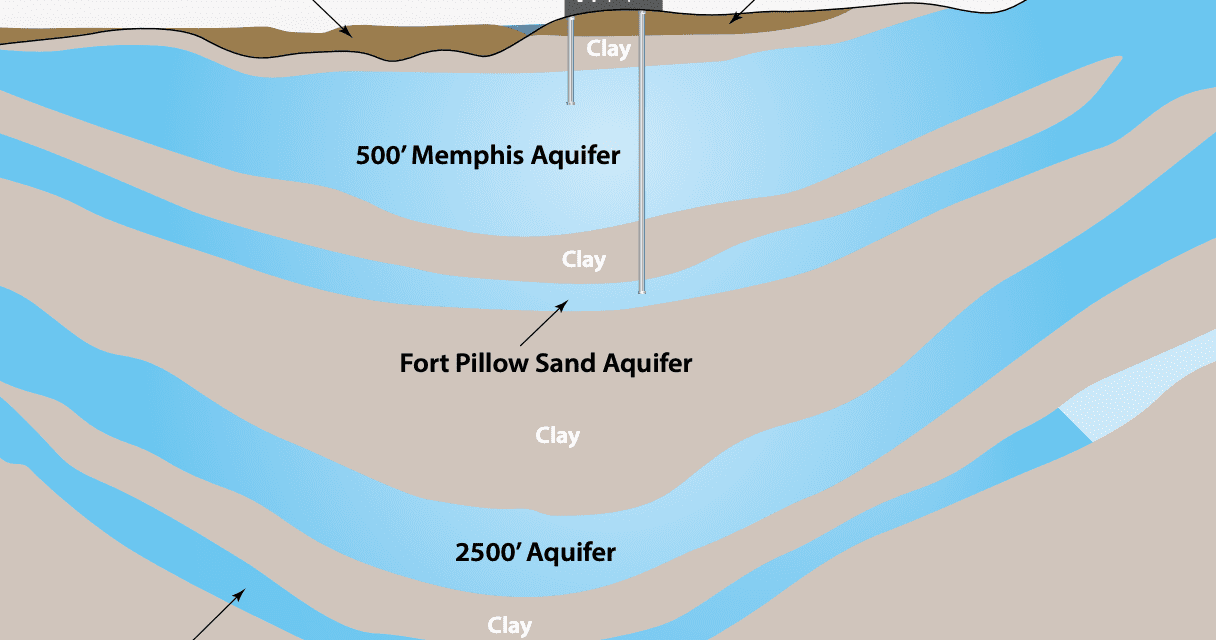
The Blue Print lays out, in unprecedented detail, the threats facing the aquifer, including the protective clay layer that shields it. Once thought to be rare, these breaches are far more widespread. A recent scientific study confirmed multiple existing breaches and identified dozens more suspected weak points, allowing younger, potentially contaminated water to seep into the ancient, high-quality groundwater below.
That finding alone should change how Memphis thinks about its water. The long-held assumption that the aquifer is naturally protected is no longer sufficient. Yes, it is protected – but it is not impenetrable.
Compounding this risk are roughly 200 known contamination sites, including federally designated Superfund locations. These sites, along with leaking underground storage tanks, industrial spills, and legacy pollution from past practices, represent ongoing threats. When combined with breaches in the aquifer’s protective layers, they create pathways for contamination that were not fully understood even a decade ago when Protect Our Aquifer was established.
Equally troubling is the issue of overuse. The aquifer is not an infinite resource. It is replenished slowly through rainfall in what is known as the recharge zone – porous land where water seeps through the soil into the aquifer. But as development spreads and more land is covered by pavement and rooftops, that natural recharge process is disrupted.
At the same time, heavy pumping can create what scientists call a “cone of depression,” lowering water levels and potentially pulling contaminated water downward into the aquifer.
Falling Short
In other words, Memphis is putting pressure on both sides of the equation: reducing supply while increasing demand.
What’s most striking in the Blue Print are not just the threats, but the lack of a coordinated response to them.
Despite decades of awareness and even the creation of a Shelby County Groundwater Board in the 1980s, there is still no comprehensive groundwater protection plan in place. Oversight is fragmented across agencies, data is incomplete or poorly managed, and monitoring is inconsistent. The result: a patchwork system that falls short of what is needed to protect a resource of this magnitude.
The purpose of the Blue Print is to change that. It has been presented to the Groundwater Board and to MLGW. It is a call to action. It calls for the first comprehensive, long-range groundwater protection plan in Memphis history – one that treats the aquifer as the foundation of the region’s economy, health, and future.
Among its recommendations are expanded geological mapping to identify vulnerable areas, more consistent and widespread water quality sampling, improved data management systems, and the establishment of clear protections around wellheads and recharge zones.
Wanted: Smarter Development
These may sound like technical fixes, but they represent something much larger: a shift from passive reliance to active management.
And that shift is exactly what the Protect Our Aquifer movement is demanding. It is a recognition that Memphis can no longer afford to assume that its water will remain clean simply because it always has been that way. The conditions that allowed for that assumption – lower industrial demand, less development pressure, and limited scientific understanding – no longer exist.
The movement also highlights a deeper tension in how Memphis approaches growth. For years, economic development has regularly been pursued without fully accounting for environmental costs.
The aquifer challenges that approach. It forces the city to confront a fundamental question: What is the value of growth if it compromises the very resource that makes growth possible?
This is not an argument against development. It is an argument for something our community has never emphasized – smarter development.
Industries with reliance on water will continue to be part of Memphis’s economy, but they must operate within a framework that ensures long-term sustainability. That means stricter oversight, better data, and a willingness to say no when risks outweigh benefits.
It should also mean that Memphis Light, Gas & Water should no longer sell water at a discounted rate to large industries.
It’s a Miracle
Here’s the thing: the economic case for protecting the aquifer is as compelling as the environmental one. Memphis’s water has long been a competitive advantage, attracting businesses that depend on high-quality, low-cost supply.
Then, too, there’s public health. If contamination occurred, the consequences would not be evenly distributed and would fall hardest on vulnerable communities.
In the end, the Protect Our Aquifer movement is about more than environmental protection. It is about equity, governance, and long-term thinking. It is about recognizing that decisions made today – about zoning, industrial permits, water use, and regulatory enforcement – will shape the city’s future in ways that cannot easily be undone.
Most of all, this requires a change in mindset. Memphis must move from thinking of the aquifer as something it has to something it manages. That shift – from passive beneficiary to active stewardship – is the essence of the Protect Our Aquifer movement.
At the opening ceremonies of Tom Lee Park, in an inter-faith blessing for peace and healing, water from the Memphis Aquifer, from the Jordan River, and from Lourdes was poured over the outstretched hand of the Tom Lee statue by his great-great-great niece. It was a powerful reordering in the way we see our aquifer because like the others, it too is miraculous.
***
Join us at the Smart City Memphis Facebook page and on Instagram for daily articles, reports, and commentaries that are relevant to Memphis.