
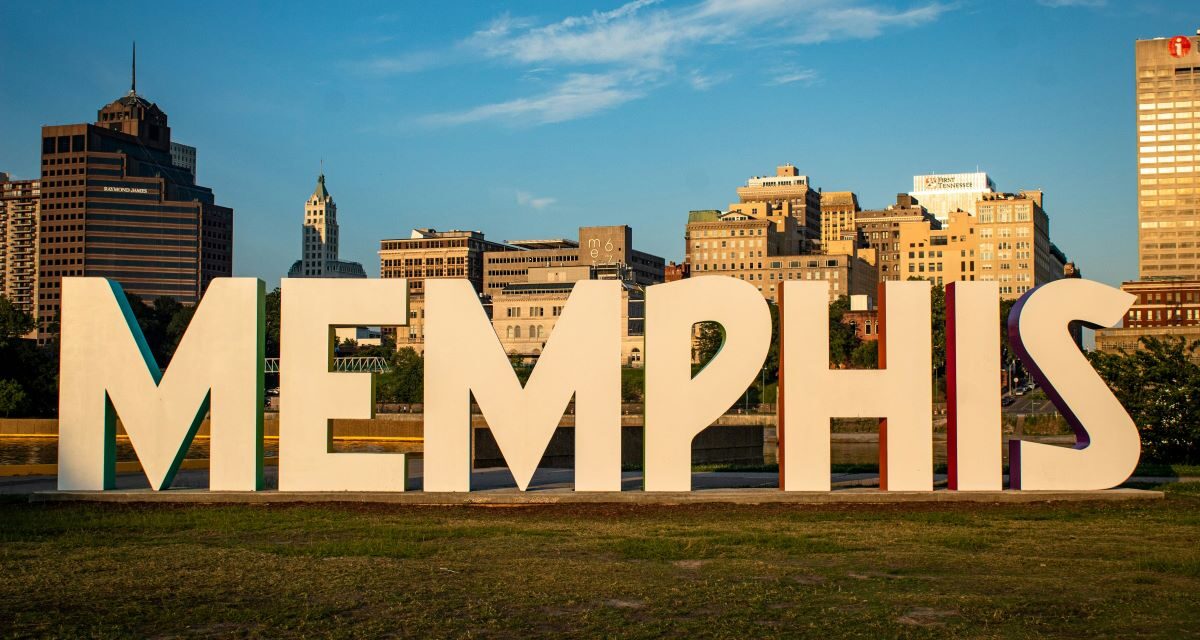
Memphis needs a vision. Particularly one about the future.
Without it, Memphis often finds itself reacting rather than leading. It chases projects rather than acting on a shared vision. It celebrates announcements rather than measuring outcomes. It focuses on individual initiatives while struggling to connect them into an overriding purpose.
This is why Memphis needs more than strategic plans. The city has produced plenty of them over the years. Some have been good. Some generated worthwhile projects. But many sit on shelves gathering dust because they fail to capture the imagination of Memphis and they fail to tell a story about the future.
Stories capture imagination. Stories create emotional commitment. Stories help people see themselves as part of something bigger. The story of Memphis’ future cannot be written by a small group of insiders or usual suspects.
It needs a broad coalition that reflects the diversity, aspirations, and creativity of the entire city. Perhaps the greatest opportunity now is to build a new civic culture – one that values collaboration over division and shared outcomes over organizational turf.
Memphis’s Best Version
The story Memphis needs is not about becoming Nashville. It is not about becoming Austin. It is not about becoming anyone else. The story about Memphis is about it becoming the best version of itself.
A city where opportunity is not determined by ZIP code. A city that attracts talent because people believe they can thrive here. A city where economic growth is widely shared. A city that embraces innovation while honoring its heritage. A city that believes its future can be greater than its past.
It’s not that we don’t have meetings. Business leaders gather. Public officials gather. Civic veterans gather. Someone invokes urgency. Someone else says this is a pivotal moment. The meeting ends with cautious optimism and a promise to continue the conversation while often the good intentions fade away.
The people who will live with the consequences of today’s decisions are still too often on the margins of the conversations that shape those decisions.
No Shortage of Young Leaders
Memphis does not have a shortage of young leadership. It has a shortage of young leadership in the rooms where the city’s priorities and plans are actually being written.
They are needed there not because it is the thing to do, not because every organization needs a millennial or Gen Z representative for appearances, but because Memphis has reached a point where experience alone is no longer enough.
The city is confronting three defining challenges simultaneously: persistent poverty, continuing population loss, and an economy that has not generated enough opportunity for enough people. Those problems are interconnected, and they will not be solved by simply revisiting and refining the strategies of the last 20 years.
We’ve already proven they don’t work.
Memphis has better odds of reinventing itself when a new generation begins to shape not just the implementation of ideas, but the ideas themselves.
Memphis has arrived at that moment.
Mainstreaming Young Leaders
Memphis has an impressive reservoir of young adults passionate about the city’s future. They are opening businesses in neighborhoods that others overlook. They are creating public spaces where community blossoms. They are organizing around issues like transit, housing, education, sustainability, and entrepreneurship.
They are putting down roots and even raising families when many of their peers have left. They have chosen Memphis intentionally, not accidentally. And yet too many of them tell the same story: they are invited to react to plans after they have been drafted rather than helping draft the plans in the first place.
Real leadership means sharing authority, not just seeking feedback.
One of Memphis’ recurring weaknesses has been that our civic decision-making remains concentrated among a relatively small circle of institutions and individuals. Many of these leaders have served the city with dedication. This is not an argument for pushing anyone aside.
It is an argument for widening the circle.
Tapping Into Unique Understandings
The most successful organizations do not wait for a leadership vacuum before developing their next generation. They purposefully create opportunities for emerging leaders to exercise real responsibility while experienced leaders remain engaged as mentors, partners, and institutional memory.
Memphis should be no different.
Every major civic initiative in Memphis should include meaningful leadership roles for people in their twenties, thirties, and early forties. Not symbolic seats. Not advisory committees that meet after the important decisions have been made. Equal partnership in setting priorities, allocating resources, and defining success.
Why? Because they understand the competition in ways that older generations often do not.
They know why graduates choose Nashville. They know why entrepreneurs move to Austin or Raleigh. They know what their friends say about Charlotte, Denver, Indianapolis, and other cities competing for the same talent. They understand what makes a city attractive because they are the very people every city in America is trying to attract and retain.
If Memphis wants to stop exporting talent, it should listen carefully to the people who have consciously chosen to stay. They also understand something equally important: Memphis’ strengths.
Power-sharing Begins Here
Younger Memphians are often portrayed as critics, but actually, most of them are the city’s strongest believers. They celebrate its authenticity, its neighborhoods, its affordability, its cultural richness, its entrepreneurial spirit, and its refusal to become a generic Sun Belt clone.
They do not want Memphis to become another Nashville. They want Memphis to become a more successful Memphis.
Memphis today has no margin for error.
Population loss is not just a demographic statistic: It is a fiscal challenge, a workforce challenge, a housing challenge, and ultimately a confidence challenge. Every talented young person who leaves Memphis represents not only a lost resident but a lost entrepreneur, teacher, engineer, artist, physician, civic volunteer, or future mayor.
We spend energy asking how to attract young talent from elsewhere – and we should – but we should spend even more energy asking how to share power with the extraordinary young talent already here.
Power is not a networking reception. Power is not a photo on a committee announcement. Power is the ability to influence what gets funded, what gets built, what gets prioritized, and what story the city tells about itself.
It’s More Than Inheriting A City
Speaking from a Boomer platform, it seems that younger civic leaders’ networks are generally less hierarchical and more collaborative. They are accustomed to working across disciplines, forming partnerships quickly, and using technology and social networks to mobilize people around specific goals.
That style of leadership is increasingly how successful cities operate. Memphis needs that energy at the center, not the periphery.
Here’s the point: Every generation inherits a city. Every generation also has the opportunity to reshape it.
Today’s young Memphians did not create many of the structural challenges that define Memphis but they will inherit responsibility for solving them. It is only logical that they become much more prominent in deciding what comes next.
The future cannot be designed solely by people whose careers were shaped by yesterday’s economy. It must also be designed by people whose careers and whose lives will be shaped by tomorrow’s.
Memphis cannot afford to ask its next generation merely to inherit the city. It must invite them to lead it.
***
Join us at the Smart City Memphis Facebook page and on Instagram where these blog posts are published along with occasional articles, reports, and commentaries that are relevant to Memphis.




One of your best! I’ve been thinking about this more and more. Especially as I serve on the Public Advisory Board regarding property tax from xAI, I do not know what the vision is. I keep asking people, and they don’t know either. Memphis needs a vision!!