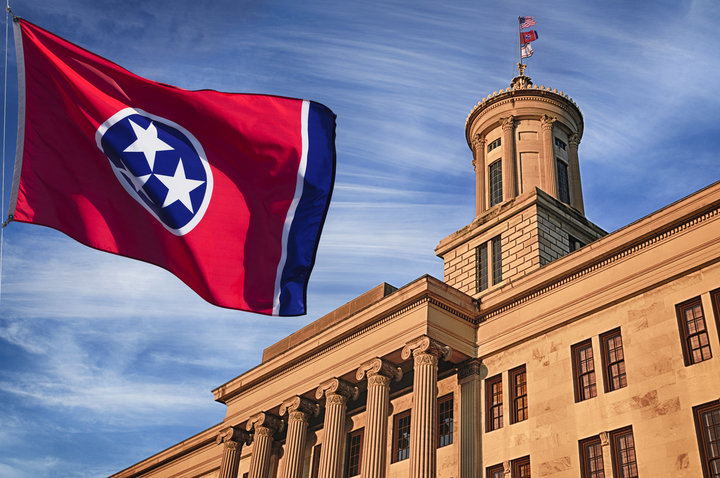
There is a narcissistic brand of arrogance that flourishes in the supermajority in the Tennessee capitol, a smug certainty that they are always right.
They come from Podunk towns across Tennessee and once they gather in Nashville, the lawmakers convince themselves that they understand the complex realities of the state’s major cities, which many of them have never visited.
In Tennessee, their arrogance is no longer subtle or occasional. It is legislative doctrine.
When you think of examples of operational excellence, here’s betting state government doesn’t make your list. After all, there are the close to 200 deaths each year in Tennessee’s prisons, there’s the condition of state roads, and that’s not even mentioning the complete failure of the special school district it set up to improve student performance in Memphis.
Then, consider the latest big idea from Nashville: the urge to seize control of locally governed airports in the state’s major cities. On paper, it is dressed up in the language of efficiency and oversight. In practice, it is something far more familiar – state politicians inserting themselves into functioning systems they neither built nor meaningfully support or understand, all while pretending to rescue them.
Does It Ever Stop?
City airports, including Memphis International Airport, are not theoretical constructs. They are economic engines, logistical ecosystems, and, in many cases, among the most competently managed public assets in our region.
They succeed precisely because they are governed locally, responsive to regional business needs, local travel patterns, and local economic strategies. It is a major driver of our regional economy and the proposed interference by Republican legislators carries the risk of devastating not only the airport’s economic impact but the overall economies of Memphis and Nashville, which are crucial engines of the Tennessee economy. In this way, the idea that they could contribute to the operations of these airports is not just ill-advised; it defies common sense.
Just consider that this big idea comes from a legislator from a town of 5,000, and he presumes that he can tell MEM – which is home base to FedEx, one of the two largest employers in Tennessee – what it can do better.
But insult is the point. This is about power, not performance.
This is not about smart policy. It is about political theater.
This not based on the advice of airport experts. It is driven by unbridled egos and MAGA delusions.
Their Record Is One Of Failure
The same legislature that shows little appetite for addressing the structural challenges Memphis faces suddenly discovers a deep concern for “oversight” when it comes to assets that generate revenue and influence. The rhetoric is managerial; the motive is control.
And it is not happening in isolation.
At the very moment state lawmakers are reaching for control over city assets, they are also doubling down on policies that make those same cities less safe. Tennessee has, in recent years, enthusiastically passed some of the loosest gun laws in the country, often under the banner of freedom. The result has not been a flowering of liberty but a steady erosion of public safety in Memphis as gun crimes soared.
The legislature’s approach to guns operates as a kind of willful self-hypnosis.
It treats firearms as symbols in an ideological debate rather than with measurable, devastating impacts.
They live in denial. They refuse to see the simple logic: When laws are loosened, when permit requirements are stripped away, when training standards are minimized, when access expands without corresponding safeguards, the result is predictable.
And yet, the Republican supermajority sees the answer to too many guns as more guns.
They Listen To Each Other And Think It’s Brilliance
Governing from inside an echo chamber of political talking points where reality gains no entry, they don’t see the emergency room with gun victims, they don’t see police who approach every event with trepidations or see the families burying loved ones.
The legislators’ response is never introspection but escalation. Each new incident is met with deflection, as if acknowledging the consequences of their bad policy choices would be a political defeat.
It is governance by stubbornness, a refusal to connect cause and effect when the connection is politically inconvenient.
And while Memphis absorbs the fallout – while city officials, police chiefs, and community organizations struggle to manage the consequences – the same lawmakers who loosened the laws turn around and suggest those cities are incapable of governing themselves.
It is a perverse political deception: create the conditions for instability, then cite that instability as justification for intervention.
Proposed Immigration Laws From Steven Miller
The pattern extends further still, into the legislature’s approach to immigration, where policy has drifted from enforcement into something closer to performance art—highly visible, rhetorically charged, and often aimed at the most vulnerable among us.
In recent months, Tennessee lawmakers have entertained and advanced a slate of proposals that were recommended from the playbook of Stephen Miller, whose policy is less about effectiveness than provocation, and whose reputation for cruelty makes him one of the most disliked actors in modern American politics.
Reports and advocacy analyses point to at least seven to 10 distinct legislative efforts in Tennessee that echo or align with Miller’s approach. One proposal restricts access to public education or imposes additional documentation burdens on immigrant children, effectively turning classrooms into checkpoints. Another proposal blurs the line between community policing and immigration enforcement.
Then there is also legislation to limit access some public benefits for undocumented families, including program affecting children’s health. Then, there is the proposal to expand penalties around immigration-related violations, often without clear evidence that such escalation improves compliance or outcomes.
The language of the bills is revealing. It is not the language of careful, nuanced policy. It is the belligerent language of invasion, of threat, of political siege. It transforms children into symbols and families into abstractions, stripping away any notion that it’s about living, breathing human beings.
There is a grim efficiency to this approach. By focusing on those with the least political power – children, undocumented families, newcomers without established networks – the people most affected are also the least able to influence the system imposing those effects.
Legislators’ Bullies Pulpits
But the long-term consequences are not confined to those communities. Policies that stigmatize, exclude, and destabilize immigrant families ripple throughout the region. They affect schools, where educators must navigate the fear and uncertainty. They affect the local economy, which depend on immigrant labor and entrepreneurship. They affect the social fabric of Memphis prides itself on diversity as a source of resilience and growth.
And they affect the moral standing of the state itself.
A legislature that targets children – whether directly or through policies that undermine their stability – reveals something fundamental about its priorities. It is not simply choosing one policy path over another. It is acting as a bully deciding whose well-being counts and whose does not.
In the legislature’s context, Memphis is not a partner but a problem, and immigrant families become convenient targets, their complexity reduced to slogans that fit neatly into MAGA and Miller messaging.
It would be one thing if this approach produced results. But that is not what we see.
And through it all, we see a legislature that appears less interested in governing effectively than in asserting authority and acting on their considerable self-centered, self-promoting warped, cynical notions of good governance.
***
Join us at the Smart City Memphis Facebook page and on Instagram for daily articles, reports, and commentaries that are relevant to Memphis.