
Everybody wants government to be more businesslike until it comes to their special interest.
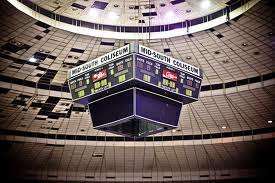
The emerging example appears to be the Mid-South Coliseum, a building lacking any purpose that makes economic or historical sense. However, that won’t deter some preservationists from trying to start a “Save the Mid-South Coliseum” effort, begging the seminal question: saving it for what?
It’s not enough to have fond memories of concerts in the Coliseum. It’s not enough to have the feeling that the building still has some functional purpose. It is not enough to have the vague notion that the building can make money.
Any organization making the claim that the building should be saved should produce a business plan and market study that justifies it. It’s those real-life challenges that lead us to predict that the Coliseum has no future and that it should be razed to clear a canvas for redevelopment of the former Fairgrounds site.
A High Price to Pay
It would be hard in the best of times to come up with a case that makes sense for city government to sink tens of millions of dollars into the Coliseum, but with the grim budgetary realities gripping City of Memphis government for the foreseeable future, it’s unlikely that a government that can’t come up with $7 million for a needed, modern 911 center can come up with the money needed to bring the Coliseum up to the standards of the Americans for Disabilities Act, to address the building’s sizable maintenance needs, and to restore the building – from a ceiling falling in to broken bathrooms to broken tile – to a level where it is usable by the public.
We love the Coliseum. We saw some of the most incredible, emotionally-charged Memphis State basketball games in history there and we saw memorable concerts by the Beatles and the Rolling Stones, to name only a couple. However, nostalgia is a tenuous justification for saving the building and it falls well short of the serious analysis that is needed by anyone proposing that the building should be reopened.
There are those who say that the Coliseum can be brought up to operable standards for about $10 million. Don’t believe it. Studies of the building dating back more than a decade show that the cost is three to four times higher. To put that in context, it’s at least 50% more than the city’s incentive for Electrolux, and that investment will create more than 3,000 jobs.
Unfortunately, because of the structural construction of the Coliseum, it is not practical to reduce its capacity to a more manageable and market-useful size, say, 4,000 seats. Years ago, city and county governments (before county deeded over the building to the city) was interested in rightsizing the building for a possible future but it was found to be incredibly costly because in the end, because of the way the building was designed and constructed, the building would essentially have to be rebuilt.
The Wrong Size at the Wrong Time
Fast forward to now. The prohibitive costs of getting the building up to par, City Council has been told, is the reason that a new, multi-purpose building sized for graduations and sporting events makes more sense at the Fairgrounds. Based on the market studies by the city’s sport consultant, there isn’t a market for a building the size of the Coliseum and more to the point, the cost of opening an 11,000-seat building when events regularly need only 3,000 seats blows a hole in any business plan for making the building turn a profit.
After all, if there is a concert or event that can draw 7,000 to 11,000 people, FedEx Forum, invoking its right of first refusal from its non-compete agreement, would hold them there. For an arena with 11,000 seats, the business model has to be built on concerts.
For example, one sold-out concert in The Pyramid produced more revenue than all of the University of Memphis’ basketball gamed combined. There’s no reason to ever think that the Grizzlies ownership, in control of FedEx Forum, is going to let another venue regularly host events of that size, and it shouldn’t anyway, because it’s in the city’s interest for FedEx Forum to be as successful as possible to general the dedicated revenue streams to pay back the bonds.
Then, there is the issue that the Coliseum’s place on the National Register of Historic Places. This designation does not prevent city government from razing the building, but more to the point, it was a designation accomplished by a runaway Coliseum board that was doing everything to throw obstacles up to prevent the closing of the building after the opening of The Pyramid.
The Spiral
Neither city nor county government favored the historic designation in 2000 and opposed the Board’s application for the historic designation. The governments’ move to close the Coliseum would take six years, because the Coliseum board had a reserve fund that it drained to keep its doors open following the opening of The Pyramid.
More serious was the fact that the Coliseum board decided to go head-to-head and compete against The Pyramid for business, and in the process, it drove down the revenues of the new arena – which had to recoup the most revenues possible to pay its considerable overhead – by undercutting the rental rate for The Pyramid.
Only when the reserve funds were spent and city and county governments (county owned 40% and city owned 60%) were faced with subsidizing the building was it clear that the Coliseum’s days were numbered. There was no realistic use for the building and no budget to fix its many problems. From the time The Pyramid opened, city and county governments wanted to shut down the building and demolish it. Finally, in 2006, the Coliseum closed.
Since 2000, government has favored the razing of the Coliseum, and it takes on new importance with opportunity for new sporting venues and retail stores on the site, and since the redevelopment costs are being paid by the rebated state sales tax allowed by the Tennessee Tourism Development Zone, there is the imperative to maximize revenues as much as possible. It seems impossible to us that a renovated Coliseum could come close to producing an amount that even approaches the revenues from new venues on the same sight.
Love Isn’t a Business Plan
But even if there wasn’t a plan for a new sports-oriented neighborhood at the Fairgrounds, we’d still say it’s time to take down the Coliseum. In fact, we’ve said it for more than five years. The building is slowly deteriorating and the acres of asphalt are nothing but an eyesore.
While some claim that the Coliseum should be preserved because of its historic connections to Elvis, we think it’s more historic for being the building that led The Beatles to give up touring altogether. There no denying that the building had the best acoustics of any concert venue ever built in Memphis. It’s also true that no other building of its kind ever measured up to the Coliseum’s designs as shown in finishes like its terrazzo floors.
And yet, that still doesn’t convince us that the Coliseum should be saved. Already, city government seems to have preserved older and more historic buildings on the Fairgrounds site and preserved and improved the monuments that now stand at the entrance to the unartfully-named Tiger Lane. The old Libertyland Carousel has been crated up, waiting for the day when it will be restored and reassembled.
At this point, Memphis Heritage has not taken a position on the Coliseum, and in recent years, under the leadership of June West, the organization has found broader influence and support. It’s why we regularly find ourselves on the same side of issues with Memphis Heritage these days as it finds the right balance for its best results and effectiveness.
Flexibility and Economic Vitality
To quote an article we posted Friday: “Of all the design disciplines, historic preservation is perhaps the most misunderstood. While it’s widely accepted that architects design our buildings, and planners organize our cities, the role of preservationists merits less appreciation. Popular culture abounds with clichés of the preservation zealot – there’s the gray-haired old lady laying herself down in front of an oncoming bulldozer, the guy dedicated to rescuing decrepit buildings and saving historical artifacts, and the Not-In-My-Back-Yard types preventing economic development at every turn.
“But perhaps we’ve been too hard on historic preservation. While those stereotypes do exist, many working in the profession today imbue the preservation process with flexibility and economic vitality.”
At the end of the day, flexibility and economic vitality make the decision on the Mid-South Coliseum pretty clear: there’s no basis on which to “save” a building with no useful future or a past that merits preservation.



If I had my way, I would tear this old building down.
No point in saving the Coliseum. For what? HIgh school graduations?
roller derby?
Three is not a lucky number if you are counting large indoor venues in Memphis. One, Fed Ex Forum new and controlled by a contract with a private party not in City’s best interest. Two, Pyramid empty, still almost new, and killed by the Fed Ex forum contract. Three, the Coliseum, just plain dead. Bury it. Sorry, I have lived here all my life, I love the coliseum, had a lot of good times there, but all things change. Unless somebody wants to buy it and run it, raze it and let us remember the good times. Larry
The gusto I’ve seen from Memphis to tear down a building that, if nothing else, fills our ever-formless city, frightens me. Without a plan for its replacement and capital for its demolition, what does it matter to leave it alone?
If someone comes up with a great plan to re-use, so be it. If someone comes up with a great plan to replace it, so be it. At this point, Robert Lipscomb’s urban village and Jerry Lawler’s Wrestling Museum are both world-class unicorns. Nobody has a business plan.
In the meantime, we do have the Coliseum’s sleek curves to look at. Maybe they’ll disappear in a few years. If so let’s hope they morph into the rooflines of cottages and apartment buildings providing beauty and taxes to Memphis, rather than one more speculative brownfield lying fallow for decades because Memphis couldn’t wait to destroy.
GatesofMemphis:
The urban village plan does have a business plan. I prefer to see the green space now at the site of Libertyland and think it should be extended as far east as possible without Coliseum. It wouldn’t be a brownfield. It would be a greenfield, and if nothing ever happens on the site, I’d rather look at the green than an old building falling in on itself.
It’s up to the people crying to save it to come up with a business plan. My money’s on them failing.
Frank: You’re right. The city aka Robert Lipscomb has presented a business plan, layout, design concepts, etc., to City Council and others. Also, the city plans to issue an RFP for developers in the coming weeks and we’ve been told that they already are receiving calls about it. If it’s to lie fallow, let’s at least look at trees and parkland rather than acres of asphalt and another Sterick Building.
Frank, nobody’s crying. It’s fun to imagine people with different ideas having clown-like constitutions, but it’s not true.
SCM, do you have a link to the business plan? If the RFPs are about to happen then what I asked for (something!) is also about to happen.
But, making a case for nothing! via the gorgeous Sterick Building isn’t making your case. Or do you reject Jeff Speck’s modest suggestion to Memphis, (see http://www.mrdcinfo.org/programs/jeff-speck/jeff-speck-audio/): “don’t just do something, let it sit there”?
We hope it goes without saying, but we’ll say it anyway. gatesofmemphis is one of the best, most thoughtful blogs in Memphis, so we respect his opinion and welcome his comments.
We’ll try to find a link to the business plan. Or we’ll see if we can get a digital copy of it. And yes, we’re with you: let’s do something.
We hear you on the Sterick Building, but it sure gets tiring telling people that it’s empty and there are no plans for anything except for it to sink under its own weight. Now that’s a building we could get excited about saving, but we’ve probably let it get too far gone.