Smart City Memphis
 

Sign up or Login

Law and Order Dilemma: Who Checks The Prosecutors?

by Smart City Memphis (RSS) | July 22nd, 2006 5:22pm CST

We’ve written before about the need for nonpolitical prosecutors whose actions have no place for ego or self-promotion or special rules for special people. In light of the election of the district attorney general in the election in about 10 days and the recent appointment of a new U.S. attorney, the following column by national syndicated columnist Neal Peirce seemed especially timely:

With a recent uptick in crime, tough prosecutors who are ready to convict and imprison perpetrators are likely to be more popular than ever.

But a warning flag is being hoisted by American University law professor Angela J. Davis, past director of the District of Columbia Public Defender Service (and no relation to the more famed liberal activist Angela Y. Davis).

Prosecutors, notes Davis, are “the most powerful officials in the criminal justice system” — more so even than judges. Why? “The charging and plea bargaining power they exercise almost predetermines the outcome of most criminal cases. Over 95 percent of all criminal cases are resolved by a guilty plea.”

Consider a person arrested for having a quantity of drugs on them. Depending on the amount, the prosecutor can charge simple possession (a misdemeanor), or possession with intent to distribute (a felony which in most jurisdictions means a mandatory prison sentence). So it’s the prosecutor, through his charge and plea bargaining powers, who really decides prison time (and most likely a wrecked life) for the defendant, or not.

The most serious system-wide issue, argues Davis in her forthcoming book, “Arbitrary Justice: The Power of the American Prosecutor,” isn’t the isolated, fairly rare case of a prosecutor coercing witnesses, fabricating evidence, or consciously targeting racial minorities.

Rather, it’s the lack of controls on, or accountability for, the every-day decisions of prosecutors. Their legal responsibility isn’t just to represent the state in seeking convictions; it’s to pursue justice. But too often, Davis asserts, prosecutors exercise their discretion “haphazardly at worst and arbitrarily at best, resulting in inequitable treatment of both victims and defendants.”

There’s the “win-win-win” ethos in many prosecutors’ offices — elected prosecutors and their staffs out to show how tough they are on crime, or how eager to impose death penalties in heinous cases (especially when there’s strong media interest, or photogenic victims). Sometimes prosecutors overcharge grossly so they can wring heavier plea bargains out of defendants. Or adopt a “don’t ask, don’t tell” policy toward potential police abuses in the arresting phrase.

Views on class and race, even unconsciously, lead prosecutors to make shoot-from-the-hip decisions easily at odds with true justice, Davis asserts: “I saw it all the time in the D.C. system. A rich kid comes in (though few are arrested) with parents and family lawyer, explaining ‘Little Johnny has a drug problem and let’s put him in a program, not lock him up.’ The prosecutor usually agrees. But a poor, black or Latino kid comes in on a parallel drug case, maybe with a public defender, and the prosecutor figures — ‘I can’t let you back into the neighborhood, I’ll send you to jail.’”

Davis also pinpoints how appointed U.S. Attorneys, pursuing the country’s “war on drugs,” have focused relentlessly on convicting and incarcerating even small-time neighborhood drug dealers and their girlfriends and family members, especially from inner-city neighborhoods, even on the scantiest of evidence. Federal drug prosecutions tripled between 1981 and 1990.

Under our system, all officials wielding government power should be and are subject to checks — but we’ve ended up, Davis asserts, “giving prosecutors a pass” — no effective control by voters, legislatures, or the judiciary itself. Voters have little idea of how prosecutors are actually handling cases. Legislatures (and Congress) pay scant attention beyond frequently bolstering prosecution powers.

The U.S. Supreme Court has severely circumscribed conditions under which prosecutors’ judgment can be questioned at all, referring cases to states’ attorney disciplinary authorities that are themselves known to be weak. From 1970 to the mid-1990s, one study found, there were only 44 cases nationwide in which prosecutors faced disciplinary hearings of misconduct; even then, a reprimand was generally the worst punishment.

So what’s to be done? Prosecutors themselves have traditionally resisted oversight. The public has been inundated with television programming that justifies prosecutors going right up to the edge on ethics and law to get the “bad guys.” The American Bar Association publishes standards of behavior for prosecutors, but the strictures have no teeth — they’re just “aspirational,” Davis notes.

Davis would have national, state and local bar associations conduct in-depth investigations to determine adequacy of current prosecutorial misconduct controls, and possible reforms. She’d have bar associations set up state and/or local prosecution review boards — not only to receive specific complaints brought by the public, but undertake random reviews of prosecutions and (with colleges and universities) launch surveys to reveal discriminatory practices by race or class.

The idea is that an outside eye could discourage arbitrary, hard-to-justify choices by prosecutors without chilling the essential, fair law enforcement we all depend on prosecutors to perform.

Against the formidable, entrenched power of today’s federal-state-local prosecutorial systems, any prospect of significant culture reform seems remote. But if we’re ever to dare a start, Davis offers a group of eminently reasonable first steps.


Tags: Uncategorized

Categories: Uncategorized

Comments RSS Feed

Tweet

Comments are closed.

Our Fracking Congress

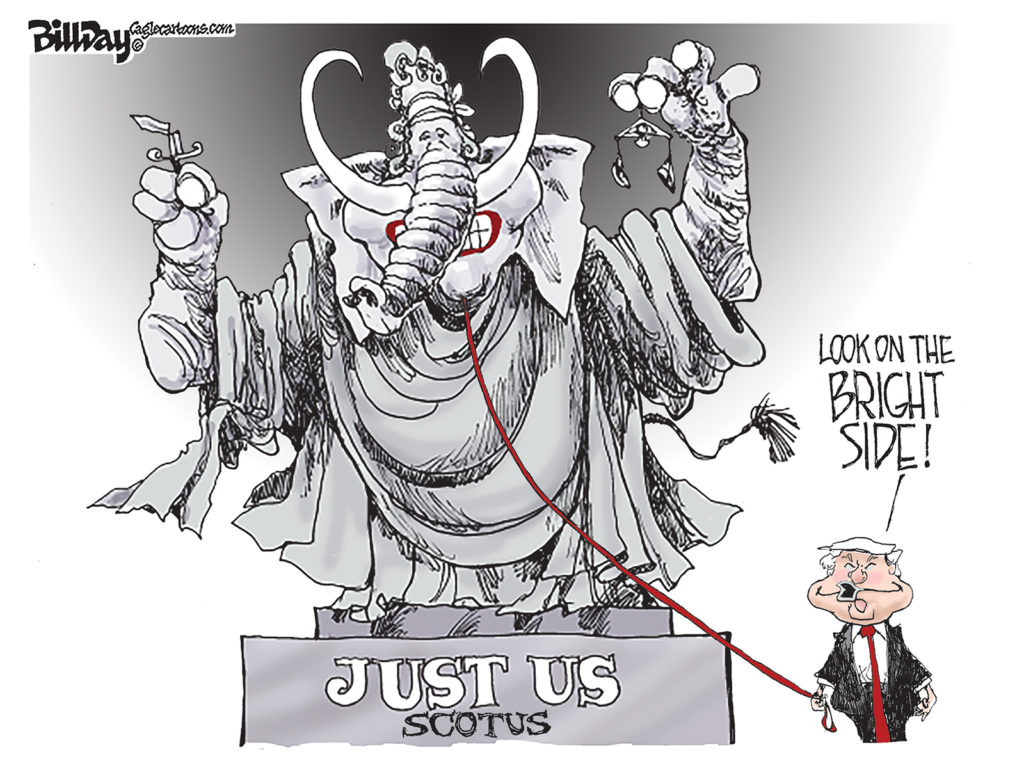
by Bill Day. Memphian Bill Day is two-time winner of the RFK Journalism Award in Cartooning. His cartoons are syndicated internationally by Cagle Cartoons. Cartoons Archive →

Photograph by Amie Vanderford

More Images

Memphian Amie Vanderford is a photographer for peace and justice. Her portfolio includes photographs from Peru, Zimbabwe, Nepal, Indian, and her hometown.

  • Subscribe to Posts via Email

    You can get Smart City Memphis posts right in your e-mail box. Just sign up below to begin receiving them.


  • RSS

    • New Videos: Stories of Auto-Rickshaws in India

    • Sustainable Urban Transport in India: Role of the Auto-Rickshaw Sector

    • New Competition: Encouraging Youth to Rethink Public Transportation

    • Paris to Allow Cyclists to Run Red Lights

    • Research Recap, February 6: Urban Happiness, Electric Highways, Cooperative ITS

    • Living Without a Car in Bogotá: Day 12

  • RSS

    • The Changing Face of Housing

    • How Seville’s Hidden Treasures Became the World’s Largest Glued Wood Structure

    • Four Pioneering Examples of Sustainable Refurbishment from Around the World

    • Do You Have an Idea for our Urban World? 21 Cities, 90 Million Citizens are Interested

    • #CycleSafe – Eight Achievable Steps for Creating Cities fit for Cycling

    • Bogotá Citizens Take to Youtube to Criticize the Transmilenio BRT System

  • RSS

    • Disturbing Video of the Day: Cloud of Filth Emanates from Bus Seat

    • Scenes From Europe's Frozen Cities

    • One Month in Beijing = Smoking 5 Cigarettes

    • This Week in Bans: 'Gay Lifestyles' Outlawed in St. Petersburg, Russia

    • Azerbaijan's Plans for a One Kilometer-Tall Skyscraper

    • Postcard From Venice

  • Search Posts

  • About Smart City Memphis

    This is the blog by Smart City Consulting and its opinions are informed by our work in Memphis and other cities on a variety of issues affecting urban success. Smart City Memphis was named one of the most intriguing blogs in the U.S. by the Pew Partnership for Civic Change. Our intent is to "connect the dots" on events, issues, and policies that shape Memphis and its future, and to frame Memphis issues in a national context. The blog's editor is Tom Jones, principal at Smart City Consulting and an editorial contributor at Memphis magazine, where he writes the monthly column, City Journal. Send blog posts, ideas, suggestions, and emails to tjones@smartcityconsulting.com.
  • Archives

    • February 2012 (11)
    • January 2012 (35)
    • December 2011 (29)
    • November 2011 (30)
    • October 2011 (34)
    • September 2011 (33)
    • August 2011 (39)
    • July 2011 (36)
    • June 2011 (41)
    • May 2011 (36)
    • April 2011 (57)
    • March 2011 (39)
    • February 2011 (45)
    • January 2011 (56)
    • December 2010 (44)
    • November 2010 (30)
    • October 2010 (28)
    • September 2010 (24)
    • August 2010 (22)
    • July 2010 (23)
    • June 2010 (34)
    • May 2010 (28)
    • April 2010 (32)
    • March 2010 (35)
    • February 2010 (31)
    • January 2010 (43)
    • December 2009 (49)
    • November 2009 (17)
    • October 2009 (24)
    • September 2009 (23)
    • August 2009 (18)
    • July 2009 (22)
    • June 2009 (28)
    • May 2009 (23)
    • April 2009 (23)
    • March 2009 (26)
    • February 2009 (25)
    • January 2009 (36)
    • December 2008 (15)
    • November 2008 (22)
    • October 2008 (21)
    • September 2008 (25)
    • August 2008 (23)
    • July 2008 (32)
    • June 2008 (27)
    • May 2008 (35)
    • April 2008 (26)
    • March 2008 (25)
    • February 2008 (29)
    • January 2008 (33)
    • December 2007 (20)
    • November 2007 (19)
    • October 2007 (32)
    • September 2007 (25)
    • August 2007 (25)
    • July 2007 (26)
    • June 2007 (16)
    • May 2007 (21)
    • April 2007 (25)
    • March 2007 (18)
    • February 2007 (16)
    • January 2007 (17)
    • December 2006 (16)
    • November 2006 (14)
    • October 2006 (18)
    • September 2006 (21)
    • August 2006 (20)
    • July 2006 (20)
    • June 2006 (17)
    • May 2006 (12)
    • April 2006 (19)
    • March 2006 (20)
    • February 2006 (23)
    • January 2006 (16)
    • December 2005 (23)
    • November 2005 (21)
    • October 2005 (23)
    • September 2005 (19)
    • August 2005 (27)
    • July 2005 (23)
    • June 2005 (16)
    • 0 (2)
  • Categories

  • Contributors

    • Aaron Shafer
    • Andrew Trippel
    • Anthony Siracusa
    • Barry Chase
    • Brad Leon
    • Brian Stephens
    • CEOs for Cities
    • Charles Santo
    • Chris Sanders
    • David Williams
    • Doug Imig
    • Elizabeth Alley
    • Emily Trenholm
    • Eric Mathews
    • Gene Pearson
    • Gene Pearson and Louise Mercuro
    • Greg Thompson
    • Gwyn Fisher
    • Janet Boscarino
    • Jim Strickland
    • Jimmie Covington
    • John Kirkscey
    • John Lawrence
    • Jonathan Flynt
    • Josh Whitehead
    • Julie Ellis
    • Kenya Bradshaw
    • Laura Adams
    • Leah Wells
    • Louise Mercuro, AICP
    • Lurene Cachola Kelley
    • Margot McNeeley
    • Matt Farr
    • Matt Timberlake
    • Melissa Petersen
    • Natashia Gregoire
    • Ray Brown
    • Rev. Steve Montgomery
    • Robert Bain
    • SCM
    • Scott L. Newstok
    • Smart City Memphis
    • Smart City Radio
    • Steve Bares
    • Steve Lockwood
    • Susan Adler Thorp
    • Tom Jones
    • Tomeka Hart
    • Tommy Pacello
    • Women Unite
    • Zach Hoyt

© 2012 Smart City Memphis. All rights reserved.

  • Register
  • Log in
  • RSS
  • Smart City Radio
  • Smart City Consulting