
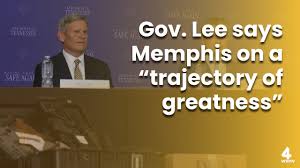
Bill Lee entered office wrapped in the language of unity, civility, and faith-driven leadership. He cultivated the image of a calm businessman above partisan warfare – a governor more interested in solving problems than inflaming divisions. Supporters described him as thoughtful, compassionate, and different from the angry brand of politics dominating America.
But he leaves office this year as something entirely different.
A profound disappointment. A fraud.
The contrast between Lee’s carefully crafted image and the political reality under his administration is impossible to ignore.
Instead of defending democratic fairness, he has overseen – and often enabled – a governing culture increasingly defined by partisan manipulation, attacks on local autonomy, and ideological warfare. The result is a state government that too often seems determined not to represent all Tennesseans, but to entrench permanent political power for one party.
He Wasn’t Different After All
In 2022, Tennessee Republicans dismantled Nashville’s longtime unified congressional district, slicing Davidson County into three separate districts in a nakedly partisan maneuver designed to eliminate Democratic representation.
Governor Lee could have objected. Or at least urged restraint and fair play.
He could have argued that voters deserve fair representation. He could have used the moral language he often invokes to defend democratic principles over raw political advantage.
Instead, he signed the maps.
That decision said far more about his governorship than any campaign advertisement ever did.
What makes this especially frustrating is that Lee presented himself as a different kind of Republican leader. He was not supposed to be a culture warrior. He was not supposed to govern through division and ideological score-settling.
The Chief Enabler
Yet under his leadership, Tennessee has become increasingly consumed by exactly those impulses.
The Legislature has pursued state takeovers of local authority, weakened gun laws despite rising violence, targeted immigrant communities with performative cruelty, and repeatedly treated Tennessee’s cities as adversaries rather than partners.
Lee rarely leads these fights, but he almost always enables them structurally.
A governor’s legacy is not determined only by the tone of his speeches. It is determined by the policies he signs, the abuses he tolerates, and the democratic principles he is willing – or unwilling – to defend.
Nothing illustrates that disappointment more clearly than Tennessee’s continued pursuit of aggressive gerrymandering and political power grabs aimed at weakening the voices of the state’s cities.
Dummymandering
It has been fascinating to watch Lee shed his skin as a moderate Republican when he was elected and turn into a rubber stamp for the most unpopular president in modern history.
And because Trump’s policies and petulant behavior are leading his party to a shellacking in the mid-terms, Lee and the legislature’s supermajority admit that their party cannot win on a level playing field, and because Trump ordered it, they began a gerrymandering scheme to tilt the playing field to their advantage. At least in the short term.
The national gerrymandering movement is the national equivalent of the Shelby County Republican Party forcing county elections to become partisan. Today, there are no Republicans in a countywide office.
While Lee and others may feel good sticking it to a majority Black city and Democratic districts across the country, within the next couple of years, Democrats can emulate their gerrymandering and end up with a net increase in safe seats.
In that way, ultimately, this will be the classic example of dummymandering, excitedly chasing the short-term gain and producing districts where politicians appeal to the extreme ends of the Republican Party.
Hypocrisy In Action
Gerrymandering is often discussed in abstract political language, but its effects are concrete and corrosive. When districts are manipulated to predetermine outcomes, elections become less competitive, politicians become less accountable, voters become more cynical, communities lose their collective leverage, and most damaging of all, government stops reflecting the actual interests and realities of the people it is supposed to serve.
History will judge Lee harshly for leadership characterized by expedience and obsequiousness, but for now, his interest is likely to be appointed to the Trump Administration, and in pursuit of his personal ambition, he tramples on the rights of Black Tennesseans who live in Memphis.
Throughout his term, Lee has professed to be a friend to Memphis. He’s called it the “soul of Tennessee” and a “remarkable city” on a “trajectory of greatness,” emphasizing its importance to the state.
Supporters of the current aggressive Republican redistricting often defend it as standard political hardball, something both parties do. But that argument misses the larger point: extreme gerrymandering is not simply tough politics; it is an assault on meaningful representation. It allows politicians to insulate themselves from accountability and manufacture outcomes before a single vote is cast.
And that’s not even mentioning the end game: to devalue the votes of a majority Black city. That’s the troubling anti-democratic dimension that’s being paved over as Republicans chase a nakedly partisan result.
This Is Not Normal
Memphis deserves better than being treated as a political puzzle piece for strategists in Nashville and extreme right wingers like Marsha Blackburn.
At a moment when Memphis needs stronger advocacy in Washington – for economic mobility, transit, neighborhood investment, public safety, environmental protection, and equitable healthcare – the last thing the city needs is diluted representation engineered for partisan convenience.
If Tennessee leaders truly believe in representative government, they should draw districts that respect communities rather than fracture them. They should compete for votes instead of manipulating maps. And they should recognize that democracy is strongest when voters believe their voices genuinely matter.
Gerrymandering a new congressional district would not just redraw boundaries. It would send a familiar and damaging message that the political power of this city is something to be attacked rather than respected.
Tennessee leadership increasingly treats aggressive redistricting as normal political strategy – just another mechanism for maximizing partisan power. But democracy was never supposed to function like a corporate acquisition.
Citizens are not assets to be redistributed for competitive advantage.
Squandering His Legacy
What makes Lee’s role especially disappointing is that he had the political capital to defend democracy. Unlike more combative national figures, he cultivated broad goodwill early in his tenure. He could have defended an alternative vision of conservative leadership grounded in institutional respect and democratic restraint.
He chose not to.
Bill Lee had the opportunity to be remembered as a stabilizing leader who elevated Tennessee above the toxic patterns consuming American politics.
Instead, his legacy is now one of quiet accommodation – smiling moderation masking structural extremism.
For many Tennesseans, especially in Memphis, that may prove the greatest disappointment of all. Not to mention the devastating price Memphians may have to pay.
***
Join us at the Smart City Memphis Facebook page and on Instagram for daily articles, reports, and commentaries that are relevant to Memphis.


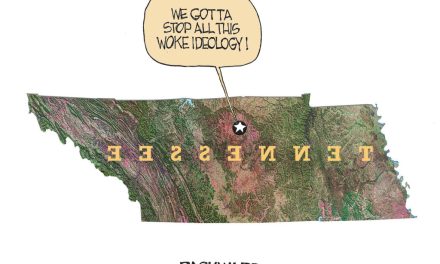

Lee not a Statesman but in the end a Zealot…