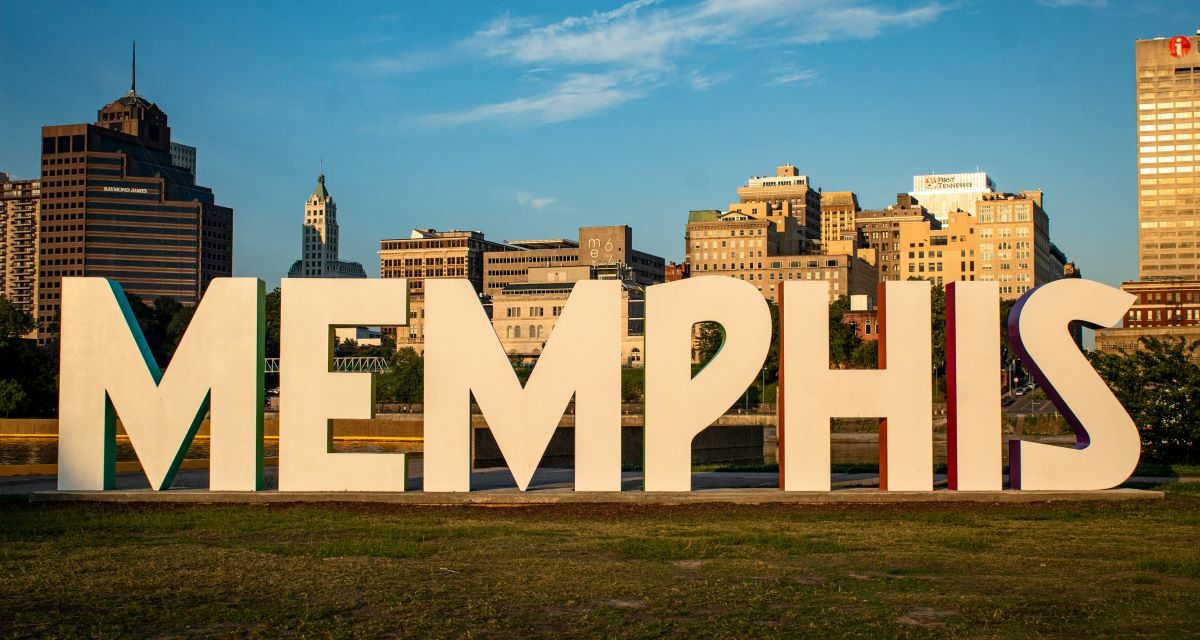
As this blog approaches its 21st year, looking back at the past two decades conjures up events that were important in the moment and others that shaped the future of Memphis.
January 6, 2025 – Declines in Crime by Areas of Memphis for 2024:
28.9% – 38117 – East Memphis
26.6% – 38103 – Downtown
25.4% – CITYWIDE HOMICIDES
24.0% – 38 120 – White Station/East Memphis
21.3% – CITYWIDE PROPERTY CRIMES
19.3% – 38111 – Normal Station/University of Memphis/Sherwood Forest
18.3% – 38016 – Cordova
18.1% – 38119 — Balmoral/East Memphis
16.9% – 38105 – Uptown/Pinch District
16.9% – 38125 – Richwood/Burlington
16.5% – 38128 – Egypt-Raleigh
16.0% – 38118 – Oakville/Parkway Village
15.2% – 38107 – North Memphis/New Chicago/Vollintine-Evergreen
14.5% – 38116 – Whitehaven
14.5% – 38112 – Midtown/Overton Park/Hein Park/Binghampton
13.3% – CITYWIDE CRIME
13.2% – 38134 – Elmore Park…
The following are the declines in crimes in 2024 by areas of Memphis as defined by ZIP codes. For the year, the overall city crime rate declined 13.7%. Homicides dramatically declined. 2023’s 398 homicides set a record but the number decreased to 299 in 2024.
Read more: Declines in Crime by Area of Memphis for 2024 | Smart City Memphis
January 9, 2020 – Leveraging 3.0 To Create A Culture of Planning:
It is often said that Memphis has not had a comprehensive plan in 38 years, but that is not precisely true.
It’s been even longer.
That’s because what was approved by City Council and the County Board of Commissioners in 1981 was not precisely a comprehensive plan. It was the 70-page Memphis 2000 Policy Plan.
 Rather than being a real comprehensive plan, it was a compilation of 106 recommendations that in appear to be the favorite ideas from five advisory groups with limited public input. The groups were economy, land use, housing, transportation, and public facilities.
In other words, Memphis 2000 Policy Plan bears as much resemblance to Memphis 3.0 as The Pyramid arena is to FedExForum.
Planning’s History
In 1953, the afternoon daily newspaper, Memphis Press-Scimitar, published an editorial, “Give Memphis Real City Planning.” For years, there had been complaints that the city had no plan for the future, and city planning became a major issue in the mayor’s election of 1955. Harland Bartholomew, who had been the city planner of choice since he wrote the comprehensive plan of 1924, developed the first major revision in zoning in 1955.
The good news was that the city and county governments created the joint Memphis and Shelby County Planning Commission, but they didn’t want to pay an adequate salary for planners. It was not until 1962 that a professional, Jerrold Moore, was finally hired, and in the late 1960s, the Planning Commission staff completed its 10-volume “Community Facilities Study,” cataloguing Memphis’ needs through 1990.
And yet, in December, 1976, the Planning Commission was abolished, and in its place, the Land Use Control Board was created and remains in place today. The planning staff, while normally understaffed, managed to produce a number of plans to guide growth. They often produced limited success since politics regularly reared its ugly head.
Then, 39 years ago, city planners unveiled the Memphis 2000 Policy Plan. No one expected in 1981 that it would be almost four decades before the policy plan would be supported with a comprehensive plan that is Memphis 3.0. Back then, it was expected that Memphis 2000 would be updated on a regular basis in light of changing factors and new realities.
It was not to be, and as our community has proven several times over the years, the plan was the outcome – not the policies needed to convert it into reality.
Read more: Leveraging Memphis 3.0 To Create A Culture of Planning | Smart City Memphis
January 6, 2015: Principles for Our 2015 New Year’s Resolutions
There is more talk about moonshots here these days than at the Kennedy Space Center at Cape Canaveral.
Once the Greater Memphis Chamber’s Chairman’s Circle used the term, moonshots, to describe its ambitions, it has become a common feature of conversations all over Memphis.
It defines a priority that has the ability for transformative change, a long-held goal for Memphis. Ten years ago, we talked about the need for leap frog strategies for  Memphis. Later, we blogged about the power of innovative disruption, and this was followed by a call for Memphis to focus on game changers.
Regardless of what we call it, it’s crucial for Memphis, which continues to find itself generally in the bottom five of the top 51 largest metros when it comes to key economic development indicators. That we have been unable to move from those bottom rungs in the past 15 years only serves to accentuate the sense of urgency that we need to exhibit.
We have no margin for error.
The Chairman’s Circle came up with its own moonshot agenda – high school graduates ready to work in advanced manufacturing, diesel mechanics, welding or other high-demand trades; pre-K; connecting Mid-South green spaces; adding 1,000 entrepreneurs in 10 years, and developing a long-range growth plan for the region…
Everyone has their own moonshot list, and we’re no exception. We’ll provide our list in our next post, but first, as we all consider our individual moonshot lists, we have a few principles that provide a context for them:
1) Resist the temptation to treat anecdotes as data.
Often, in Memphis, we hypnotize ourselves with our own hyperboles. We regularly rely on anecdotes to convince ourselves that we are making progress rather than relying on actual data. In this vein, we often define success as how we are doing now as opposed to how we were doing 10 years ago. Instead, we need to be comparing our key indicators with other similar cities to see how we are stacking up, where we are making gains, and where we need to step up our work.
2) Let’s create a story for Memphis that resonates with all of us.
Memphis needs a clear narrative. We hear a lot about the need for a vision, but we also need a shared narrative for Memphis. When we say narrative, we are thinking of a story. People remember stories, and we need one that each of us can see ourselves in. It’s a story that incorporates where we have been, who we are, and where we hope to go. And most of all, it’s a story that motivates action.
3) Shake the Nashville obsession – and Detroit too while we’re at it.
We understand the Memphis-Nashville comparisons and conflicts go back to the days when we were derisively called “Big Shelby” and Nashville was a smaller, less sophisticated place. Here’s the thing: Nashville is the current media darling and getting a great deal of national publicity (which it deserves). There will be inevitably be another number one city for the media and another city after that, and while we believe that we need to compare ourselves to other cities to measure our progress, Nashville might be one of them but it is not the only one…
4) Be intolerant about “us versus them” rhetoric.
There is too much to be done for us to waste any more time with city vs. suburbs and white vs. black arguments and diatribes from either side that do nothing so much as to divide and weaken our resolve. This of course means swearing off the reading of comments to The Commercial Appeal articles, where the uninformed and biased express their opinions with such determined enthusiasm. It’s rare to have a discussion about negative influences in our community without the ugliness of these comments coming up. In short, we need to ignore the racists whose only mission in life seems to be drags on lifting up this community and taking it instead into their swamp of prejudice, discord, and disharmony. There has never been a greater need for rational debate and discussion, but as we enter the city campaign city, they are absolute necessities.
- Quit chasing magic answers.
Memphis regularly battles civic ADD. We often can’t stick with something long enough to see if it will bear fruit and produce results. Instead, we decide to chase another big idea, the latest magic answer, or a silver bullet imported from another city. Despite media coverage that treats some cities as overnight successes, their success is almost always tied to a sustained focus on key strengths, opportunities, and leadership. There are some who contend that Nashville’s vote to consolidate its city and county governments produced the boom times it’s experienced today. Of course, that vote took place 52 years ago.
We have a friend who says Memphis always chases the latest magic answer – but 10 years after everyone else. We have another friend who says that Memphis is always grabbing a “best practice” from another city as the answer to our problems, but the truth is that by the time something is called a best practice, it isn’t one anymore. The best practice of all for Memphis is to create its own rather than searching for them in other cities.
There is an element of truth in the comment, but the underlying truth is that before we chase another magic answer, we need to get the basics right. That may be the greatest challenge of all.
- Create balanced strategies for the future.
There is the deeply seeded sense in a large part of our community that plans for the future don’t include them. It’s incumbent on anyone who develops a moonshot list to consider how it can benefit everyone in Memphis. That’s why we are encouraged by Chamber President Phil Trenary’s regular call for measuring success by how poverty is reduced in Memphis.
There is support for tax freezes as a tool in our economic development toolkit but no one can deny that there is an overreliance on them is creating an imbalance in taxes between residential and commercial. Every time corporate taxes are waived, residential and small businesses have to pick up the slack.
Read more: Principles For Our 2015 New Year’s Resolutions | Smart City Memphis
January 7, 2010 – Mayor Wharton and the Mandate of the Memo
The hardest part about being a candidate for change is delivering it when you’re elected.
It’s even harder when the call for change is delivered in a mandate, because expectations are higher and patience is shorter. That’s particularly true here because City Hall has been limping along for eight years with no sense that anyone had the credibility and ability to lead Memphis out of the wilderness.
While new Memphis Mayor A C Wharton doesn’t have to play Moses to our wandering tribe, he will have to play Obama for a city demanding change in short order. The inescapable fact is that there is so much that has to be done and it’s not possible for them to be handled one at a time.
From Weak to Strong Mayor
 Wharton has no choice but for multi-tasking to be the chief qualification for every appointee in City Hall. And yet, the lessons of the Obama presidency are not lost on Wharton, whose 45 percent victory margin on election day gives him a unique opportunity to use the public mandate to extend his honeymoon long enough to begin a really ambitious agenda to change Memphis’ troubling trajectory.
If anything, Wharton’s innate cautiousness was deepened during his seven years as Shelby County Mayor. He had little choice, because county government has a “weak mayor” whose power is limited and spans less than one-third of county workplace.
City Hall is a totally different world, where the “strong mayor” rules. While negotiation and persuasion are the first steps in getting anything done in county government, Wharton can now change the direction of the entire city government with a memo.
Change by Dictum
That was all it took to change Chicago’s image from “hog butcher to the world” to one of the nation’s “greenest cities.” There was no consensus-building process. There were no public hearings. There was simply a memo from Mayor Richard M. Daley ordering his departments to build hundreds of miles of bike paths, plant hundreds of thousands of flowers on Michigan Avenue, and construct sustainable public buildings.
Back here, major recommendations in Wharton’s own Sustainable Shelby plan can be implemented with memos to the city managers now under his control. As chairman of the Metropolitan Planning Organization (MPO), the regional transportation planning group required by federal law, he had little traction in challenging the asphalt lobby.
That’s all changed. MPO adopted years ago a policy – which was made advisory – that bicycle lanes should be part of all road improvement plans. And yet, Bicycling magazine named Memphis the second worst bicycling city in the U.S., writing that “no bike lanes exist within the city limits of Memphis. And the city government, comprised of layers of bureaucracy, has repeatedly ignored or rejected requests from bike clubs.”
Read more: Mayor Wharton and the Mandate of the Memo | Smart City Memphis
June 28, 2005 – Doing Nothing Is Not OK
OK, so maybe the Riverfront Development Corporation has done a less than stellar job selling its Promenade plan. But that’s no reason for the Commercial Appeal to fall for the case to do nothing being made by the so-called “Friends for Our Riverfront.”
You’ve heard the debate: The Big Bad RDC wants to “develop” our riverfront along Front Street from Union to Adams. The good ole Friends want to “save” our riverfront.
Here’s the real story: Today, the west side of Front Street is full of aging public buildings — a too-small Fire Divison headquarters (with a new chain link fence around it), two parking garages (one of which opens onto Riverside Drive and welcomes visitors coming off the Hernando Desoto Bridge with an offer of “Car Detailing”), and a library that even the librarians want to close. The property also has a park (which looks better than it has in years, thanks to the RDC) and a Customs House that the RDC is actively helping the University of Memphis acquire for a new law school.
Today, this property offers essentially no public access to the bluff, other than in the park.
Now, here’s the choice: Keep it as is. Or develop it according to the Promenade plan developed by Cooper Robertson with public input for the RDC.
That’s it. It’s that simple. The alternative offered by Friends to tear down the public buildings, remove (and not replace) the parking, and build a park is just a smokescreen. No one — no one who understands the City’s finances, anyway — really believes the addition of a five or six block long park on Front Street is a viable option.
Think about it. The only parks decently maintained in Memphis today are those maintained by the RDC. The money for doing so comes from the savings the RDC has been able to manage from its operation of Mud Island and maintenance of the downtown parks compared to earlier management by the City. (And it sure helps to have Danny Lemmons, a smart, committed manager, in charge, who has been spotted picking up trash himself with his crews on Sunday morning after a big weekend event.)
Who believes we’re going to add six new blocks of parks in a part of the city that already has an abundance of green space?
For that matter, who believes that we can remove two parking garages, not replace them and keep office tenants and residents in an area that is already tenuous?
You may not like the Promenade plan (although I can’t imagine why). But your alternative is clear — leave the Promenade as is — a broken down, embarrassing collection of underperforming public buildings with no public access.
This is the best Memphis can do?
That’s the real contention of Friends. With friends like these, who needs enemies?
Published here: Doing Nothing Is Not OK | Smart City Memphis
**
**
These commentaries are also posted on the Smart City Memphis Facebook page and on Instagram along with occasional articles, reports, and commentaries that are relevant to Memphis.