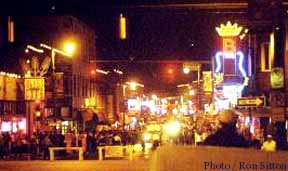
Although City Hall officials said State of Tennessee’s $74 million funding for Beale Street was about a new first impression for Memphis, that seemed to be mainly political positioning.
After all, first impressions about Memphis are shaped more by the overall state of downtown – which often comes off as lethargic when compared to comparable cities’ downtowns – rather than a single street, even one as historic as Beale.
More to the point, the favorable impression City Hall is seeking is the one from Memphis Grizzlies.
Despite years of negotiations with the NBA team on an agreement for a long-term commitment to Memphis when the existing one expires in six years, a new agreement remains unsigned despite the $550 million in improvements that will be made to FedExForum to respond to the team’s concerns, to improve visitor experiences, and to spin off more money now that city government has risk in paying operating deficits.
State of Tennessee previously funded $230 million of the $550 million FedExForum budget for renovations which may take seven years or more. It is also supported by a 0.5% city hotel-motel tax increase (which makes the hotel-motel tax in Memphis one of the highest in the U.S.). Memphis Mayor Paul Young wisely has said no bonds will be issued by city government until a second long-term contract is signed.
Comprehensive Assessment Needed
Plans are first to address deferred maintenance, replace the emergency generator, chiller plant updates, modernization of all elevators, replace of retractable seats, improve ingress/egress for safety, and later phases include locker upgrades, arena bowl upgrades, and improvements to north end tunnel. It is structured in phases so the Forum can remain open for Grizzles games and concerts.
Negotiations have been ongoing on since 2022 in hopes of signing a new contract that will begin when the current one expires in 2029. In the ensuing years, a number of ambitious ideas have been advanced to deal with issues raised by the Grizzlies such as the condition and safety of Beale Street, about having a voice in the future of the street, and about having an eye to creating a sports entertainment district like the ones that are all the rage around major sports venues in other cities.
In other words, the mayor’s preoccupation and rhetoric about Beale Street are about sending a message to the Grizzlies that they are important to the future of Memphis and that city government is committed to doing whatever it can to the street’s success.
The emphasis on the $74 million in state money seems to be on spending it quickly. It is slated to be spent on upgraded street and pedestrian lighting, security features, landscaping, and traffic flow improvements.
Unfortunately, these priorities don’t suggest that Beale Street will receive the comprehensive assessment it needs. The announced approach is unexciting, as reflected in the fact that the hiring priorities are for an engineering company, a project manager, and a construction manager.
It is of course fine that the street will look better and more appealing, but there is a need to consider much more – like the tenant mix and what tweaks are needed to create more interest; the peculiar scheduling of security staff; the reduction of the street’s staff to two people from seven; condition of the buildings which are owned by City of Memphis; underused assets like the New Daisy, which has had about seven concerts in the last seven years as opposed to the dozens that were once held there; and the moribund Handy Park.
That Was Then
In 2013, Beale Street was named “America’s Most Iconic Street,” and cities including Nashville came to Memphis for advice about what they could do to have a thriving entertainment district.
But that was then and this is now.
Today sports entertainment districts have been – and are being – developed in cities across the United States. There’s 60-acre Battery Atlanta anchored by Truist Park, home of the Atlanta Braves, featuring a theater, shopping, dining, and luxury residential units; 100,000-square feet at St. Louis’ Ballpark Village adjacent to Busch Stadium; Texas Live! located between the Dallas Cowboys stadium and Texas Rangers field; the 30-acre Deer District around the Milwaukee Bucks’ Fiserv Forum; the area in Chicago around Wrigley Field; and the 25-year-old Arena District in Columbus, Ohio. Other districts are being developed in Knoxville, Ontario CA, Minneapolis, and Alexandria Va.
The potential of creating something similar around FedExForum has been a topic of the Grizzlies negotiations. One concept seriously discussed calls for MLGW headquarters to be demolished and replaced with retail, restaurants, residences, and more that would create Memphis’ version of the sports entertainment districts in other cities.
Whatever the $74 million in state money is used for, it should be spent to consider how FedExForum can ultimately become the center of a sports entertainment district in Memphis. Reports are that such a plan would be not only be welcomed by the Grizzlies but would be the strongest message about Memphis’ commitment to leveraging the team’s presence as anchor for a vision that could attract the private investment that would be needed.
Add Intellectual Capital
That said, the process would require the involvement of people who can increase the intellectual capital in conversations about what is planned. Hopefully, the person recently hired from Chicago to manage Beale Street has in-depth experience in managing and visioning entertainment districts and can lead the process to do more than focus on the hardscape but what the street could and should be.
Beale Street has assets. There are the four cornerstones that have been on the street for decades – B.B. King’s Blues Club, Rum Boogie Silk O’Sullivan, and Alfreds. B.B. King’s is likely #1 on the list of Memphis restaurant/clubs.
Beale Street has an inherent competitive advantage – the authenticity that is its foundation and which could combine with a broader sports-oriented development to give Memphis something totally distinctive and unexpected.
City government could ask the architecture firm Ellerbe Becket (now part of AECOM) for its insights and recommendations. It was the lead designer of FedExForum but also has experience in entertainment districts.
In addition, HOK collaborated on the design of AutoZone Park and it too has planned and designed sports. It has said the most vibrant developments share three key attributes: sense of place, community connections, and diverse offerings that support sustainability while complementing the sense of place of the surrounding community.
Its architects have said: “arenas should be a beacon connecting a community, encouraging foot traffic and activity throughout the district and supporting fluidity to nearby neighborhoods…(and) establish multi-modal connections in the neighborhood, including walking, driving, and public transit.”
It’s Downtown, Stupid
Destination real estate development firm Hunden Partners, which has also worked in Memphis, said: “Successful entertainment districts thrive by creating a dense, pedestrian-friendly sense of place that blends diverse, high-quality attractions, dining, and retail with active, year-round programming.”
This should be the destination for Beale Street and any money to be spent should be an investment in that journey, rather than the prevailing sense that if you don’t know where you’re going, any road will take you there.
As the process begins, it’s worth ratifying that Beale Street is important to Memphis but there should be no misunderstanding that it’s downtown that creates – and will continue to create – first impressions of Memphis, which is why connectivity is a priority.
**
Join us at the Smart City Memphis Facebook page and on Instagram where these blog posts are published along with occasional articles, reports, and commentaries that are relevant to Memphis.