
The national Sierra Club has rightfully identified I-269 as one of the 50 worst transportation projects in the U.S.
The Sierra club explanation for why I-269 has a negative impact on the future of Memphis echoed many concerns heard here. Here’s an earlier post about this unnecessary highway:
I-269 will unquestionably take a toll on Shelby County.
That’s why it’s high time for Shelby County to place a toll on I-269.
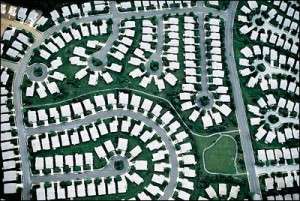
For too long, there’s been a dismissive attitude about anything that could change the interstate highway’s determined march around the outskirts of Shelby County, including a dip into Fayette County at one point. As a result, the hundreds of millions of dollars to be spent on the project will be the gift that keeps on giving for developers as it fuels unsustainable sprawl and it fulfills a vision that was hatched deep in Mississippi politics.
Since we started writing about I-269 on this blog, there is some good news. Concern about its impact has become more pronounced and widespread and understanding about its impact has increased. Despite that, little that is substantive has been done to translate concern into action, conversations into strategies.
Running the Clock Out
Development interests clearly are hoping for the clock to run out as design and plans for the unneeded interstate move ahead to a point where they cannot be altered. We’re not at that point quite yet, but we are close. Because of it, we need our leaders to do something now to mitigate the largely negative impact that I-269 will have on Memphis and Germantown and the negative impact that it will inevitably have on Collierville and Bartlett.
The days of delusion are over, and many in the suburbs who thought I-269 was a godsend are more sober in their thinking. The highway encourages businesses and people to move to the eastern fringes, where their economic pull and tax revenues will drain city governments located away from its immediate path. If the current, illogical plan for exits about every mile on I-269 persists, vital tax revenues will move from existing cities to new greenfields of subsidized suburban sprawl.
Once it became clear that the highway could not be sold as an economic artery while depriving Memphis and other cities of much-needed revenues, cheerleaders for I-269 shifted to the justification that it was a vital freight route that would take trucks around the county rather than through the heart of Memphis.
That trucking companies advised local government decades ago that most truckers will ignore such a lengthy detour did little to deter the momentum behind the project since its real impetus was spawned in Mississippi by politicians bent on continuing the predatory policies honed there, as seen in North Mississippi basing its economic development and its cities’ futures on simply stealing people and businesses from Memphis.
Lott of Politics
Driven by the clout of then Senate Majority Leader Trent Lott, Mississippi politicos outmaneuvered their Tennessee colleagues who believed they could kill I-269 by controlling where and whether it entered Mississippi at all. That was before Mr. Lott, inspired by campaign donations from development interests, trumped Tennessee officials who opposed the project – from the governor to the Shelby County mayor to the Memphis mayor – by adding wording to a federal bill that essentially took the decision out of Tennessee’s hands while stepping up the schedule for construction and ensuring that it crossed politically influential landowners’ property.
Lott was supported by then U.S. Representative from Texas and House Whip Tom (Hammer) Delay, who had earlier suggested that the I-69 Coalition hire someone who would be uniquely skilled in presenting its case in the nation’s capital. That person just happened to be his brother, who was paid about $300,000 a year. To DeLay’s hammer, Lott played the nail.
If there is one demoralizing aspect of our region’s “growth” over the past 25 years, it has been how some politicians will sell a smarter future for their own short-term political gain. It’s the sort of motivation that calls on someone like Mr. Lott to take a position that was tantamount to saying, “Memphis and Shelby County be damned. I need to make these political friends happy.” Then again, we can’t be too hard on him, because back here at home, county officials were regularly doling out hundreds of millions of dollars to deliver up infrastructure that lined the pockets of preferred developers with millions of dollars although they understood that our community wasn’t truly growing but instead was simply moving people around on the map.
Back then, there were some bold actions that could have been taken, but our local officials blinked and refused to play political hard ball with the Tennessee Department of Transportation and the Bredesen Administration so that Shelby County’s interests were given greater voice in the decision-making.
Modest Proposals
Even today, there are some decisions that can be made to mitigate I-269 but it still requires leadership to stand tall for changes and to explain to their constituents why the impacts of this interstate will ultimately raise taxes and weaken existing cities. First, it requires leaders to come to grips with reality – the way that I-269 will shape the futures of their communities and not for the better.
Three ideas that we can think of offhand:
Green preservation zones. The eastern connector of I-269 that roughly follows the Shelby County line should be protected as a natural reserve area where development is restricted and rural land and key recharge areas for the aquifer are protected. There’s a compelling argument to be made that along the northern border of the highway in the Millington area, a new industrial park should be built. Millington needs economic support and its presence could compete with similar emphasis in North Mississippi, but the most eastern section should be set aside and removed from potential development.
Limited access. If I-269 is a “freight highway,” as its advocates argue, there is no need for the array of exits that punctuate the highway every mile or so. The only reason for that many exits is to deliver up greenfields to developers and to once again lure people out of existing cities with the promise of cheaper costs of living (people still don’t regularly include the cost of gas in their calculations) and quicker commutes into the more urbanized parts of Shelby County to their work places.
User fees. In the past, the MPO (Metropolitan Planning Organization) has said that tolls can’t be put on interstate highways, but it’s done in other places. In fact, there are now 3,175 miles of tolled highways in the interstate system. If freight companies and developers want this highway, at least they should pay for it through user fees so that I-269 is paying its own way. Perhaps, the toll could be used to develop a truly regional public transit system that delivers higher quality service to key job centers or the toll revenues could be used to rebuild existing infrastructure that needs repairs. After all, we already have Highway 385 and if people want a higher level of service, they should pay for it.
It’s the Metro, Stupid
The project cost is now moving toward $1 billion, and backers now justify it with terms like smart growth, knowledge economy jobs, New Urbanism, and open space protection. They also claim that Memphis will benefit from new economic growth and development as a result of I-269, but they know this is not true.
These are difficult times for the Memphis metro – let’s say it again, metro. Unlike most other metro areas, the cancerous problems that threaten our economic health are regional in nature and not just the problems of the urban core. Unless we start to figure out how to avoid the negative impact of self-indulgent projects like I-269 and make investments that strengthen our entire region so that it is prepared for the fundamental restructuring of the economy that is well under way, we will prove that the road to hell is indeed paved with intentions that aren’t always so good.
In the end, it’s not great roads that will draw jobs to Memphis. It’s great quality of life, a great quality of place, a culture of creativity and entrepreneurship that will attract the talented people that in turn attract jobs to our community. The blind pursuit of more lanes and more roads without the fuller context for what makes Shelby County successful in the future produces an inadequate plan for transportation and replicates the same mistaken policies of the past.
I-269 will unquestionably take a toll on Shelby County.
That’s why it’s high time for Shelby County to place a toll on I-269.
For too long, there’s been a dismissive attitude about anything that could change the interstate highway’s determined march around the outskirts of Shelby County, including a dip into Fayette County at one point. As a result, the hundreds of millions of dollars to be spent on the project will be the gift that keeps on giving for developers as it fuels unsustainable sprawl and it fulfills a vision that was hatched deep in Mississippi politics.
Since we started writing about I-269 on this blog, there is some good news. Concern about its impact has become more pronounced and widespread and understanding about its impact has increased. Despite that, little that is substantive has been done to translate concern into action, conversations into strategies.
Running the Clock Out
Development interests clearly are hoping for the clock to run out as design and plans for the unneeded interstate move ahead to a point where they cannot be altered. We’re not at that point quite yet, but we are close. Because of it, we need our leaders to do something now to mitigate the largely negative impact that I-269 will have on Memphis and Germantown and the negative impact that it will inevitably have on Collierville and Bartlett.
The days of delusion are over, and many in the suburbs who thought I-269 was a godsend are more sober in their thinking. The highway encourages businesses and people to move to the eastern fringes, where their economic pull and tax revenues will drain city governments located away from its immediate path. If the current, illogical plan for exits about every mile on I-269 persists, vital tax revenues will move from existing cities to new greenfields of subsidized suburban sprawl.
Once it became clear that the highway could not be sold as an economic artery while depriving Memphis and other cities of much-needed revenues, cheerleaders for I-269 shifted to the justification that it was a vital freight route that would take trucks around the county rather than through the heart of Memphis.
That trucking companies advised local government decades ago that most truckers will ignore such a lengthy detour did little to deter the momentum behind the project since its real impetus was spawned in Mississippi by politicians bent on continuing the predatory policies honed there, as seen in North Mississippi basing its economic development and its cities’ futures on simply stealing people and businesses from Memphis.
Lott of Politics
Driven by the clout of then Senate Majority Leader Trent Lott, Mississippi politicos outmaneuvered their Tennessee colleagues who believed they could kill I-269 by controlling where and whether it entered Mississippi at all. That was before Mr. Lott, inspired by campaign donations from development interests, trumped Tennessee officials who opposed the project – from the governor to the Shelby County mayor to the Memphis mayor – by adding wording to a federal bill that essentially took the decision out of Tennessee’s hands while stepping up the schedule for construction and ensuring that it crossed politically influential landowners’ property.
Lott was supported by then U.S. Representative from Texas and House Whip Tom (Hammer) Delay, who had earlier suggested that the I-69 Coalition hire someone who would be uniquely skilled in presenting its case in the nation’s capital. That person just happened to be his brother, who was paid about $300,000 a year. To DeLay’s hammer, Lott played the nail.
If there is one demoralizing aspect of our region’s “growth” over the past 25 years, it has been how some politicians will sell a smarter future for their own short-term political gain. It’s the sort of motivation that calls on someone like Mr. Lott to take a position that was tantamount to saying, “Memphis and Shelby County be damned. I need to make these political friends happy.” Then again, we can’t be too hard on him, because back here at home, county officials were regularly doling out hundreds of millions of dollars to deliver up infrastructure that lined the pockets of preferred developers with millions of dollars although they understood that our community wasn’t truly growing but instead was simply moving people around on the map.
Back then, there were some bold actions that could have been taken, but our local officials blinked and refused to play political hard ball with the Tennessee Department of Transportation and the Bredesen Administration so that Shelby County’s interests were given greater voice in the decision-making.
Modest Proposals
Even today, there are some decisions that can be made to mitigate I-269 but it still requires leadership to stand tall for changes and to explain to their constituents why the impacts of this interstate will ultimately raise taxes and weaken existing cities. First, it requires leaders to come to grips with reality – the way that I-269 will shape the futures of their communities and not for the better.
Three ideas that we can think of offhand:
Green preservation zones. The eastern connector of I-269 that roughly follows the Shelby County line should be protected as a natural reserve area where development is restricted and rural land and key recharge areas for the aquifer are protected. There’s a compelling argument to be made that along the northern border of the highway in the Millington area, a new industrial park should be built. Millington needs economic support and its presence could compete with similar emphasis in North Mississippi, but the most eastern section should be set aside and removed from potential development.
Limited access. If I-269 is a “freight highway,” as its advocates argue, there is no need for the array of exits that punctuate the highway every mile or so. The only reason for that many exits is to deliver up greenfields to developers and to once again lure people out of existing cities with the promise of cheaper costs of living (people still don’t regularly include the cost of gas in their calculations) and quicker commutes into the more urbanized parts of Shelby County to their work places.
User fees. In the past, the MPO (Metropolitan Planning Organization) has said that tolls can’t be put on interstate highways, but it’s done in other places. In fact, there are now 3,175 miles of tolled highways in the interstate system. If freight companies and developers want this highway, at least they should pay for it through user fees so that I-269 is paying its own way. Perhaps, the toll could be used to develop a truly regional public transit system that delivers higher quality service to key job centers or the toll revenues could be used to rebuild existing infrastructure that needs repairs. After all, we already have Highway 385 and if people want a higher level of service, they should pay for it.
It’s the Metro, Stupid
The project cost is now moving toward $1 billion, and backers now justify it with terms like smart growth, knowledge economy jobs, New Urbanism, and open space protection. They also claim that Memphis will benefit from new economic growth and development as a result of I-269, but they know this is not true.
These are difficult times for the Memphis metro – let’s say it again, metro. Unlike most other metro areas, the cancerous problems that threaten our economic health are regional in nature and not just the problems of the urban core. Unless we start to figure out how to avoid the negative impact of self-indulgent projects like I-269 and make investments that strengthen our entire region so that it is prepared for the fundamental restructuring of the economy that is well under way, we will prove that the road to hell is indeed paved with intentions that aren’t always so good.
In the end, it’s not great roads that will draw jobs to Memphis. It’s great quality of life, a great quality of place, a culture of creativity and entrepreneurship that will attract the talented people that in turn attract jobs to our community. The blind pursuit of more lanes and more roads without the fuller context for what makes Shelby County successful in the future produces an inadequate plan for transportation and replicates the same mistaken policies of the past.



for the “green preservation zones” you refer to, the Sierra club should purchase that land from the owners. The they could preserve it however they see fit.
Media Release
December 18, 2012
Contact: Dennis Lynch, dmlynch@bellsouth.net, 901-361-8029
Scott Banbury, smbanbury@gmail.com, 901-619-8567
New Sierra Club Report Identifies How the Nation’s Best and Worst Transportation Projects Will Move the US Beyond Oil, or Keep Us Shackled to the Pump
— Regional I-269 Highway Seen as One of the Worst
Memphis, TN — I-269 is featured in the Sierra Club’s new national report: “Smart Choices, Less Traffic: 50 Best and Worst Transportation Projects in the United States.” Sierra Club Chickasaw Group today highlighted the need to move beyond oil and why I-269 is an example of the kinds of projects that will keep the Memphis area dependent on oil for our daily transportation needs.
[Inserted I-269 map. Full-size image attached to email.]
“Transportation infrastructure we build today will be with us for decades,” said Dennis Lynch, Transportation Chair for Sierra Club’s Chickasaw Group. “I-269 is an example of infrastructure that we simply cannot afford, it should not be part of a 21st century transportation system for our community. Although most of I-269 in Tennessee is already built, we need to learn from the experience and make sure that future transportation projects in the area increase the variety of transportation options available, and make our employment centers accessible to all workers.”
“The completion of I-269 will cause great challenges to Memphis and Shelby County,” said Jim Strickland, Memphis City Councilman. “It will make it easier to work in the city or county, but live outside the county, thereby negatively impacting our tax base.”
“The Sierra Club’s report: ‘Smart Choices, Less Traffic’ provides an impetus for activists and planners to get together and think more deeply about how we can move the Memphis region in a positive direction,” said Scott Banbury, Conservation Chair for Sierra Club’s Chickasaw Group. “Decision makers and influencers need to develop transportation and land use strategies that reflect the kind of communities that we all desire.”
“Our region’s new outer beltway loop, I-269, presents a serious challenge to smart growth. Local history shows that highway projects have opened up our region for sprawl.” Sarah Newstock, from Livable Memphis. “If unfettered growth is allowed to occur along the corridor, more of our neighborhoods will be left behind.”
“We should work for the strength of the region, development of the core, and reduced dependence on oil.” said Mr. Lynch. “Equal money should be spent to revitalize transportation within Memphis for livability, using complete streets policies and approaches. Any investment in infrastructure that is not part of an appropriate regional strategy is a negative for the region. Under MAP 21 (Moving Ahead for Progress), the nation’s new transportation policy, we have the opportunity to ensure that Tennessee invests in the transportation projects that help us to move beyond oil.”
· We can and should demand the best use of our transportation dollars. This I-269 project will keep us driving deeper into oil dependence and climate disruption
· We can no longer afford to build roads that were planned when gasoline was $1 gallon or less. Let’s invest in transit, biking and walking and rail – projects that will help us all save money at the pump.
· Initial proposals for the road were opposed by the citizens and mayors of Memphis and Shelby County, citing “nothing but problems for Memphis”. They feared the project would induce sprawl and deepen economic segregation in the region.
· The Memphis MPO’s DRAFT report- “I-269 Tennessee Vision Study” encourages exurban officials to think about what type of development they want, but the impacts to the region and core city Memphis are not properly addressed. Major roads should not be built without fully understanding regional impacts.
The full report is available here:
http://content.sierraclub.org/beyondoil/content/smart-choices-less-traffic
###
Kathy- there is more than one way create a “green preservations zone”. We could establish a system that provides for a transfer of development rights for those properties. Existing owners can sell the development rights for their land holdings based on the hypothetical value of the property should it be sold for development. Once these rights were sold, the property would be required to remain in its agrarian and rural state in perpetuity. These rights could be purchased and held by any number of groups and individuals but would likely be bought by developers. Developers could then utilize these rights to create higher density development than is permissible under current regulations in more appropriate locations.
Happy now?
Talk about a waste of tax money- the sections of existing I-269 that connect Millington to I-40 see less traffic than Peabody Avenue in Midtown. Between Singleton Pkwy and US 51, this section of roadway sees slightly over 10,000 cars per day on average which means this 4 lane freeway is carrying the same traffic that we see on roads like Chelsea Ave, Knight Arnold Rd. and Southern Ave. What a waste!
We’re building bike lanes to encourage less use of auto. What about NEV lanes (neighborhood electric vehicle) to support the new manufacturing facility in DeSoto County that makes the all electric MyCar. This would help get Memphis and surrounding areas out of the “non attainment” status for air pollution and help create jobs in the metro area. Every family’s second car could be a NEV that goes faster than a bike and is an all weather vehicle. And we wouldn’t see sprawl development along I-269.
And now the state of Tennessee (which evidently doesn’t include Memphis) says they won’t build I-69, which was the alleged reason for I-269 in the first place. Of course, we all know the reason for 269 was to reward a political contributor of Trent Lott who owned land along the route in Desoto County. And people get all up in arms when some minor government employee steals a few dollars and makes the front pages. Trent Lott and his cronies steal billions and not a fucking peep…..so now we a have useless circle jerk circumferential freeway being built but no I-69, b/c TN won’t spend money in West TN. Where is stunt baby Kelsey and the rest of our GOP “representation” that are supposed to go to bat for their region? Too busy saving America from abortion and 50 round ammo clips from the gun-grabbers I guess. What a fucking joke.