Smart City Memphis
 

Sign up or Login

State Merit Aid Does Little To Affect Residency Decisions of Graduates

by SCM (RSS) | November 14th, 2012 3:00pm CDT

Tweet

From Inside Higher Ed:

http://www.insidehighered.com/news/2012/11/13/report-state-merit-aid-influences-residency-decisions-few-graduates

One of the major justifications for state financial aid programs based on academic merit – grants that studies show go disproportionately to students from affluent families — is that they keep those students, who might otherwise go elsewhere for college, in the state during and after their undergraduate years.

But a paper published by the National Bureau of Economic Research by Maria D. Fitzpatrick and Damon Jones, public policy professors at Cornell University and the University of Chicago, respectively, calls that argument into question. Fitzpatrick and Jones looked at the migration patterns of students in states that adopted merit-aid programs and found that the scholarships do not have a sizable effect on migration patterns. The majority of the spending on these programs goes to students whose education and migration behavior is not altered.

“The magnitude of our results suggest that only a small fraction of the eligible population responds to merit aid by changing educational or migration decisions,” the authors of the report wrote. “We find that programs targeted to at least 30 percent of a cohort alter the behavior of at most 2 percent of a cohort at the margin.”

According to the paper, 28 states had some sort of merit aid program for resident students for the 2010-11 academic year, awarding a total of $3.9 billion. Since being introduced in the early 1980s, non-need-based aid has grown as a share of overall state aid, making up 29 percent of all state aid in 2010-2011, according to the College Board’s annual “Trends in Student Aid” report.

Several states — particularly those in the Southeast, such as Georgia, South Carolina, Arkansas, Mississippi and Tennessee — distributed the majority of their state aid based on criteria other than financial need, according to the College Board report.

Because they needed samples large enough to judge the effects of the policy, the authors only looked at programs where awards were given to at least 30 percent of a cohort. That left a list of 15 states where the authors could measure the effects of the programs.

The authors looked at whether the introduction of merit aid programs had any effect on college-going rates, completion rates, and the residency of students aged 24 to 32.

Previous research, most of which has focused on a small number of colleges, has found that states that offer such programs tend to see a slightly higher percentage of students attending in-state universities. Fitzpatrick and Jones found the opposite. Bachelor’s-degree completion actually dropped slightly in their data.

Fitzpatrick and Jones also wanted to see if the merit aid programs affected students’ decisions after college.

“If college provides location-specific human or social capital, students who are induced to remain in their home state for college may remain in the state after graduation,” the two wrote. “On the other hand, if the skills acquired during college are relatively portable geographically, states with merit aid policies may find themselves paying to train the future workforces of other states.”

Fitzpatrick and Jones found that the percentage of students whose behavior was affected by the merit aid program was an order of magnitude smaller than the percentage of students eligible for the program. So if 30 percent of students in a state were eligible for the program, the percentage of students who under different circumstances would have relocated but instead remained in the state was less than 3 percent.

The report’s authors note that a better understanding of how the marginal retention affects the overall workforce and economy is needed to know whether the policies truly paid off. “More work is needed to determine whether the increased retention of high skilled workers leads to increased economic growth for the state,” Fitzpatrick and Jones wrote. “Even if it does, further research will also be required to determine how distorting migration between states effects the economic growth of the country as a whole.”


Categories: Education

Comments RSS Feed

Comments are closed.

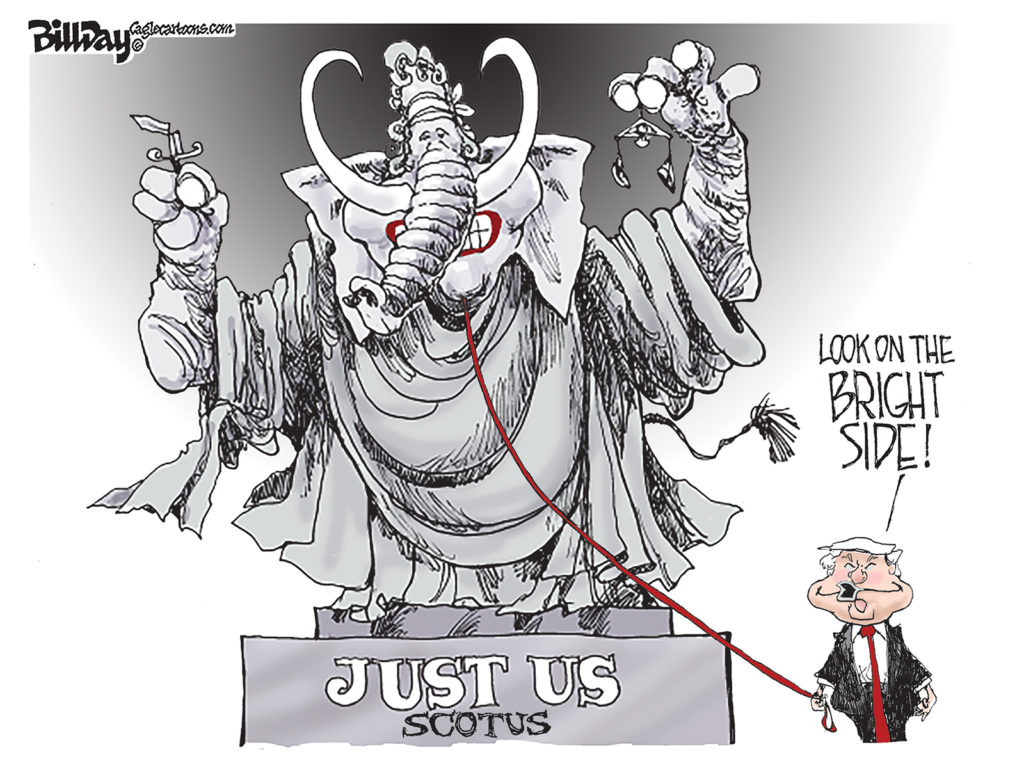
OKLA Home A, A Bill Day Cartoon

by Bill Day. Memphian Bill Day is two-time winner of the RFK Journalism Award in Cartooning. His cartoons are syndicated internationally by Cagle Cartoons. Cartoons Archive →

Photograph by Amie Vanderford

More Images

This ongoing series of photographs is intended to show the daily lives of these single mothers in order to invoke recognition of their similarities to all mothers, along with understanding and empathy from the viewer of the strengths that these single mothers possess within the challenging situations they face. My hope is that newfound empathy with these mothers’ lives will give people some pause before they condemn single mothers when discussing issues such as welfare and other politically charged hot buttons.

  • Subscribe to Posts via Email

    You can get Smart City Memphis posts right in your e-mail box. Just sign up below to begin receiving them.


  • RSS

    • All aboard: Engaging the public on transport projects

    • Weaving people back into the urban fabric

    • How clean is the air we breathe in cities?

    • Friday Fun: Self-driving automobile + Bus + Taxi = Otobuxi

    • Q&A with Hernan Navarro: Lima’s El Metropolitano BRT

    • Should the speed limit on arterial roads increase?

  • RSS

    • New Ventilation System Keeps Buildings Fresh But Warm

    • Eight Guidelines to Keep Creativity at the Heart of Cities

    • Infographic: Cities Embracing the Green Revolution

    • The Economic and Educational Value of Retrofitting Schools

    • Greening Cities with Better Bike Lanes

    • Texas and Bangladesh: Tragedies of Placeless Economics

  • RSS

    • Invention of the Day: Shoes That Generate Power From Your Steps

    • Drowning Was the Largest Cause of Death From Superstorm Sandy

    • Anthony Weiner's NYC Mayoral Campaign Website Features ... the Pittsburgh Skyline

    • What's Going On With Rob Ford, Toronto's Alleged Crack-Smoking Mayor?

    • Dramatic Photographs of Alaska's Erupting Volcano, as Seen From Space

    • Selling the Public on Public Housing

  • Search Posts

  • About Smart City Memphis

    This is Smart City Consulting's blog and its purpose is to connect the dots and provide perspective on events, issues, and policies shaping Memphis and its future. Smart City Memphis was named one of the most intriguing blogs in the U.S. by the Pew Partnership for Civic Change, it was voted the best Memphis blog in About.com's Reader's Choice Awards, and The (Memphis) Commercial Appeal wrote: "Smart City Memphis provides some of the most well-thought-out thinking about Memphis' past, present, and future you'll find anywhere." Our blog's editor is Tom Jones, principal at Smart City Consulting and an editorial contributor at Memphis magazine, where he writes the monthly column, City Journal. Submit blog posts, ideas, suggestions, and emails to tjones@smartcityconsulting.com.
  • Archives

    • May 2013 (23)
    • April 2013 (34)
    • March 2013 (27)
    • February 2013 (31)
    • January 2013 (30)
    • December 2012 (29)
    • November 2012 (31)
    • October 2012 (33)
    • September 2012 (29)
    • August 2012 (33)
    • July 2012 (26)
    • June 2012 (33)
    • May 2012 (33)
    • April 2012 (31)
    • March 2012 (37)
    • February 2012 (32)
    • January 2012 (35)
    • December 2011 (29)
    • November 2011 (30)
    • October 2011 (34)
    • September 2011 (33)
    • August 2011 (39)
    • July 2011 (36)
    • June 2011 (41)
    • May 2011 (36)
    • April 2011 (57)
    • March 2011 (39)
    • February 2011 (45)
    • January 2011 (56)
    • December 2010 (44)
    • November 2010 (30)
    • October 2010 (28)
    • September 2010 (24)
    • August 2010 (22)
    • July 2010 (23)
    • June 2010 (34)
    • May 2010 (28)
    • April 2010 (32)
    • March 2010 (35)
    • February 2010 (31)
    • January 2010 (43)
    • December 2009 (49)
    • November 2009 (17)
    • October 2009 (24)
    • September 2009 (23)
    • August 2009 (18)
    • July 2009 (22)
    • June 2009 (28)
    • May 2009 (23)
    • April 2009 (23)
    • March 2009 (26)
    • February 2009 (25)
    • January 2009 (36)
    • December 2008 (15)
    • November 2008 (22)
    • October 2008 (21)
    • September 2008 (25)
    • August 2008 (23)
    • July 2008 (32)
    • June 2008 (27)
    • May 2008 (35)
    • April 2008 (26)
    • March 2008 (25)
    • February 2008 (29)
    • January 2008 (33)
    • December 2007 (20)
    • November 2007 (19)
    • October 2007 (32)
    • September 2007 (25)
    • August 2007 (25)
    • July 2007 (26)
    • June 2007 (16)
    • May 2007 (21)
    • April 2007 (25)
    • March 2007 (18)
    • February 2007 (16)
    • January 2007 (17)
    • December 2006 (16)
    • November 2006 (14)
    • October 2006 (18)
    • September 2006 (21)
    • August 2006 (20)
    • July 2006 (20)
    • June 2006 (17)
    • May 2006 (12)
    • April 2006 (19)
    • March 2006 (20)
    • February 2006 (23)
    • January 2006 (16)
    • December 2005 (23)
    • November 2005 (21)
    • October 2005 (23)
    • September 2005 (19)
    • August 2005 (27)
    • July 2005 (23)
    • June 2005 (16)
    • 0 (2)
  • Categories

  • Contributors

    • Aaron Shafer
    • Andrew Trippel
    • Anthony Siracusa
    • Barry Chase
    • Brad Leon
    • Brian Stephens
    • CEOs for Cities
    • Charles Santo
    • Chris Sanders
    • Crosstown Collaborative
    • David Williams
    • Doug Imig
    • Elizabeth Alley
    • Elizabeth Lemmonds
    • Emily Trenholm
    • Eric Mathews
    • Gene Pearson
    • Gene Pearson and Louise Mercuro
    • George Lord
    • Greg Thompson
    • Gwyn Fisher
    • Janet Boscarino
    • Jim Strickland
    • Jimmie Covington
    • John Kirkscey
    • John Lawrence
    • Jonathan Flynt
    • Josh Whitehead
    • Julie Ellis
    • Kenya Bradshaw
    • Laura Adams
    • Leah Wells
    • Louise Mercuro, AICP
    • Lurene Cachola Kelley
    • Margot McNeeley
    • Mark James
    • Matt Farr
    • Matt Timberlake
    • Melissa Petersen
    • Natashia Gregoire
    • Ray Brown
    • Rev. Steve Montgomery
    • Robert Bain
    • SCM
    • Scott L. Newstok
    • Smart City Memphis
    • Smart City Radio
    • Steve Bares
    • Steve Lockwood
    • Susan Adler Thorp
    • Tom Jones
    • Tomeka Hart
    • Tommy Pacello
    • Women Unite
    • Zach Hoyt

© 20111-2013 Smart City Memphis. All rights reserved.

  • Register
  • Log in
  • RSS
  • Smart City Radio
  • Smart City Consulting