
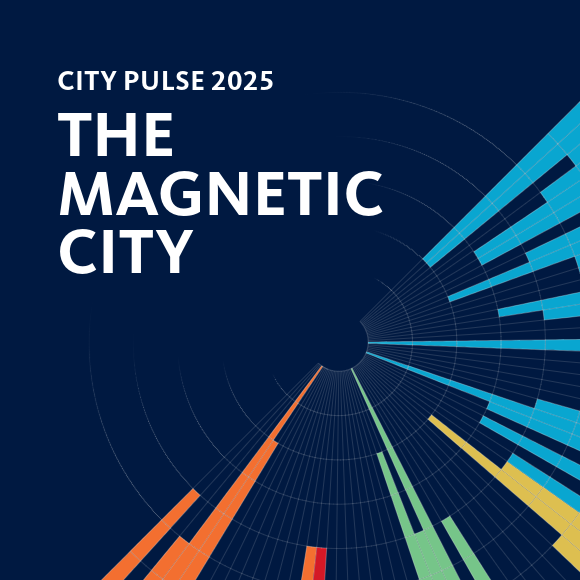
We live in a time of valuable research with insights into how cities succeed – and how they fail – and how they attract people and how they keep them.
I’m not talking about the eye candy rankings produced by moving companies, rental companies, financial companies, and the like. Those are aimed at attracting clicks but in the end offer little strategic insight in reversing Memphis’ disturbing – and accelerating – population loss.
That’s because these kinds of clickbait rankings are about cherry-picking some data points and deciding they determine whether a city is a great place for couples, for single women, for college graduates, and any other categories you might choose. But the thing is the ranking can change dramatically based on a different set of data points subjectively chosen.
More valuable is objective research that relies on what people think when making a decision on where to live and what leads them to stay. There has been some interesting research in this area and Memphis, Shelby County, and the MSA should take notice.
Why Isn’t Memphis Sticky
There’s never been a more critical time to reassess why Memphis isn’t a “sticky” city like it once was, a place where people don’t just move but decide to stay. They are the places where the residents find the qualities they value and the emotional connections to their cities, and in staying, they contribute to stability and vitality.
It raises the question about whether lack of stability and vitality might be at the heart of Memphis’ disturbing – and accelerating – population loss which is producing angst but no serious plan to reverse the trend line.
The numbers tell the story: Memphis lost 13,785 people between 2010-2020 but the trend worsened in 2020-2024 with the loss of an additional 22,185, creating total population loss of 35,970 since 2010.
So, what about Memphis did not produce a stronger love of place and connection based as much on feelings as on the physical. National and international surveys offer us insights into answers about why Memphis is bleeding population but exactly who holds the portfolio to develop serious strategies based on the additional intellectual capital.
Feelings Matter
Gensler’s latest survey, City Pulse 2025: The Magnetic City, is based on the opinions of 33,000 residents in 65 global cities to uncover where people live and why.
The report said: “Over time, what anchors someone in place is not just what it provides, but how it feels. A city becomes home when it inspires pride, offers moments of joy, and fosters a true sense of belonging. Belonging isn’t a ‘soft’ idea. It is a core urban asset. Places where people feel anchored and empowered are more stable, resilient, and innovative.”
In ranking the factors that most strongly influence to stay in a city, it’s important to note that the top five of 152 factors were more emotional than practical:
- I don’t feel bored in my city.
- I feel at home in my city.
- I am proud of my city
- My city is getting better as a place to age
- My sense of belonging has grown over time.
When all of the factors are summed up, the conclusion said that “cultivating deep emotional bonds is essential to maintaining residents. It’s not enough to build economic infrastructure alone; cities must also invest in vibrancy, community, cultural richness, and social connection – qualities that transform a city from a place to life to a space to thrive.
The Magnetic City Report added: “Urban success is not just about attracting people to cities; it is also about building places where they want to stay. To stay in a city, people need to feel engaged, connected, and safe at all life stages. When residents have a deep sense of attachment, they see their city in a longer time frame including as a place to age. By investing in places that strengthen identity, foster community, and connect neighborhoods, cities can cultivate lasting relationships with residents – and in turn, become stronger and more competitive.”
Questions That Deserve Answers
It raises the question of when and how this bond was broken in Memphis and how it led to the historic population loss.
If feelings matter so much and Memphis is as much a feeling as anything, what went wrong?
If the connection between person and place is about experiences, social ties, sense of belonging and familiarity, is what we’re telling ourselves merely self-hypnosis when it comes to claiming these factors for Memphis?
If cultivating the connection to place is the most important strategy for cities seeking to build and retain a resilient population for the future, where did our community go wrong?
After all, we have the Greater Memphis Chamber, Memphis Tourism, and Memphis Brand spending millions of dollars bragging about Memphis to create positive attitudes but are Memphians buying it?
Do we need more candor – and not rely so much on anecdotes – about the realities of living in Memphis instead of mere cheerleading?
The Price of Sprawl and Annexation
In retrospect, it’s more and more obvious that sprawl and annexation were factors that debilitated Memphis. It stretched the city to the breaking point in delivering and affording public services but it also broke the sense of shared purpose and a mutual “we’re all in this together” attitude that were present in the more compact Memphis. In particular, gobbling up hundreds of square miles in annexations allowed Memphis politicians – and the business community which pushed for it – to delude themselves into thinking that the city was still growing when it had actually stopped decades earlier. After about 1970, the Memphis population was being propped up by absorbing new areas and neighborhoods into the city.
The City Pulse 2025: The Magnetic City offers help. The people surveyed overwhelmingly said they were attracted to cities with good costs of living (83%); safety (81%); high quality health care (80%); job opportunities (74%), and level of taxes (70%). Memphis has an attractive cost of living but it doesn’t appear to be positive enough to keep tens of thousands of its citizens from moving to adjoining counties, and while crime rates have been dramatically reduced, it’s likely that public positive perceptions have not climbed as sharply.
Then, too, about 140,000 people stay in Memphis because they have little choice. They are trapped by poverty which raises the question of what kind of city is being built. Is Memphis building a MATA-style city in which people are treated to insufficient service and a “take it or leave it” approach to public services that treat people as if they have to settle for whatever they are given as Memphis emphasizes cheapness over quality?
Said another way: as people are deciding whether to stay in Memphis, are services and amenities telling them that they aren’t valued in their own city and that creating high-quality and vibrant places more of a talking point than a policy plan.
After all, the survey proved that intangible and intuitive factors are as crucial as tangible factors in a person deciding that a city will remain their home.
The survey concluded that families with children feel the most optimistic about their cities’ futures. It is difficult to say this is true for families in Memphis and the Memphis region.
A city’s general attractiveness, ample opportunity for recreation and fun, and vibrancy are keys to it not being boring and this is crucial. Boredom is a killer because bored people are over three times more likely to leave.
Memphis was not surveyed to determine the share of residents who say they are satisfied with their city as a place to live but it did suggest indications for Memphis. Memphis’ performance is often grouped with Detroit (66.3%) and Baltimore (50.1%), and we compare ourselves ambitiously to Nashville (71.1%) and Atlanta (70.1%). It would seem that the share of Memphians satisfied with their city as a place to live would be between 50% and 66%.
Memphis Ranks #81 in Performance
Placemaking and place branding firm resonance issued The Performance of America’s Best Cities which evaluates the top 100 cities within a context of the most vibrant and livable ones that balance economic opportunity, culture, and quality of life, using its proprietary Place Power Score methodology which uses innovative metrics and includes perception data from Ipsos survey of 2,003 people.
The Memphis MSA was ranked #81.
The sub-heading: “A city full of American lore is writing its next chapter.” The evaluation said:
“Tennessee’s second-largest city is an American icon that has been quietly adding to the national lore from the bluffs and floodplains that line the eastern bank of the Mississippi River for more than two centuries. The heart of the Delta Blues and famously home to Graceland, the “spiritual birthplace” of Elvis, it is the lesser-known Music City, USA. But those two honors can’t hold a pick to the city’s contributions to the Civil Rights Movement. Or to its barbecue. With so many stories to tell (most recently in a starring role in the Elvis biopic), Memphis ranks #28 nationally in our Museums subcategory—home to the National Civil Rights Museum in addition to Graceland. It’s not surprising that others are telling the city’s stories these days: Memphis ranks #28 in the nation for Tripadvisor Reviews, #27 for Facebook Check-ins and #38 in our overall Lovability index. And business is good, with a #53 ranking for large companies and a number of corporate titans, including FedEx and AutoZone, headquartered here. Affordable housing and new urban investment—from the South City Redevelopment to the upscale residential community The Legacy at Colonial—keep Memphis rocking.”
Nashville MSA was #23; Knoxville MSA #73; and Chattanooga MSA #98. Atlanta MSA was #12; Baltimore MSA was #26; St. Louis MSA was #29; Detroit MSA was #47; Louisville MSA was #57; Oklahoma City MSA was #86; Birmingham MSA was #90; and Little Rock was #93.
Memphis’ Net Favorable Rating
Finally, in a survey by YouGov, Americans were asked what city they most favorably viewed. The answer: Nashville.
YouGov wrote: “Nashville leads the country in net favorability — the share of Americans who view it favorably minus the share who view it unfavorably. Just behind Nashville and its +44 net favorability are San Diego, Colorado Springs, and Virginia Beach — each with net favorability of +39. Next in the ranking among the 50 biggest cities: Charlotte, N.C. (+37), Denver (+36), Raleigh, N.C., (+35), and San Antonio (+34).”
Memphis’ had a net favorability of +21.
For people who have visited each of the 50 largest cities in the U.S. the net favorability for Memphis is +25. In the list of 50 largest cities, Memphis finished in the 40th position in net favorability ahead of Los Angeles, San Francisco, Housing, and Chicago.
When it comes to people who live in suburbs, towns, and rural areas, Memphis is +17, but that rises to +32 for people who live in cities (which means they place Memphis in the 19th position among the 50 cities). Meanwhile, Republicans have much more favorable view of Memphis than Democrats – +33 compared to +17.
Intellectual Capital
As Memphis grapples with these issues – or more accurately, if it chooses to grapple with these issues – I write often about the need to increase the intellectual capital brought to bear on Memphis’ most knotty problems and how the academic expertise in our universities are too rarely tapped.
I was told recently that level of intellectual capital has been added to University of Memphis with the appointment of Krystal Laryea, a cultural and organizational sociologist who graduated in 2024 with her PhD from Stanford University. Her research examines the micro and meso level foundation of meaning, belonging, and integration in groups, organizations, and cities. The aim of her work is to shed light on the social processes that allow people to build relationships, communities, and institutions across lines of difference.
Her expertise and the academic rigor brought to the subjects of belonging and meaning appear to speak directly to what Memphis must deliver if people are to stay and the deeply concerning problem of population loss. Welcome, Krystal, we need you.
***
Join us at the Smart City Memphis Facebook page and on Instagram where these blog posts are published along with occasional articles, reports, and commentaries that are relevant to Memphis.






The answer to why Memphis is shrinking boils down to 2 factors – the schools and crime. The cost of housing/living in Memphis is very favorable compared to even our suburban neighbors, however, young families with children looking for an affordable starter home won’t look at Memphis because of our deplorable school system and the incompetent people in charge of it. When you factor in the crime too it’s a wonder that anybody with children would live here.
Ken is right. In consideration of his thoughts : The voucher system will expand for young people and workforce training of adults is occurring. Public education is not effective for whatever reason. Crime is being tackled with significant help from Fed and State level; it is never to late. Mayor Young has it right and he is communicating from a bigger picture stand point. He says over and over, we need two things 1. rising incomes from work and 2. re-population. The Mayor says, “density” and “housing” rather than re-population. He also says, de-annexing, or managing a smaller footprint will be helpful. The Memphis3.0 building plan will have code and zoning reductions and refinements that will speed up housing. The building permits average 300 to 250 a month now, so, we might have 12,000 housing units by year end 2030. The Mayors 2030 goal is 10,000 housing units. The goal is to get native citizens in those homes. The assets in the city are improving with K-12 schools, TCAT, jobs4TN, childcare, grocery stores, parks and urban shops. We need income growth and income velocity to make this work. Industry is showing up. “Memphis is ranked #1 for Economic Development since 2019” Governor Lee said last week.
I’d love to see Lee’s evidence. I’ve posted a lot of data on this blog that shows the contrary.
Meanwhile, we need a comprehensive plan in which all the prime strategies converge and interconnect rather than talking points. The fact that in only a few years Memphis was turned from a city of homeowners into a city of renters by investors, including the “whale” investors, demands attention and policy interventions.
My granddaughter attends public school and has thrived. Voucher data don’t show results that justify the spending. It seems more of the war on teachers and public schools agenda of right wing Republican supermajority.
Revising population loss will take disruptive change. I’m hoping to see it soon.
Thanks for comment.
Very good analysis, Tom. Now, for action.