
Part 1 of this post can be read here.
**
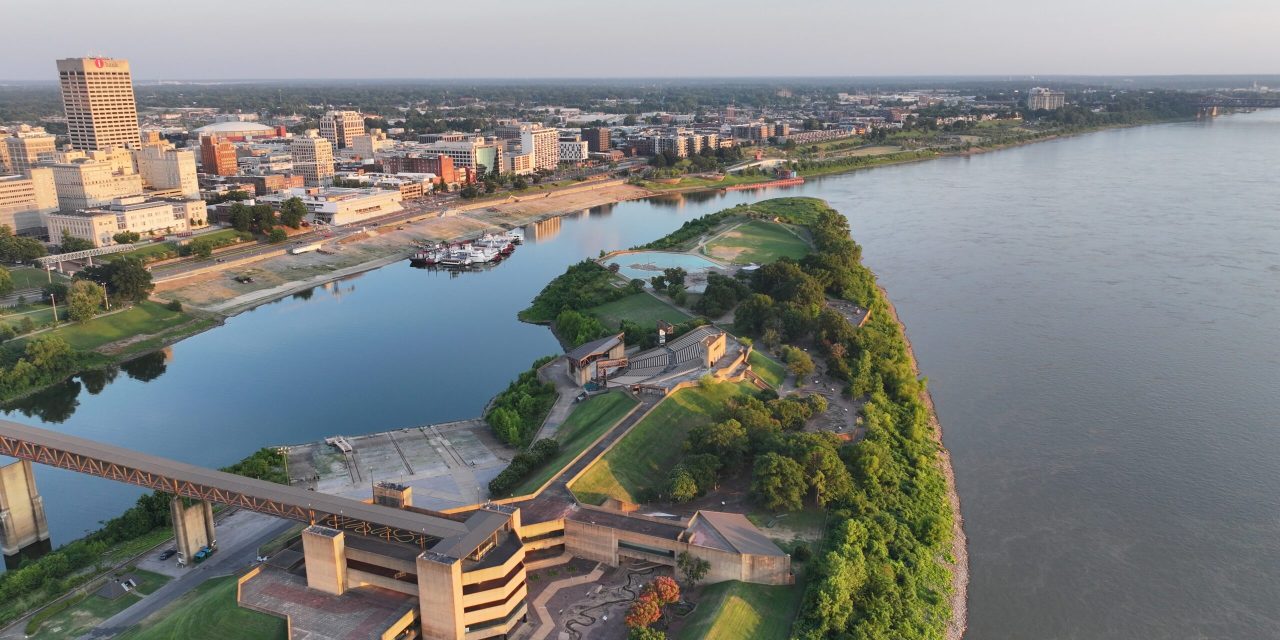
The Mud Island Amphitheater is an issue that offends few stakeholders and flatters civic nostalgia. But that comes at a real cost.
Time, money, and attention are finite. Incremental fixes at Mud Island can’t substitute for vision and inches the city to another half-measure that ultimately does little to advance the ball on Mud Island or represent the best use of city funding.
The danger is not that the amphitheater fails outright. The danger is that it limps along just enough to justify more money, more excuses, and more delay and takes the eye off creating a productive future for Mud Island.
Put simply, Memphis does not need another reheated idea from the 1980s. It needs leadership willing to say plainly that the amphitheater is not the linchpin of Mud Island’s future. And it means resisting the temptation to confuse activity with progress.
A Cautionary Tale
“Orion Amphitheater spent $4 for every $1 it makes,” the headline in the Huntsville Times said. That venue has been touted as a model for Memphis but it is now more of a cautionary tale.
The most vocal supporters for renovating Mud Island Amphitheater have held up Orion as a model for what the Mud Island facility could be, even saying it could hold as many as 30 concerts a year – although it never has. In the 10 years before the last concerts were held in 2018, the amphitheater had an average of five concerts a year.
In addition, the $150,000, 169-page report last year by Sound Diplomacy, a consulting firm whose template seems to suggest every client city can be a music mecca, also supported Orion as the venue Memphis should use as inspiration for the Mud Island facility amphitheater.
The $47 million, 8,000-seat Orion Amphitheater opened in 2022 and the hyperbole has now come face-to-face with reality. In the venue’s latest financial report, it said that just under $2 million in tickets were sold, and with sponsorships and marketing agreements, it had $2.8 million in income. That compares to expenditures of $11.2 million.
The City of Huntsville is subsidizing the venue with more than $7 million but that was not enough to cover the deficit and Orion Amphitheater ended up more than $1.4 million in the red.
The harsh financials led to the newspaper coverage about Orion spending $4 to make $1. It’s the same financial profile the facility has had since it opened, losing money every year and requiring significant infusions of taxpayer money from Huntsville taxpayers.
In truth, it seems the debate about the Mud Island amphitheater persists not because it is logical, but because it is politically convenient and safe. It allows officials to look busy without confronting the deeper, more uncomfortable truths about Mud Island.
Obsession Or Strategy
In this way, the continued obsession with the amphitheater is not just misplaced. It is symptomatic of a deeper unwillingness to confront structural problems head-on. Until that changes, Mud Island will remain stuck—not because it lacks potential, but because the city lacks the political will to imagine something better.
To that end, it’s time for Memphis City Council to shake off its convenient amnesia and officially adopt the 2022 HR&A Advisors study. After all, it paid for it. HR&A, the nationally respected real estate and economic development firm, wrote a professional assessment of Mud Island’s future.
City Council should not keep paying for national expertise and insight and then ignore it until they are politically comfortable. That’s the lure of Mud Island Amphitheater. It enables politicians to look like they are doing something when it is inconsequential to the broader question of what Mud Island can become.
The HR&A Advisors study laid out a clear-eyed framework for what works, what doesn’t, and what it will take to turn Mud Island into a functional, publicly valuable part of the city again. Best of all, the advisers began with the right question: “What can you do on Mud Island that will be self-sustaining, distinctive, and add to the quality of life in Memphis that you can’t do anywhere else in Memphis or downtown?”
Its advice: any potential use must occupy Mud Island’s footprint of 52 acres, it should take advantage of the island’s limited access (not fight it), it should embrace some form of public access, it should not compete with downtown, it should have curb appeal from I-40 and downtown, it should not rely solely or principally on government money, it should produce enough revenue to cover Mud Island operations, and it should have a viable plan B if plan A fails or falters.
It begins with letting go of what Mud Island has been and looking at not only what it can be but what is likely to be successful for the future. “The key to places like this is to start from a place of real, direct honesty about opportunities and challenges,” said HR&A partner Jonathan Meyers. His firm recommended the expansion of development on the north end, creating destination entertainment, commercial, and recreation activities, river research and education uses, and emphasizing nature and the impact of the river.
Defining Success
Hyperbole and nostalgia are a poor bet for a successful Mud Island that it is dire need of reinvestment when it needs a 52-acre concept rather than piecemeal development as ideas come along. Of course, it also depends on how success is defined – revenue generation, new investment, civic benefit, increased visits, educational uses or other potential benefits.
There’s no denying that it’s a challenge. Otherwise, there would already be there the Mud Island aquarium that COO Doug McGowen pushed energetically in the Strickland Administration but instead the grand scheme fell flat. In 2017, he said the $125 million aquarium and a pedestrian bridge connecting the mainland to the southern tip of Mud Island would begin construction in no more than four years later. Only the Memphis Business Journal followed up in 2020 when reporter Corey Davis was told the city was still open to the idea but there are no active plans.
If the future of Mud Island was not problematic and an amphitheater profitable, Live Nation would have pursued its conversations with the River Parks Partnership about managing of the amphitheater. Instead, it looked for substantial public guarantees and it suggested the amphitheater is in the wrong place, suggesting a better location is on the south end of Mud Island. The company’s reticence is understandable: many promoters say that Memphis is an easy place to lose a lot of money in because the market is so soft.
Rather than Mud Island, Live Nation will operate the 1,300 seat indoor Satellite Music Hall, which is scheduled to open this year. Its location near Crosstown Concourse is likely related to Southeastern Asset Management’s stake in Live Nation. The Memphis global investment firm’s vice-chair Staley Cates has been pivotal in the revitalization of the former Sears store and distribution center into a vibrant, mixed-use “vertical urban village.”
Then there is also Grind City Amp, the outdoor music venue at Grind City Brewing Company with its general admission capacity of 4,500. It’s located little more than a mile from Mud Island Amphitheater. Its first concert is scheduled for April 22 with the Alabama Shakes. And this isn’t even including the venerable Minglewood Hall, Graceland Soundstage, and Orpheum Theatre and Halloran Center.
All in all, it should raise serious questions about spending millions of dollars on the Mud Island Amphitheater for a smattering of concerts.
**
Join me at the Smart City Memphis Facebook page and on Instagram where these blog posts are published along with occasional articles, reports, and commentaries that are relevant to Memphis.




What if the focus is on the wrong events? Perhaps the real events should be plays, small-scale productions that appeal to very limited crowds but appealing to different local crowds. Limiting the budget needed for repairs. Focus has been on Tom Lee but the island is the other true downtown park and in many ways the front door to Memphis. The island should not be thought of as competing with downtown but rather as a complementary asset of downtown. If I were a visitor to your city, (I am not a native nor do I live here), esp. during nice weather, I would make a point of visiting it.