
Smart City Memphis
 

Sign up or Login

Looking for Better Answers to Blight

by Smart City Memphis (RSS) | January 3rd, 2013 12:18am CDT

Tweet

The poster child for the blight that dogs Memphis stands at Winchester Road and Cazassa Drive in Whitehaven. There, three apartment complexes are emblematic of how hard it is to attack urban blight.

Just this one location involves real estate speculation, a Ponzi scheme, New York investors, an Israeli company, a flip scam, a tax freeze, a Shelby County tax sale, City of Memphis legal threats, and a conscientious owner of one complex overwhelmed by the deteriorating conditions of the other two adjacent complexes.

Here’s the scope of the problem: there are 9,000 Memphis addresses where the electricity has been cut off for more than six months and 30 percent of them are apartments.

Nothing has a greater degree of difficulty than massive complexes like those at Winchester and Cazassa. They stand in stark contrast to the upbeat rhetoric about the future of aerotropolis and Whitehaven, and all the happy talk about better days ahead only heightens the frustration of the residents living near the apartments, where fires have been common place and where empty apartments are magnets for the kinds of activities that prompt frequent calls to the police.

Two of the complexes have been empty for three to five years. Lawsuits were filed several years ago, but only one owner could be found and the company owning another was defunct. The owner of the third agreed to a plan to sell the complex, but there was a big problem: no one wanted to buy.

The owner was willing to turn the complex over to a nonprofit organization or to local government, but no one had the resources or power to do it. Eventually, an investor took possession, a New York investment company foreclosed on it, a real estate broker bought it for $200,000 and sold it for $400,000 in a flip scam before it was quit claimed for $10,000 to an Israel company.

There was a time not too many years ago that it had an owner who kept it well-tended, receiving a tax freeze from the Memphis Health, Education, and Housing Facility Board. After the complex was sold and declined for several years, the Health Ed Facility Board demanded maintenance, but it turned out the FBI was investigating the buyer and the property was part of an affinity Ponzi scheme targeting Mormons.

Today, the previous owner has returned and would like to increase the value of his investment by demolishing the declining apartment complex next door. However, earlier this year, the Shelby County Trustee surprised everyone, as often happens with delinquent tax sales, by putting the property on the auction block for back taxes although it had negative value. To complicate matters even more, the Shelby County Board of Commissioners instructed the trustee not to take the property, which begs the question of what the plan for the property is now.

It’s quite a saga and while it plays out, the overall neighborhood is damaged by the prominent problem properties deteriorating in its midst. More than anything, it points to the need for serious reform of a hopelessly inefficient process that traps hundreds of properties in legal limbo. Because no one in the process knows what anyone else is doing and the emphasis is more about collecting back taxes than building stronger neighborhoods, properties are kept out of circulation for five years as they move through the tax sale process. Even after the tax sale, what is missing is a process to convert blighted properties to productive use.

It takes the help of the Tennessee Legislature to correct the flaws in the system and create a new, streamlined tax foreclosure system that requires action within two to three years and stops the irrational churning of some tax sales properties. That dependable, more efficient process should be coupled with a true Land Bank that serves as the single point of entry for every tax sale property and that has the power and the resources to circumvent the foreclosure process with the tools to assemble property, transfer it to nonprofit organizations, use it for community gardens and other “green uses,” manage an Adopt-a-Lot program, order demolition, and renovate houses at key locations.

It takes a major shift in thinking, but the payoff is a totally new way of dealing with foreclosed property and putting it to productive use by community development-minded agencies. In the end, the greatest enemy to blight reduction in Memphis is not the considerable legal complexities, but the temptation to stick with the status quo because that’s the way it’s always been done.

Published in December issue of Memphis magazine as its City Journal column


Categories: Neighborhoods, Poverty

Comments RSS Feed

One Comment

  1. Anonymous says:
    January 8, 2013 at 2:31 pm

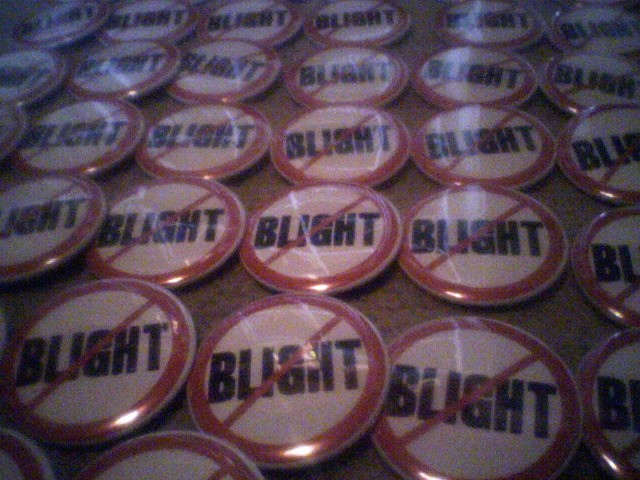
    I thank wearing me one O them buttuns would fix it!

Kidnapped Women, A Bill Day Cartoon

by Bill Day. Memphian Bill Day is two-time winner of the RFK Journalism Award in Cartooning. His cartoons are syndicated internationally by Cagle Cartoons. Cartoons Archive →

Photograph by Amie Vanderford

More Images

This ongoing series of photographs is intended to show the daily lives of these single mothers in order to invoke recognition of their similarities to all mothers, along with understanding and empathy from the viewer of the strengths that these single mothers possess within the challenging situations they face. My hope is that newfound empathy with these mothers’ lives will give people some pause before they condemn single mothers when discussing issues such as welfare and other politically charged hot buttons.

  • Subscribe to Posts via Email

    You can get Smart City Memphis posts right in your e-mail box. Just sign up below to begin receiving them.


  • RSS

    • Weaving people back into the urban fabric

    • How clean is the air we breathe in cities?

    • Friday Fun: Self-driving automobile + Bus + Taxi = Otobuxi

    • Q&A with Hernan Navarro: Lima’s El Metropolitano BRT

    • Should the speed limit on arterial roads increase?

    • Promoting ridesharing for the daily commute in Mumbai

  • RSS

    • Eight Guidelines to Keep Creativity at the Heart of Cities

    • Infographic: Cities Embracing the Green Revolution

    • The Economic and Educational Value of Retrofitting Schools

    • Greening Cities with Better Bike Lanes

    • Texas and Bangladesh: Tragedies of Placeless Economics

    • Urban Ideology in Obama’s Brand of Regionalism

  • RSS

    • New Satellite-Eye Views of the Deadly Oklahoma Tornado

    • Airline Perk of the Day: A Book That Lasts Precisely the Length of Your Flight

    • Imagining Syracuse Without Its Elevated Highway

    • Where Do Schools Spend the Most Per Kid?

    • The Surprising Reason Oklahoma Doesn't Have Enough Tornado Shelters

    • Atlanta's Getting a Ferris Wheel

  • Search Posts

  • About Smart City Memphis

    This is Smart City Consulting's blog and its purpose is to connect the dots and provide perspective on events, issues, and policies shaping Memphis and its future. Smart City Memphis was named one of the most intriguing blogs in the U.S. by the Pew Partnership for Civic Change, it was voted the best Memphis blog in About.com's Reader's Choice Awards, and The (Memphis) Commercial Appeal wrote: "Smart City Memphis provides some of the most well-thought-out thinking about Memphis' past, present, and future you'll find anywhere." Our blog's editor is Tom Jones, principal at Smart City Consulting and an editorial contributor at Memphis magazine, where he writes the monthly column, City Journal. Submit blog posts, ideas, suggestions, and emails to tjones@smartcityconsulting.com.
  • Archives

    • May 2013 (21)
    • April 2013 (34)
    • March 2013 (27)
    • February 2013 (31)
    • January 2013 (30)
    • December 2012 (29)
    • November 2012 (31)
    • October 2012 (33)
    • September 2012 (29)
    • August 2012 (33)
    • July 2012 (26)
    • June 2012 (33)
    • May 2012 (33)
    • April 2012 (31)
    • March 2012 (37)
    • February 2012 (32)
    • January 2012 (35)
    • December 2011 (29)
    • November 2011 (30)
    • October 2011 (34)
    • September 2011 (33)
    • August 2011 (39)
    • July 2011 (36)
    • June 2011 (41)
    • May 2011 (36)
    • April 2011 (57)
    • March 2011 (39)
    • February 2011 (45)
    • January 2011 (56)
    • December 2010 (44)
    • November 2010 (30)
    • October 2010 (28)
    • September 2010 (24)
    • August 2010 (22)
    • July 2010 (23)
    • June 2010 (34)
    • May 2010 (28)
    • April 2010 (32)
    • March 2010 (35)
    • February 2010 (31)
    • January 2010 (43)
    • December 2009 (49)
    • November 2009 (17)
    • October 2009 (24)
    • September 2009 (23)
    • August 2009 (18)
    • July 2009 (22)
    • June 2009 (28)
    • May 2009 (23)
    • April 2009 (23)
    • March 2009 (26)
    • February 2009 (25)
    • January 2009 (36)
    • December 2008 (15)
    • November 2008 (22)
    • October 2008 (21)
    • September 2008 (25)
    • August 2008 (23)
    • July 2008 (32)
    • June 2008 (27)
    • May 2008 (35)
    • April 2008 (26)
    • March 2008 (25)
    • February 2008 (29)
    • January 2008 (33)
    • December 2007 (20)
    • November 2007 (19)
    • October 2007 (32)
    • September 2007 (25)
    • August 2007 (25)
    • July 2007 (26)
    • June 2007 (16)
    • May 2007 (21)
    • April 2007 (25)
    • March 2007 (18)
    • February 2007 (16)
    • January 2007 (17)
    • December 2006 (16)
    • November 2006 (14)
    • October 2006 (18)
    • September 2006 (21)
    • August 2006 (20)
    • July 2006 (20)
    • June 2006 (17)
    • May 2006 (12)
    • April 2006 (19)
    • March 2006 (20)
    • February 2006 (23)
    • January 2006 (16)
    • December 2005 (23)
    • November 2005 (21)
    • October 2005 (23)
    • September 2005 (19)
    • August 2005 (27)
    • July 2005 (23)
    • June 2005 (16)
    • 0 (2)
  • Categories

  • Contributors

    • Aaron Shafer
    • Andrew Trippel
    • Anthony Siracusa
    • Barry Chase
    • Brad Leon
    • Brian Stephens
    • CEOs for Cities
    • Charles Santo
    • Chris Sanders
    • Crosstown Collaborative
    • David Williams
    • Doug Imig
    • Elizabeth Alley
    • Elizabeth Lemmonds
    • Emily Trenholm
    • Eric Mathews
    • Gene Pearson
    • Gene Pearson and Louise Mercuro
    • George Lord
    • Greg Thompson
    • Gwyn Fisher
    • Janet Boscarino
    • Jim Strickland
    • Jimmie Covington
    • John Kirkscey
    • John Lawrence
    • Jonathan Flynt
    • Josh Whitehead
    • Julie Ellis
    • Kenya Bradshaw
    • Laura Adams
    • Leah Wells
    • Louise Mercuro, AICP
    • Lurene Cachola Kelley
    • Margot McNeeley
    • Mark James
    • Matt Farr
    • Matt Timberlake
    • Melissa Petersen
    • Natashia Gregoire
    • Ray Brown
    • Rev. Steve Montgomery
    • Robert Bain
    • SCM
    • Scott L. Newstok
    • Smart City Memphis
    • Smart City Radio
    • Steve Bares
    • Steve Lockwood
    • Susan Adler Thorp
    • Tom Jones
    • Tomeka Hart
    • Tommy Pacello
    • Women Unite
    • Zach Hoyt

© 20111-2013 Smart City Memphis. All rights reserved.

  • Register
  • Log in
  • RSS
  • Smart City Radio
  • Smart City Consulting