
Smart City Memphis
 

Sign up or Login

TDOT Returns to Its Old Ways

by Smart City Memphis (RSS) | December 27th, 2012 12:25am CDT

Tweet

The headline about the Tennessee Department of Transportation’s double standard for I-69 and I-269 provoked the image here of Jack Nicholson in The Shining: “I’m baaaaaaack.”

And so it is for TDOT.

With the election of Governor Bill Haslam, former commissioner of TDOT Gerald Nicely, got the boot as did his more sensitive approach to TDOT transportation projects which had run roughshod over local community wishes for decades.  It was Mr. Nicely who introduced context sensitive design into the TDOT vocabulary, and although he didn’t go as far as we hoped at times, he was revolutionary within the TDOT environment, where roadbuilders have long held sway.

When Phil Bredesen ran for election as governor in 2002, he said that TDOT was “out of control” and ran campaign ads pledging to clean up the troubled agency that had been the target of outside lawsuits and frequent fines by the state Department of Environment and Conservation.  Governor Bredesen was right, but there are troubling signs that the Haslam Administration is undoing those reforms, most notably the environmental protections that were set in place.

Lacking Rationality

With the announcement about I-69, TDOT appears to have firmly returned to the land of the special interests where people have never seen a highway they don’t like and has never seen sprawl as a problem or bad for any Tennesseee community.

As a former mayor, TDOT Commissioner John Schroer should know better, but then again, perhaps, he thought that Nashville’s big boondoggle project, the massive circumferential state highway 840, was actually sound transportation planning.  The $753 million that the 78 mile interstate-type Nashville southern bypass has cost has been paid entirely by TDOT over 21 years, but when it comes to I-69, the TDOT commissioner says he cannot make a similar long-term commitment to the West Tennessee roadway.

Notably, plans for SR 840 were included in the 1986 Better Roads Program, and if nothing else, it was certainly truth in advertising.  It could never have been called the Better Communities program.  We’re sure the huge investment in unsustainable development is treated as “growth” in Nashville just like it is here.  If development interests and well-connected political contributors are good at anything, it is in greasing state processes whenever there is the opportunity to open up greenfield development even if it chokes off the city at its core and for the public to pay for the infrastructure to make it possible.

Meanwhile, while shutting off any funding for I-69, Commissioner Schroer announced that SR 840’s sister project in Shelby County – I-269 – will not be affected by this burst of fiscal concern by TDOT and I-269 will continue unabated despite any rational reason for its existence.

Political Highways

Our last post recounted the way that Mississippi politics outflanked all the opposition in Tennessee and added I-269 to the federal transportation plan although it was opposed by the Democratic Memphis mayor, the Republican Shelby County mayor, and the Republican Tennessee governor.  The elected officials rightly pointed out that there was no need for the highway because I-69 better responded to the needs of our large trucking industry.   It was more direct and more economical.  It simply made good sense.

Despite those facts, Mississippi politicians, motivated to open up the northern part of their state adjacent to Memphis for some powerful developers, sold I-269 as a necessary highway for the Memphis region to serve its distribution and freight industry.  The bait and switch became obvious when plans for the interstate had exits every mile on the route, something the freight industry hardly needed but would open up greenfields to developers, much of it unspoiled and ripe for conservation protections.

Over the years, the Republican Party all but abandoned any claim on Memphis itself and became more and more a party of the suburbs presided over by a number of vocal, anti-Memphis extremists.  Today’s Republican Party finds little concern in the unsustainability at the core of I-269 because they have deluded themselves that the benefits to the ‘burbs are significant although in time, the interstate will prove damaging to Germantown, Collierville, and Bartlett, draining revenues and residents from the towns.

Taking a Toll

Changes in this route seem about as possible as the MPO reform that is needed to make sure it’s not repeated, and so, if Mr. Schroer would like to do something to anything related to I-269 that would be helpful for this entire community, he should develop a plan to turn the project into a toll.

User fees are all the rage in government these days, so for I-269, the state should lead us toward user fees, or tolls, for vehicles on it.

In the past, the MPO (Metropolitan Planning Organization) has said that tolls can’t be put on interstate highways, but it’s done in other places.  In fact, there are now 3,175 miles of tolled highways in the interstate system.

If freight companies and developers want this highway, at least they should pay for it through user fees so that I-269 is paying its own way.  If developers want this road to line their pockets with another attack on sustainability, residents of its developments should pay for it.

Turnpikes to the Future

The Republican governor of Virginia received approval to add a toll on I-95 and it will generate $250 million over the first five years, Georgia created toll lanes on I-85 in suburban Atlanta, and other states are following suit.  There already are tolls on 129 miles of the Connecticut Turnpike; 30 miles of the Dallas-Fort Worth Turnpike; 305 miles of the Illinois Turnpike; 236 miles of the Kansas Turnpike, 531 miles of the Pennsylvania Turnpike, 280 miles of the Oklahoma turnpikes; and 45 miles of the Kentucky Turnpike, to mention but a few.

Perhaps, the toll could be used to develop a truly regional public transit system that delivers higher quality service to key job centers, the toll revenues could be used to rebuild existing infrastructure that needs repairs, or the revenues could support urban development or density-increasing projects.

Or, for that matter, tolls on I-269 could be used to build I-69.


Categories: Transportation

Comments RSS Feed

Comments are closed.

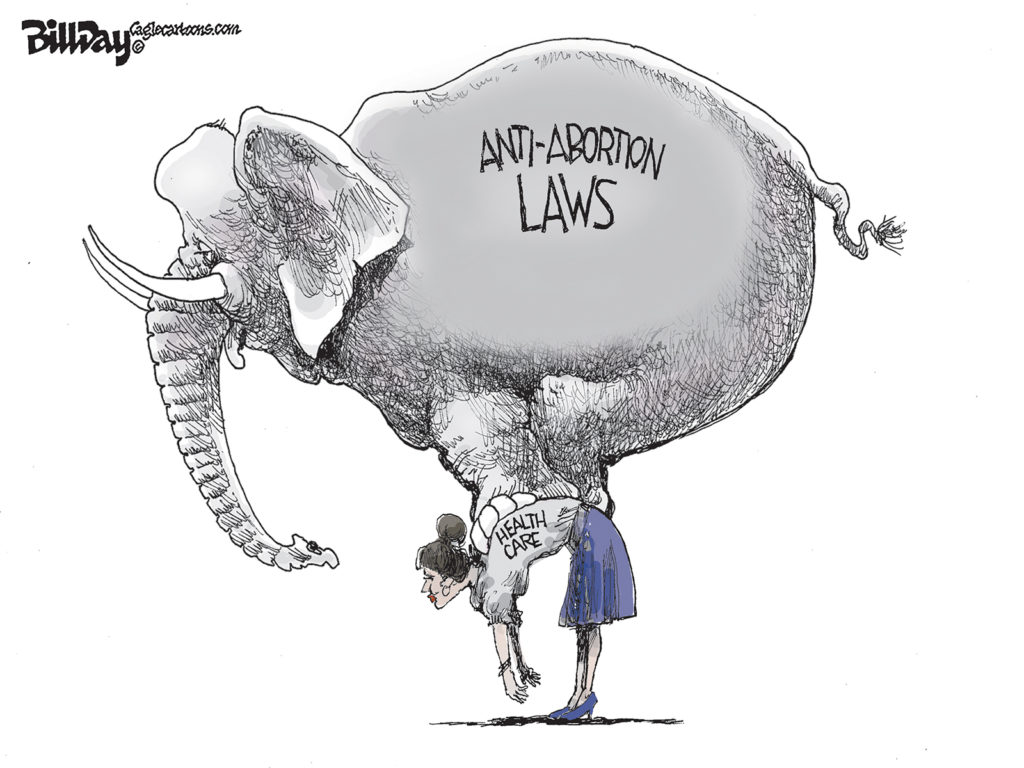
OKLA Home A, A Bill Day Cartoon

by Bill Day. Memphian Bill Day is two-time winner of the RFK Journalism Award in Cartooning. His cartoons are syndicated internationally by Cagle Cartoons. Cartoons Archive →

Photograph by Amie Vanderford

More Images

This ongoing series of photographs is intended to show the daily lives of these single mothers in order to invoke recognition of their similarities to all mothers, along with understanding and empathy from the viewer of the strengths that these single mothers possess within the challenging situations they face. My hope is that newfound empathy with these mothers’ lives will give people some pause before they condemn single mothers when discussing issues such as welfare and other politically charged hot buttons.

  • Subscribe to Posts via Email

    You can get Smart City Memphis posts right in your e-mail box. Just sign up below to begin receiving them.


  • RSS

    • All aboard: Engaging the public on transport projects

    • Weaving people back into the urban fabric

    • How clean is the air we breathe in cities?

    • Friday Fun: Self-driving automobile + Bus + Taxi = Otobuxi

    • Q&A with Hernan Navarro: Lima’s El Metropolitano BRT

    • Should the speed limit on arterial roads increase?

  • RSS

    • New Ventilation System Keeps Buildings Fresh But Warm

    • Eight Guidelines to Keep Creativity at the Heart of Cities

    • Infographic: Cities Embracing the Green Revolution

    • The Economic and Educational Value of Retrofitting Schools

    • Greening Cities with Better Bike Lanes

    • Texas and Bangladesh: Tragedies of Placeless Economics

  • RSS

    • Bizarre Bike Vs. Car Saga of the Day: The Sorry Story of Emma Way

    • In Greenland, an Urban Heat Island Is Growing Fast

    • Tea Time in Syria

    • Designing Apps for Astronauts and Chicken Farmers

    • With Portland's Latest Rejection of Fluoride, Science Loses Out to History's Weirdest Alliance of Paranoiacs

    • An Amazingly Effective Support System for Single Moms

  • Search Posts

  • About Smart City Memphis

    This is Smart City Consulting's blog and its purpose is to connect the dots and provide perspective on events, issues, and policies shaping Memphis and its future. Smart City Memphis was named one of the most intriguing blogs in the U.S. by the Pew Partnership for Civic Change, it was voted the best Memphis blog in About.com's Reader's Choice Awards, and The (Memphis) Commercial Appeal wrote: "Smart City Memphis provides some of the most well-thought-out thinking about Memphis' past, present, and future you'll find anywhere." Our blog's editor is Tom Jones, principal at Smart City Consulting and an editorial contributor at Memphis magazine, where he writes the monthly column, City Journal. Submit blog posts, ideas, suggestions, and emails to tjones@smartcityconsulting.com.
  • Archives

    • May 2013 (23)
    • April 2013 (34)
    • March 2013 (27)
    • February 2013 (31)
    • January 2013 (30)
    • December 2012 (29)
    • November 2012 (31)
    • October 2012 (33)
    • September 2012 (29)
    • August 2012 (33)
    • July 2012 (26)
    • June 2012 (33)
    • May 2012 (33)
    • April 2012 (31)
    • March 2012 (37)
    • February 2012 (32)
    • January 2012 (35)
    • December 2011 (29)
    • November 2011 (30)
    • October 2011 (34)
    • September 2011 (33)
    • August 2011 (39)
    • July 2011 (36)
    • June 2011 (41)
    • May 2011 (36)
    • April 2011 (57)
    • March 2011 (39)
    • February 2011 (45)
    • January 2011 (56)
    • December 2010 (44)
    • November 2010 (30)
    • October 2010 (28)
    • September 2010 (24)
    • August 2010 (22)
    • July 2010 (23)
    • June 2010 (34)
    • May 2010 (28)
    • April 2010 (32)
    • March 2010 (35)
    • February 2010 (31)
    • January 2010 (43)
    • December 2009 (49)
    • November 2009 (17)
    • October 2009 (24)
    • September 2009 (23)
    • August 2009 (18)
    • July 2009 (22)
    • June 2009 (28)
    • May 2009 (23)
    • April 2009 (23)
    • March 2009 (26)
    • February 2009 (25)
    • January 2009 (36)
    • December 2008 (15)
    • November 2008 (22)
    • October 2008 (21)
    • September 2008 (25)
    • August 2008 (23)
    • July 2008 (32)
    • June 2008 (27)
    • May 2008 (35)
    • April 2008 (26)
    • March 2008 (25)
    • February 2008 (29)
    • January 2008 (33)
    • December 2007 (20)
    • November 2007 (19)
    • October 2007 (32)
    • September 2007 (25)
    • August 2007 (25)
    • July 2007 (26)
    • June 2007 (16)
    • May 2007 (21)
    • April 2007 (25)
    • March 2007 (18)
    • February 2007 (16)
    • January 2007 (17)
    • December 2006 (16)
    • November 2006 (14)
    • October 2006 (18)
    • September 2006 (21)
    • August 2006 (20)
    • July 2006 (20)
    • June 2006 (17)
    • May 2006 (12)
    • April 2006 (19)
    • March 2006 (20)
    • February 2006 (23)
    • January 2006 (16)
    • December 2005 (23)
    • November 2005 (21)
    • October 2005 (23)
    • September 2005 (19)
    • August 2005 (27)
    • July 2005 (23)
    • June 2005 (16)
    • 0 (2)
  • Categories

  • Contributors

    • Aaron Shafer
    • Andrew Trippel
    • Anthony Siracusa
    • Barry Chase
    • Brad Leon
    • Brian Stephens
    • CEOs for Cities
    • Charles Santo
    • Chris Sanders
    • Crosstown Collaborative
    • David Williams
    • Doug Imig
    • Elizabeth Alley
    • Elizabeth Lemmonds
    • Emily Trenholm
    • Eric Mathews
    • Gene Pearson
    • Gene Pearson and Louise Mercuro
    • George Lord
    • Greg Thompson
    • Gwyn Fisher
    • Janet Boscarino
    • Jim Strickland
    • Jimmie Covington
    • John Kirkscey
    • John Lawrence
    • Jonathan Flynt
    • Josh Whitehead
    • Julie Ellis
    • Kenya Bradshaw
    • Laura Adams
    • Leah Wells
    • Louise Mercuro, AICP
    • Lurene Cachola Kelley
    • Margot McNeeley
    • Mark James
    • Matt Farr
    • Matt Timberlake
    • Melissa Petersen
    • Natashia Gregoire
    • Ray Brown
    • Rev. Steve Montgomery
    • Robert Bain
    • SCM
    • Scott L. Newstok
    • Smart City Memphis
    • Smart City Radio
    • Steve Bares
    • Steve Lockwood
    • Susan Adler Thorp
    • Tom Jones
    • Tomeka Hart
    • Tommy Pacello
    • Women Unite
    • Zach Hoyt

© 20111-2013 Smart City Memphis. All rights reserved.

  • Register
  • Log in
  • RSS
  • Smart City Radio
  • Smart City Consulting