Smart City Memphis
 

Sign up or Login

Vacant City Land Is Opportunity

by SCM (RSS) | September 11th, 2012 3:00pm CDT

Tweet

From The Nature of Cities:

Walk through any major city and you’ll see vacant land. These are the weed lots, garbage strewn undeveloped spaces, and high crime areas that most urban residents consider blights on the neighborhood. In some cases, neighbors have organized to transform these spaces into community amenities such as shared garden spaces, but all too often these lots persist as unrecognized opportunities for urban improvement. In densely populated cities with sometimes few opportunities for new park or green space development, small vacant lots could provide green relief, especially in low-income areas with reduced access to urban parkland.

And yet, few cities are taking advantage of these underutilized spaces to improve urban biodiversity and provide additional ecosystem services. What’s even more surprising is the vast amount of urban land that is categorized as vacant. Take New York City for example: in this urban metropolis there are 29,782 parcels designated by the city tax code as vacant within the city boundaries, not counting vacant land in the surrounding suburbs and exurbs. This totals more than 7,300 acres of land that could be providing important social and ecological benefits for urban residents.
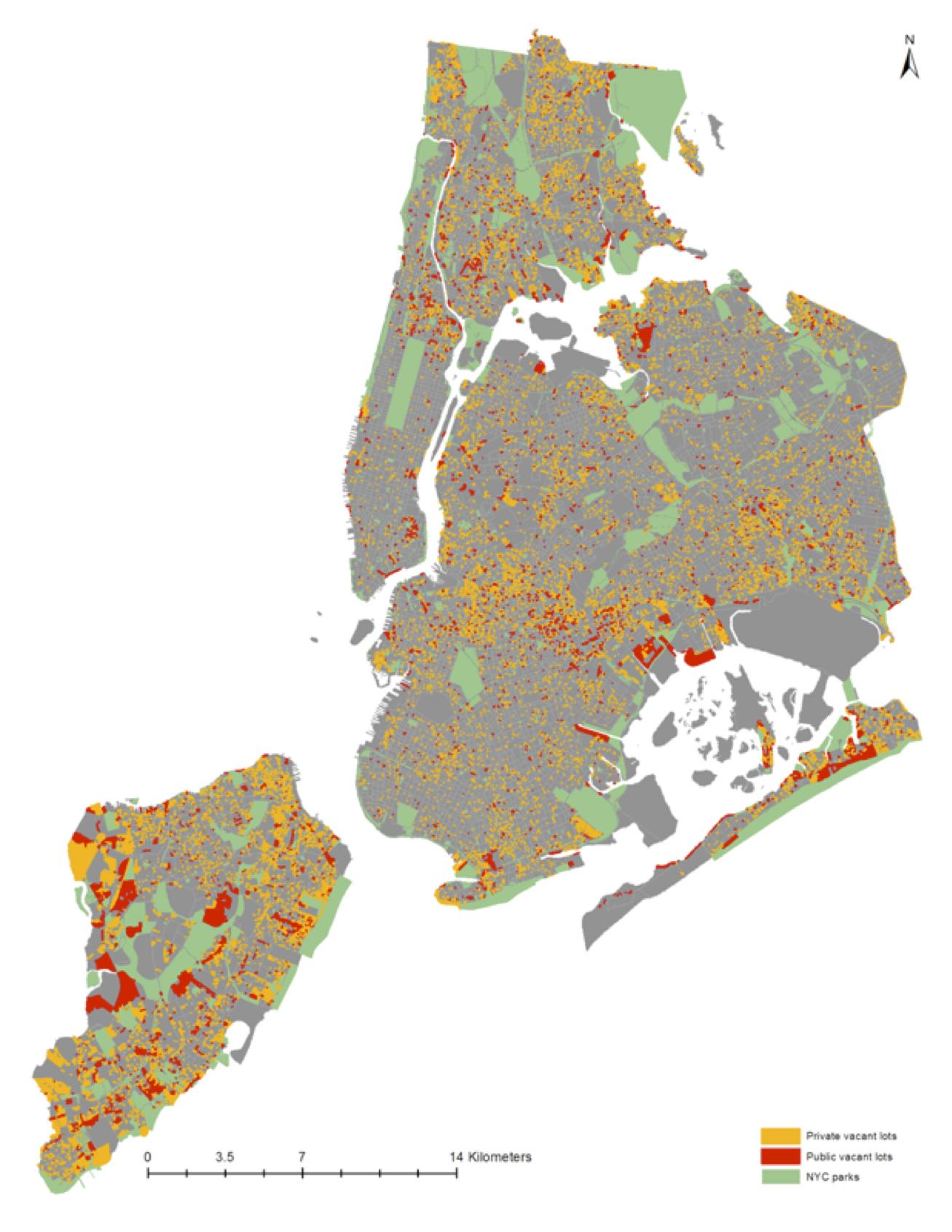
There are 29,782 publicly owned (red) and privately owned (orange) vacant lots in New York City. When combined they represent a sizable opportunity for urban improvement. NYC Parks are shown in green for reference. Image credit: Peleg Kremer (all rights reserved).
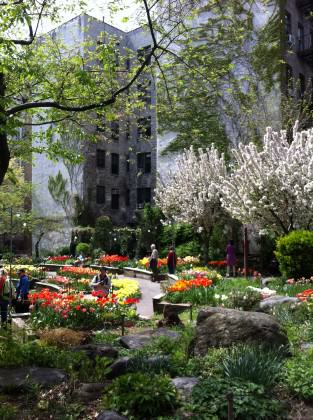
Urban garden in Manhattan, New York City. Photo by David Maddox.

Here is what we know:  Local and regional urban ecosystems provide important services that urban residents rely on for daily living. For example, ecosystems can supply clean water, produce food, absorb air pollution, mitigate urban heat, provide opportunity for recreation, decrease crime, and more. A recent publication from TEEB (The Economics of Ecosystems and Biodiversity) details the list of ecosystem services that can be provided by urban ecosystems.

And yet, all cities do not have the same level of food production, clean water supply, or air pollution removal. Different levels of ecosystem services among cities are due to a myriad of reasons. However, research is beginning to make clear that to improve urban sustainability and resilience city planners and policymakers need to strategically develop and manage the ecological resources within the city to meet the needs of expanding urban populations.
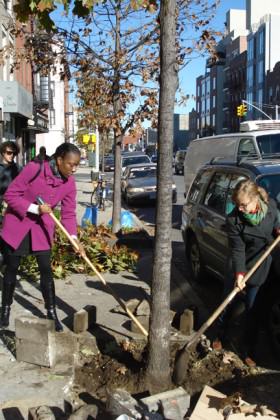
Green infrastructure is being improved and expanded in New York City to improve the capacity of the city to absorb stormwater run-off, an important ecosystem service of green space in cities. Photo by New York City Department of Parks and Recreation.

To improve the quality and quantity of ecosystem services that cities can reliably depend on, and given the financial difficulties most cities are facing, we need to find the low cost investment/high rate of return urban spaces where urban biodiversity and ecosystem services can be improved. These have to be spaces where people can interact with people (a component of ecosystems) and where people can interact with other components of ecosystems (air, soil, water, plants, animals). It’s also important for us to better understand urban people-nature dynamics (also termed social-ecological dynamics), which are about how interacting social and ecological components of ecosystems change over space and time and, for me anyway, understanding what these changes mean for future urban sustainability and resilience.

Lots of vacant land

One of the results of rapid population shifts in cities is the abandonment of previously occupied land. You can see the effects of this in older cities just by walking around. It is nearly impossible not to find land that is vacant in a city, regardless of whether you are in New York, Berlin, Sao Paulo, Shanghai, or Jerusalem. Vacant land typically results from human migration, deindustrialization, environmental disaster, decreased birth rates or contamination, and occurs at various concentrations in cities across the world. Though all cities have vacant land, some have more than others. In some cities the amount of vacancy is tremendous, such as in Detroit, Michigan (USA) where nearly one third of the city is vacant land.

So, why am I so captivated with these overlooked, unmanaged, vacant spaces in cities, especially considering that they are not the most pleasant places in which to conduct research? For one simple reason: vacant, underutilized land has the potential to provide cities with opportunity to create and develop new ecosystems that support biodiversity and increase the provisioning of vital ecosystem services for urban residents. Vacant land is ripe for transformation into more sustainable, resilient urban forms. I’m not the only one who is thinking along these lines. Urban ecologists have long recognized that the ecology in the city is not relegated to parks and protected natural areas, but exists everywhere: on rooftops, in sidewalk cracks, in backyards, in soils, rivers, and streams, in narrow green islands between streets, and also in vacant land areas.

To read more, click here.

Categories: Livability, Neighborhoods, Parks and Greening

Comments RSS Feed

Comments are closed.

Kidnapped Women, A Bill Day Cartoon

by Bill Day. Memphian Bill Day is two-time winner of the RFK Journalism Award in Cartooning. His cartoons are syndicated internationally by Cagle Cartoons. Cartoons Archive →

Photograph by Amie Vanderford

More Images

This ongoing series of photographs is intended to show the daily lives of these single mothers in order to invoke recognition of their similarities to all mothers, along with understanding and empathy from the viewer of the strengths that these single mothers possess within the challenging situations they face. My hope is that newfound empathy with these mothers’ lives will give people some pause before they condemn single mothers when discussing issues such as welfare and other politically charged hot buttons.

  • Subscribe to Posts via Email

    You can get Smart City Memphis posts right in your e-mail box. Just sign up below to begin receiving them.


  • RSS

    • Weaving people back into the urban fabric

    • How clean is the air we breathe in cities?

    • Friday Fun: Self-driving automobile + Bus + Taxi = Otobuxi

    • Q&A with Hernan Navarro: Lima’s El Metropolitano BRT

    • Should the speed limit on arterial roads increase?

    • Promoting ridesharing for the daily commute in Mumbai

  • RSS

    • Eight Guidelines to Keep Creativity at the Heart of Cities

    • Infographic: Cities Embracing the Green Revolution

    • The Economic and Educational Value of Retrofitting Schools

    • Greening Cities with Better Bike Lanes

    • Texas and Bangladesh: Tragedies of Placeless Economics

    • Urban Ideology in Obama’s Brand of Regionalism

  • RSS

    • New Satellite-Eye Views of the Deadly Oklahoma Tornado

    • Airline Perk of the Day: A Book That Lasts Precisely the Length of Your Flight

    • Imagining Syracuse Without Its Elevated Highway

    • Where Do Schools Spend the Most Per Kid?

    • The Surprising Reason Oklahoma Doesn't Have Enough Tornado Shelters

    • Atlanta's Getting a Ferris Wheel

  • Search Posts

  • About Smart City Memphis

    This is Smart City Consulting's blog and its purpose is to connect the dots and provide perspective on events, issues, and policies shaping Memphis and its future. Smart City Memphis was named one of the most intriguing blogs in the U.S. by the Pew Partnership for Civic Change, it was voted the best Memphis blog in About.com's Reader's Choice Awards, and The (Memphis) Commercial Appeal wrote: "Smart City Memphis provides some of the most well-thought-out thinking about Memphis' past, present, and future you'll find anywhere." Our blog's editor is Tom Jones, principal at Smart City Consulting and an editorial contributor at Memphis magazine, where he writes the monthly column, City Journal. Submit blog posts, ideas, suggestions, and emails to tjones@smartcityconsulting.com.
  • Archives

    • May 2013 (21)
    • April 2013 (34)
    • March 2013 (27)
    • February 2013 (31)
    • January 2013 (30)
    • December 2012 (29)
    • November 2012 (31)
    • October 2012 (33)
    • September 2012 (29)
    • August 2012 (33)
    • July 2012 (26)
    • June 2012 (33)
    • May 2012 (33)
    • April 2012 (31)
    • March 2012 (37)
    • February 2012 (32)
    • January 2012 (35)
    • December 2011 (29)
    • November 2011 (30)
    • October 2011 (34)
    • September 2011 (33)
    • August 2011 (39)
    • July 2011 (36)
    • June 2011 (41)
    • May 2011 (36)
    • April 2011 (57)
    • March 2011 (39)
    • February 2011 (45)
    • January 2011 (56)
    • December 2010 (44)
    • November 2010 (30)
    • October 2010 (28)
    • September 2010 (24)
    • August 2010 (22)
    • July 2010 (23)
    • June 2010 (34)
    • May 2010 (28)
    • April 2010 (32)
    • March 2010 (35)
    • February 2010 (31)
    • January 2010 (43)
    • December 2009 (49)
    • November 2009 (17)
    • October 2009 (24)
    • September 2009 (23)
    • August 2009 (18)
    • July 2009 (22)
    • June 2009 (28)
    • May 2009 (23)
    • April 2009 (23)
    • March 2009 (26)
    • February 2009 (25)
    • January 2009 (36)
    • December 2008 (15)
    • November 2008 (22)
    • October 2008 (21)
    • September 2008 (25)
    • August 2008 (23)
    • July 2008 (32)
    • June 2008 (27)
    • May 2008 (35)
    • April 2008 (26)
    • March 2008 (25)
    • February 2008 (29)
    • January 2008 (33)
    • December 2007 (20)
    • November 2007 (19)
    • October 2007 (32)
    • September 2007 (25)
    • August 2007 (25)
    • July 2007 (26)
    • June 2007 (16)
    • May 2007 (21)
    • April 2007 (25)
    • March 2007 (18)
    • February 2007 (16)
    • January 2007 (17)
    • December 2006 (16)
    • November 2006 (14)
    • October 2006 (18)
    • September 2006 (21)
    • August 2006 (20)
    • July 2006 (20)
    • June 2006 (17)
    • May 2006 (12)
    • April 2006 (19)
    • March 2006 (20)
    • February 2006 (23)
    • January 2006 (16)
    • December 2005 (23)
    • November 2005 (21)
    • October 2005 (23)
    • September 2005 (19)
    • August 2005 (27)
    • July 2005 (23)
    • June 2005 (16)
    • 0 (2)
  • Categories

  • Contributors

    • Aaron Shafer
    • Andrew Trippel
    • Anthony Siracusa
    • Barry Chase
    • Brad Leon
    • Brian Stephens
    • CEOs for Cities
    • Charles Santo
    • Chris Sanders
    • Crosstown Collaborative
    • David Williams
    • Doug Imig
    • Elizabeth Alley
    • Elizabeth Lemmonds
    • Emily Trenholm
    • Eric Mathews
    • Gene Pearson
    • Gene Pearson and Louise Mercuro
    • George Lord
    • Greg Thompson
    • Gwyn Fisher
    • Janet Boscarino
    • Jim Strickland
    • Jimmie Covington
    • John Kirkscey
    • John Lawrence
    • Jonathan Flynt
    • Josh Whitehead
    • Julie Ellis
    • Kenya Bradshaw
    • Laura Adams
    • Leah Wells
    • Louise Mercuro, AICP
    • Lurene Cachola Kelley
    • Margot McNeeley
    • Mark James
    • Matt Farr
    • Matt Timberlake
    • Melissa Petersen
    • Natashia Gregoire
    • Ray Brown
    • Rev. Steve Montgomery
    • Robert Bain
    • SCM
    • Scott L. Newstok
    • Smart City Memphis
    • Smart City Radio
    • Steve Bares
    • Steve Lockwood
    • Susan Adler Thorp
    • Tom Jones
    • Tomeka Hart
    • Tommy Pacello
    • Women Unite
    • Zach Hoyt

© 20111-2013 Smart City Memphis. All rights reserved.

  • Register
  • Log in
  • RSS
  • Smart City Radio
  • Smart City Consulting