Smart City Memphis
 

Sign up or Login

City Trees Fight Crime

by SCM (RSS) | June 15th, 2012 3:00pm CDT

Tweet

From Sustainable Cities Collective:

One of my first articles as a blogger was to celebrate the replacement of fallen trees in our neighborhood.  We humans instinctively resonate to nature, and street trees and other kinds of city forests add all sorts of emotional and cooling benefits to our neighborhoods.
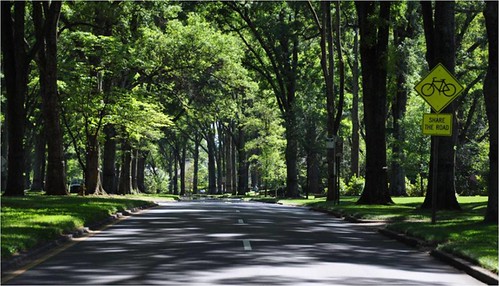
Charlotte, NC (courtesy of Victor Brandon Dover)

One of my first articles as a blogger was to celebrate the replacement of fallen trees in our neighborhood.  We humans instinctively resonate to nature, and street trees and other kinds of city forests add all sorts of emotional and cooling benefits to our neighborhoods.

But that’s not all:  new research from Baltimore finds that city trees also reduce crime.  Writing in Grist, Rachel Nuwer summarizes the findings:

“In addition to housing squirrels, [trees] also reduce lawless activity.  This is the conclusion drawn by a team of researchers who teased apart the relationship between tree canopy and crime in and around Baltimore.  They used aggregated crime data from Spotcrime and overlaid it with high-res satellite imagery to conduct probably the largest analysis of its kind to date.

“According to the study, a 10 percent increase in trees roughly equaled a 12 percent decrease in crime.  ‘It’s really pretty striking how strong this relationship is,’ says Austin Troy, director of the University of Vermont’s Transportation Research Center and lead author of the study, published in the June issue of the journal Landscape and Urban Planning.”
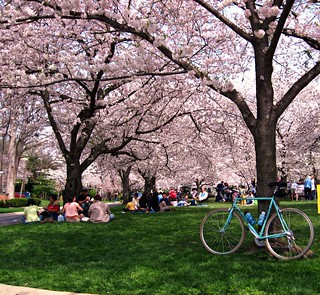
cherry trees, Bethesda, MD (c2012, FK Benfield)Given the amount of publicity given recently to another study showing that wealthier neighborhoods have more trees than poorer ones, one might surmise that the apparent crime-reducing ability of trees is really masking something more important:  that wealthier neighborhoods have less crime.  According to Nuwer, though, the researchers controlled for this:

“ In their models, they controlled for all kinds of socioeconomic factors, including income, housing age, and owner race, plus adjusted for other variables associated with tree cover, like ruralness and population density. After holding all of these points steady, trees still wound up on top.”

The new research adds to a plethora of findings and wisdom about trees.  In a fascinating, extended essay in The Wilson Quarterly, Jill Jonnes examines the history of city trees and research on their benefits, noting that a breakthrough study was conducted in Chicago in 1994.  The researchers found that the city’s trees could improve air quality by as much as 15 percent, removing measurable amounts of carbon monoxide, sulfur dioxide, nitrogen dioxide, ozone, and particulate matter.  Moreover, Chicago’s trees sequestered about 155,000 tons of carbon per year and could absorb far more over time with more planting.  Including the benefits of shade in reducing energy needs for air conditioning, each Chicago tree was found to be worth $402 over its life span, over twice the average cost.
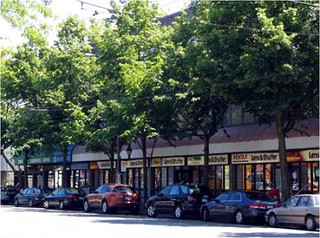
trees along commercial street (courtesy of Dan Burden)Jonnes details a large volume of more recent research in cities such as Sacramento, New York and Los Angeles.  For example, researchers in New York City have found that each year the city’s street trees deliver $122 million in benefits, or about $209 a tree.  The city spends about $14 million each year on its tree program, suggesting a hefty return on their investment.

Jonnes also points to a “Tree Benefit Calculator” developed by Casey Trees.  Borrowing an idea from Jonnes’s essay, I input a bit of information about a Norway maple in my back yard and learned that, roughly, it generates $235 in benefits each year, a strong majority in the categories of stormwater management, contribution to property value, and electricity savings.  Walkability guru Dan Burden has written a well-documented publication on 22 benefits of street trees that go beyond those cited in Jonnes’ essay.  Burden cites traffic and pedestrian safety, improved business productivity, lower temperatures, positive effects on human health, and more.

Which brings us back to the Baltimore findings on crime.  If poor neighborhoods are the ones with the most crime, as well as the ones with the most need for reduced utility bills and better health, we should begin to focus more attention to tree-planting in them.  Looks to me like it could bring multiple benefits at bargain prices.
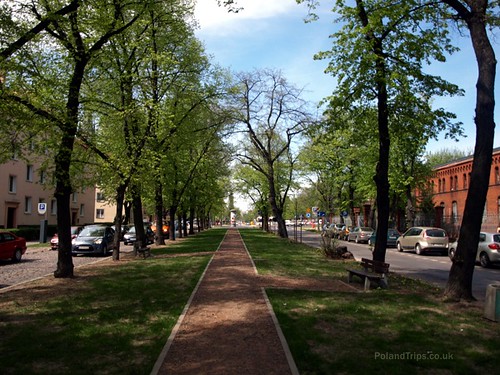
Centre City Avenue (by: Rubber Dragon, creative commons)

Categories: Livability, Neighborhoods, Parks and Greening

Comments RSS Feed

Comments are closed.

Kidnapped Women, A Bill Day Cartoon

by Bill Day. Memphian Bill Day is two-time winner of the RFK Journalism Award in Cartooning. His cartoons are syndicated internationally by Cagle Cartoons. Cartoons Archive →

Photograph by Amie Vanderford

More Images

This ongoing series of photographs is intended to show the daily lives of these single mothers in order to invoke recognition of their similarities to all mothers, along with understanding and empathy from the viewer of the strengths that these single mothers possess within the challenging situations they face. My hope is that newfound empathy with these mothers’ lives will give people some pause before they condemn single mothers when discussing issues such as welfare and other politically charged hot buttons.

  • Subscribe to Posts via Email

    You can get Smart City Memphis posts right in your e-mail box. Just sign up below to begin receiving them.


  • RSS

    • Friday Fun: Self-driving automobile + Bus + Taxi = Otobuxi

    • Q&A with Hernan Navarro: Lima’s El Metropolitano BRT

    • Should the speed limit on arterial roads increase?

    • Promoting ridesharing for the daily commute in Mumbai

    • iBus, a new BRT changing the transport landscape in Indore, India

    • Architect of possible dreams

  • RSS

    • The Economic and Educational Value of Retrofitting Schools

    • Greening Cities with Better Bike Lanes

    • Texas and Bangladesh: Tragedies of Placeless Economics

    • Urban Ideology in Obama’s Brand of Regionalism

    • The DIY Disaster Plan

    • Healthy Communities at the Placemaking Leadership Council

  • RSS

    • Brussels Does Not Take Kindly To People Messing With Its Peeing Boy Statue

    • When Gun Control Fails: Best #Cityreads of the Week

    • Engineering Feat of the Day: A 7-Million Pound Building on 40-Foot Stilts

    • Does Living Near Fast Food Restaurants Increase Your Risk of Obesity?

    • New Hampshire Town Sues Parking Meter Vigilantes

    • Terrifying Images of the Damage Wrought by the Texas Tornadoes

  • Search Posts

  • About Smart City Memphis

    This is Smart City Consulting's blog and its purpose is to connect the dots and provide perspective on events, issues, and policies shaping Memphis and its future. Smart City Memphis was named one of the most intriguing blogs in the U.S. by the Pew Partnership for Civic Change, it was voted the best Memphis blog in About.com's Reader's Choice Awards, and The (Memphis) Commercial Appeal wrote: "Smart City Memphis provides some of the most well-thought-out thinking about Memphis' past, present, and future you'll find anywhere." Our blog's editor is Tom Jones, principal at Smart City Consulting and an editorial contributor at Memphis magazine, where he writes the monthly column, City Journal. Submit blog posts, ideas, suggestions, and emails to tjones@smartcityconsulting.com.
  • Archives

    • May 2013 (18)
    • April 2013 (34)
    • March 2013 (27)
    • February 2013 (31)
    • January 2013 (30)
    • December 2012 (29)
    • November 2012 (31)
    • October 2012 (33)
    • September 2012 (29)
    • August 2012 (33)
    • July 2012 (26)
    • June 2012 (33)
    • May 2012 (33)
    • April 2012 (31)
    • March 2012 (37)
    • February 2012 (32)
    • January 2012 (35)
    • December 2011 (29)
    • November 2011 (30)
    • October 2011 (34)
    • September 2011 (33)
    • August 2011 (39)
    • July 2011 (36)
    • June 2011 (41)
    • May 2011 (36)
    • April 2011 (57)
    • March 2011 (39)
    • February 2011 (45)
    • January 2011 (56)
    • December 2010 (44)
    • November 2010 (30)
    • October 2010 (28)
    • September 2010 (24)
    • August 2010 (22)
    • July 2010 (23)
    • June 2010 (34)
    • May 2010 (28)
    • April 2010 (32)
    • March 2010 (35)
    • February 2010 (31)
    • January 2010 (43)
    • December 2009 (49)
    • November 2009 (17)
    • October 2009 (24)
    • September 2009 (23)
    • August 2009 (18)
    • July 2009 (22)
    • June 2009 (28)
    • May 2009 (23)
    • April 2009 (23)
    • March 2009 (26)
    • February 2009 (25)
    • January 2009 (36)
    • December 2008 (15)
    • November 2008 (22)
    • October 2008 (21)
    • September 2008 (25)
    • August 2008 (23)
    • July 2008 (32)
    • June 2008 (27)
    • May 2008 (35)
    • April 2008 (26)
    • March 2008 (25)
    • February 2008 (29)
    • January 2008 (33)
    • December 2007 (20)
    • November 2007 (19)
    • October 2007 (32)
    • September 2007 (25)
    • August 2007 (25)
    • July 2007 (26)
    • June 2007 (16)
    • May 2007 (21)
    • April 2007 (25)
    • March 2007 (18)
    • February 2007 (16)
    • January 2007 (17)
    • December 2006 (16)
    • November 2006 (14)
    • October 2006 (18)
    • September 2006 (21)
    • August 2006 (20)
    • July 2006 (20)
    • June 2006 (17)
    • May 2006 (12)
    • April 2006 (19)
    • March 2006 (20)
    • February 2006 (23)
    • January 2006 (16)
    • December 2005 (23)
    • November 2005 (21)
    • October 2005 (23)
    • September 2005 (19)
    • August 2005 (27)
    • July 2005 (23)
    • June 2005 (16)
    • 0 (2)
  • Categories

  • Contributors

    • Aaron Shafer
    • Andrew Trippel
    • Anthony Siracusa
    • Barry Chase
    • Brad Leon
    • Brian Stephens
    • CEOs for Cities
    • Charles Santo
    • Chris Sanders
    • Crosstown Collaborative
    • David Williams
    • Doug Imig
    • Elizabeth Alley
    • Elizabeth Lemmonds
    • Emily Trenholm
    • Eric Mathews
    • Gene Pearson
    • Gene Pearson and Louise Mercuro
    • George Lord
    • Greg Thompson
    • Gwyn Fisher
    • Janet Boscarino
    • Jim Strickland
    • Jimmie Covington
    • John Kirkscey
    • John Lawrence
    • Jonathan Flynt
    • Josh Whitehead
    • Julie Ellis
    • Kenya Bradshaw
    • Laura Adams
    • Leah Wells
    • Louise Mercuro, AICP
    • Lurene Cachola Kelley
    • Margot McNeeley
    • Mark James
    • Matt Farr
    • Matt Timberlake
    • Melissa Petersen
    • Natashia Gregoire
    • Ray Brown
    • Rev. Steve Montgomery
    • Robert Bain
    • SCM
    • Scott L. Newstok
    • Smart City Memphis
    • Smart City Radio
    • Steve Bares
    • Steve Lockwood
    • Susan Adler Thorp
    • Tom Jones
    • Tomeka Hart
    • Tommy Pacello
    • Women Unite
    • Zach Hoyt

© 20111-2013 Smart City Memphis. All rights reserved.

  • Register
  • Log in
  • RSS
  • Smart City Radio
  • Smart City Consulting