Smart City Memphis
 

Sign up or Login

The Distinctive City

by SCM (RSS) | April 26th, 2012 2:59pm CDT

Tweet

From UrbanLand:

Around the world, cities are seeking the recipe for economic success in a rapidly changing global marketplace. Indispensable assets in a post–industrial economy include: well–educated people, the ability to generate new ideas and to turn those ideas into commercial realities, connectivity to global markets, and multi-modal transportation infrastructure. Another critical—but often forgotten—asset is community distinctiveness.

If I have learned anything from my career in urban planning, it is this: a community’s appeal drives economic prosperity. I haveMcMahon_250a also learned that, while change is inevitable, the destruction of a community’s unique character and identity is not. Progress does not demand degraded surroundings. Communities can grow without destroying the things that people love.

In 2010, the Knight Foundation teamed up with Gallup pollsters to survey 43,000 people in 26 cities (where Knight-Ridder had newspapers). The so-called Soul of the Community Survey was designed to answer questions such as: What makes residents love where they live? What attracts people to a place and keeps them there?

The study found that the most important factors that create emotional bonds between people and their community were not jobs and the economy, but rather “physical beauty, opportunities for socializing and a city’s openness to all people.” The Knight Foundation also found that communities with the highest levels of attachment also had the highest rates of gross domestic product growth and the strongest economies.

Place is more than just a location on a map. A sense of place is a unique collection of qualities and characteristics – visual, cultural, social, and environmental – that provide meaning to a location. Sense of place is what makes one city or town different from another, but sense of place is also what makes our physical surroundings worth caring about.

Author Wallace Stegner once said, “If you don’t know where you are, you don’t know who you are.” We all need points of reference and orientation. A community’s unique identity provides that orientation, while also adding economic and social value. To foster distinctiveness, cities must plan for built environments and settlement patterns that are both uplifting and memorable and that foster a sense of belonging and stewardship by residents.

Planners spend most of their time focusing on numbers – the number of units per acre, the number of cars per hour, the number of floors per building. In the future, they will need to spend more time thinking about the values, customs, characteristics and quirks that make a place worth caring about. Unfortunately, many communities are suffering the social and economic consequences of losing their distinctiveness.

When it comes to 21st century economic development, a key concept is community differentiation. If you can’t differentiate your community from any other, you have no competitive advantage.

  • The Distinctive City
Capital is footloose in a global economy. Natural resources, highway access, locations along a river or rail line have all become less important. Education, technology, connectivity, and distinctiveness have all become more important. Joseph Cortright, a leading economic development authority and president and chief economist of Impresa, a consulting firm specializing in regional economic analysis, says that “the unique characteristics of place may be the only truly defensible source of competitive advantage for communities.” Likewise, Richard Florida, author of The Rise of the Creative Classsays, “How people think of a place is less tangible, but more important than just about anything else.”Unfortunately, the subtle differences between places are disappearing. Today, if you were suddenly dropped along a road outside of most American cities or towns, you wouldn’t have the slightest idea where you were because it all looks the same, including the building materials, the architectural styles, the chain stores, and the outdoor advertising. Technology and the global economy make it easy for building plans drawn up at a corporate office in New Jersey to be applied over and over again in Portland, Phoenix, Philadelphia or a thousand other communities. Over the past 50 years many of the world’s cityscapes and townscapes have gone from the unique to the uniform, from the stylized to the standardized.In recent months, there have been several surveys published, such as Zipcar’s “Future Metropolis Index” and Fast Company‘s “Most Innovative Cities” list, ranking cities based on sustainability, innovation and efficiency. Some of the factors that were evaluated included the number of green buildings, the percentage of hybrid cars and the number of patents issued. These are all important, but sustainability is about more than new technologies. At its most basic, “sustainable” means enduring. A sustainable community is a place of enduring value. Doug Kelbaugh, the dean of the University of Michigan School of Architecture, put it this way, “If a building, a landscape or a city is not beautiful, it will not be loved; if it is not loved, it won’t be maintained and improved. In short, it won’t be sustained.”

Distinctiveness involves streetscapes, architecture, and historic preservation but as Cortright points out, it also involves cultural events and facilities, restaurants and food, parks and open space and many other factors. “Keep Austin Weird” is more than a slogan; it is a recipe for economic success. A distinctive city is a city that the young and well-educated want to live in, that boomers want to retire to, and most certainly a city that people want to visit.

According to The World Bank and the World Travel and Tourism Council, tourism is the largest industry in the world. Tourism is about visiting places that are different, unusual and unique. The more one city comes to look and feel just like every other city, the less reason there is to visit. On the other hand, the more a city does to enhance its uniqueness, whether that is cultural, natural or architectural, the more people will want to visit. It is no accident that Paris – a city that looks and feels different – gets 27 million visitors per year, more than any city on the planet, according to Lonely Planet.

Arthur Frommer, one of the world’s leading travel experts and founder of the well-known travel guide company, says that among cities and towns with no recreational appeal, those that preserve their past continue to enjoy tourism. Those that haven’t, receive almost no tourism at all. Frommer has been quoted as saying,“Tourists simply won’t go to a city that has lost its soul.”

In the future, planners will have to help communities adapt to change while maintaining or enhancing the things that they value most. Lyman Orton, the principal of the Orton Family Foundation, a philanthropic organization which supports community development, calls this “heart and soul planning.” It is both a process and a philosophy. The process seeks to engage as many people as possible in community decision making. The philosophy recognizes that special places, characteristics and customs have value. Given all this, I believe that one of the big questions for cities in the future will be: Do you want the character of your city to shape the new development, or do you want the new development to shape the character of the city?


Categories: Economic Development, Livability

Comments RSS Feed

Comments are closed.

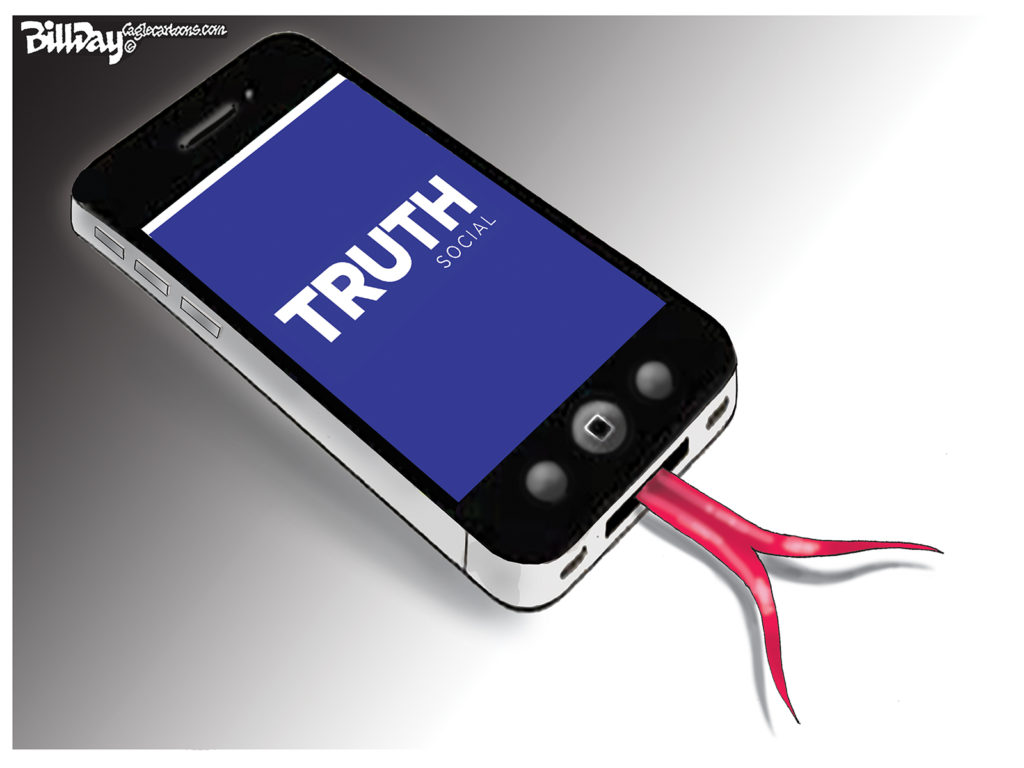
Kidnapped Women, A Bill Day Cartoon

by Bill Day. Memphian Bill Day is two-time winner of the RFK Journalism Award in Cartooning. His cartoons are syndicated internationally by Cagle Cartoons. Cartoons Archive →

Photograph by Amie Vanderford

More Images

This ongoing series of photographs is intended to show the daily lives of these single mothers in order to invoke recognition of their similarities to all mothers, along with understanding and empathy from the viewer of the strengths that these single mothers possess within the challenging situations they face. My hope is that newfound empathy with these mothers’ lives will give people some pause before they condemn single mothers when discussing issues such as welfare and other politically charged hot buttons.

  • Subscribe to Posts via Email

    You can get Smart City Memphis posts right in your e-mail box. Just sign up below to begin receiving them.


  • RSS

    • Friday Fun: Self-driving automobile + Bus + Taxi = Otobuxi

    • Q&A with Hernan Navarro: Lima’s El Metropolitano BRT

    • Should the speed limit on arterial roads increase?

    • Promoting ridesharing for the daily commute in Mumbai

    • iBus, a new BRT changing the transport landscape in Indore, India

    • Architect of possible dreams

  • RSS

    • The Economic and Educational Value of Retrofitting Schools

    • Greening Cities with Better Bike Lanes

    • Texas and Bangladesh: Tragedies of Placeless Economics

    • Urban Ideology in Obama’s Brand of Regionalism

    • The DIY Disaster Plan

    • Healthy Communities at the Placemaking Leadership Council

  • RSS

    • Brussels Does Not Take Kindly To People Messing With Its Peeing Boy Statue

    • When Gun Control Fails: Best #Cityreads of the Week

    • Engineering Feat of the Day: A 7-Million Pound Building on 40-Foot Stilts

    • Does Living Near Fast Food Restaurants Increase Your Risk of Obesity?

    • New Hampshire Town Sues Parking Meter Vigilantes

    • Terrifying Images of the Damage Wrought by the Texas Tornadoes

  • Search Posts

  • About Smart City Memphis

    This is Smart City Consulting's blog and its purpose is to connect the dots and provide perspective on events, issues, and policies shaping Memphis and its future. Smart City Memphis was named one of the most intriguing blogs in the U.S. by the Pew Partnership for Civic Change, it was voted the best Memphis blog in About.com's Reader's Choice Awards, and The (Memphis) Commercial Appeal wrote: "Smart City Memphis provides some of the most well-thought-out thinking about Memphis' past, present, and future you'll find anywhere." Our blog's editor is Tom Jones, principal at Smart City Consulting and an editorial contributor at Memphis magazine, where he writes the monthly column, City Journal. Submit blog posts, ideas, suggestions, and emails to tjones@smartcityconsulting.com.
  • Archives

    • May 2013 (18)
    • April 2013 (34)
    • March 2013 (27)
    • February 2013 (31)
    • January 2013 (30)
    • December 2012 (29)
    • November 2012 (31)
    • October 2012 (33)
    • September 2012 (29)
    • August 2012 (33)
    • July 2012 (26)
    • June 2012 (33)
    • May 2012 (33)
    • April 2012 (31)
    • March 2012 (37)
    • February 2012 (32)
    • January 2012 (35)
    • December 2011 (29)
    • November 2011 (30)
    • October 2011 (34)
    • September 2011 (33)
    • August 2011 (39)
    • July 2011 (36)
    • June 2011 (41)
    • May 2011 (36)
    • April 2011 (57)
    • March 2011 (39)
    • February 2011 (45)
    • January 2011 (56)
    • December 2010 (44)
    • November 2010 (30)
    • October 2010 (28)
    • September 2010 (24)
    • August 2010 (22)
    • July 2010 (23)
    • June 2010 (34)
    • May 2010 (28)
    • April 2010 (32)
    • March 2010 (35)
    • February 2010 (31)
    • January 2010 (43)
    • December 2009 (49)
    • November 2009 (17)
    • October 2009 (24)
    • September 2009 (23)
    • August 2009 (18)
    • July 2009 (22)
    • June 2009 (28)
    • May 2009 (23)
    • April 2009 (23)
    • March 2009 (26)
    • February 2009 (25)
    • January 2009 (36)
    • December 2008 (15)
    • November 2008 (22)
    • October 2008 (21)
    • September 2008 (25)
    • August 2008 (23)
    • July 2008 (32)
    • June 2008 (27)
    • May 2008 (35)
    • April 2008 (26)
    • March 2008 (25)
    • February 2008 (29)
    • January 2008 (33)
    • December 2007 (20)
    • November 2007 (19)
    • October 2007 (32)
    • September 2007 (25)
    • August 2007 (25)
    • July 2007 (26)
    • June 2007 (16)
    • May 2007 (21)
    • April 2007 (25)
    • March 2007 (18)
    • February 2007 (16)
    • January 2007 (17)
    • December 2006 (16)
    • November 2006 (14)
    • October 2006 (18)
    • September 2006 (21)
    • August 2006 (20)
    • July 2006 (20)
    • June 2006 (17)
    • May 2006 (12)
    • April 2006 (19)
    • March 2006 (20)
    • February 2006 (23)
    • January 2006 (16)
    • December 2005 (23)
    • November 2005 (21)
    • October 2005 (23)
    • September 2005 (19)
    • August 2005 (27)
    • July 2005 (23)
    • June 2005 (16)
    • 0 (2)
  • Categories

  • Contributors

    • Aaron Shafer
    • Andrew Trippel
    • Anthony Siracusa
    • Barry Chase
    • Brad Leon
    • Brian Stephens
    • CEOs for Cities
    • Charles Santo
    • Chris Sanders
    • Crosstown Collaborative
    • David Williams
    • Doug Imig
    • Elizabeth Alley
    • Elizabeth Lemmonds
    • Emily Trenholm
    • Eric Mathews
    • Gene Pearson
    • Gene Pearson and Louise Mercuro
    • George Lord
    • Greg Thompson
    • Gwyn Fisher
    • Janet Boscarino
    • Jim Strickland
    • Jimmie Covington
    • John Kirkscey
    • John Lawrence
    • Jonathan Flynt
    • Josh Whitehead
    • Julie Ellis
    • Kenya Bradshaw
    • Laura Adams
    • Leah Wells
    • Louise Mercuro, AICP
    • Lurene Cachola Kelley
    • Margot McNeeley
    • Mark James
    • Matt Farr
    • Matt Timberlake
    • Melissa Petersen
    • Natashia Gregoire
    • Ray Brown
    • Rev. Steve Montgomery
    • Robert Bain
    • SCM
    • Scott L. Newstok
    • Smart City Memphis
    • Smart City Radio
    • Steve Bares
    • Steve Lockwood
    • Susan Adler Thorp
    • Tom Jones
    • Tomeka Hart
    • Tommy Pacello
    • Women Unite
    • Zach Hoyt

© 20111-2013 Smart City Memphis. All rights reserved.

  • Register
  • Log in
  • RSS
  • Smart City Radio
  • Smart City Consulting