Smart City Memphis
 

Sign up or Login

A Data-Driven Case for Walkability

by SCM (RSS) | April 19th, 2012 3:00pm CDT

Tweet

From NRDC Switchboard:

About a year ago, NRDC Executive Director Peter Lehner asked me what one word, if I had to choose, would most closely describe a smart, sustainable community. Peter thought that the word might be density. But I chose walkability instead.

It is important to have a certain (though not necessarily high) level of density in a sustainable neighborhood. But we also need the right design, with connected streets, a pleasant environment that incorporates a variety of places to go and things to do, and that includes nature. We need our community to feel and be safe for us to be out and about. (The popsicle and Halloween tests are instructive here.) All these things contribute to walkability.

There’s more on the list, of course, certainly including good jobs, and places for a variety of ages and income levels to live. But I would start with walkability. If it feels good and useful to walk in a neighborhood, with things to walk to, we’re likely a significant way toward our goal.

Knowing that I write about this subject often, Wendy Landman recently got in touch. Wendy is executive director of an organization called WalkBoston, “a non-profit membership organization dedicated to improving walking conditions in cities and towns across Massachusetts.” WalkBoston’s website says the organization’s mission is to create and preserve safe walking environments that build vital communities.  They “promote walking for transportation, health and recreation through education and advocacy.”

Wendy forwarded two brochures, each of which provides a very succinct and useful, annotated compilation of national research about walking and walkable places. One is called Walk Your Way to Health; the other, Good Walking Is Good Business. They are extremely well-written and useful, and I recommend them. (Some of the references cited in the brochures are also linked on the website. From the wording of the brochures, I believe WalkBoston’s intent is to link to all of them; I hope they do.)

Here is just a sampling of what’s in the two brochures. While many of these facts and studies are known to us in the field, they aren’t necessarily known more widely. And, even for those of us who get excited about things like street connectivity, I’m not sure I have ever seen them summarized better:

  • Fewer young people want cars. In 1995 people age 21 to 30 drove 21 percent of all miles driven in the U.S.; in 2009 it was 14 percent, despite consistent growth of the age group. Living car-free in walkable areas fits younger lifestyles. [Advertising Age, 2010]
  • A one-point increase in Walk Score [based on number of destinations within a short distance] is associated with between a $700 and $3,000 increase in home values. [CEOs for Cities, 2009]

  • A 10-point increase in Walk Score increases commercial property values by 5 percent to 8 percent. [University of Arizona & Indiana University, 2010]
  • Homes in walkable urban neighborhoods have experienced less than half the average decline in price from the housing peak in the mid-2000s. [Brookings Institution, 2011] (See also this analysis.)
  • If one in ten Massachusetts adults started a regular walking program, the state would save $121 million in heart disease expenditures annually. [MA Dept. of Public Health, 2008]
  • People living in walkable neighborhoods trust neighbors more, participate in community projects and volunteer more than in non-walkable areas. [University of New Hampshire, 2010]
  • Men and women age 50 to 71 who took a brisk walk nearly every day had a 27 percent reduced death rate compared to non-exercisers. Adding 20 minutes of vigorous exercise, 3 days a week resulted in a 32 percent reduced death rate. Combining vigorous exercise and walking each week produced a 50% reduced mortality. [Arch Internal Medicine, 2007]
  • Among the more than 72,000 women in the Nurses’ Health Study, those who walked 3 or more hours/week reduced their risk of a coronary event by 35 percen compared with women who did not walk.
  • Retired men who walked less than 1 mile/day had nearly twice the mortality rates of those who walked more than 2 miles/day. [Harvard University, Brigham & Women’s Hospital, ongoing]

  • A study of over 3,200 overweight adults found that a good diet and walking 2.5 hours/week reduced their risk of developing diabetes by 58 percent. Participants aged 60 and older reduced their risk by 71 percent. [New England Journal of Medicine, 2002]
  • Exercise affects learning, memory and cognition. College students showed improved performance on recognition memory tasks after exercise. [NYU current research]
  • Risks of death from breast and uterine cancer were reduced 19 percent in those who walked 1 to 3 hours/week, by 54 percent for walking 3 to 5 hours/week. [HarvardUniversity Women’s Health Study, 2012]
  • Sedentary men who began exercising after the age of 45 have a 24 percent lower death rate than those who remain inactive. On average, sedentary people who became active later in life improved their life expectancy by about 1.6 years. [Harvard Alumni Study, 2000]

Good stuff, and important, too. WalkBoston’s website is chock-full of more information on the group’s activities, policy issues, and even maps of great walking routes in and around Boston.

.

Categories: Livability

Comments RSS Feed

Comments are closed.

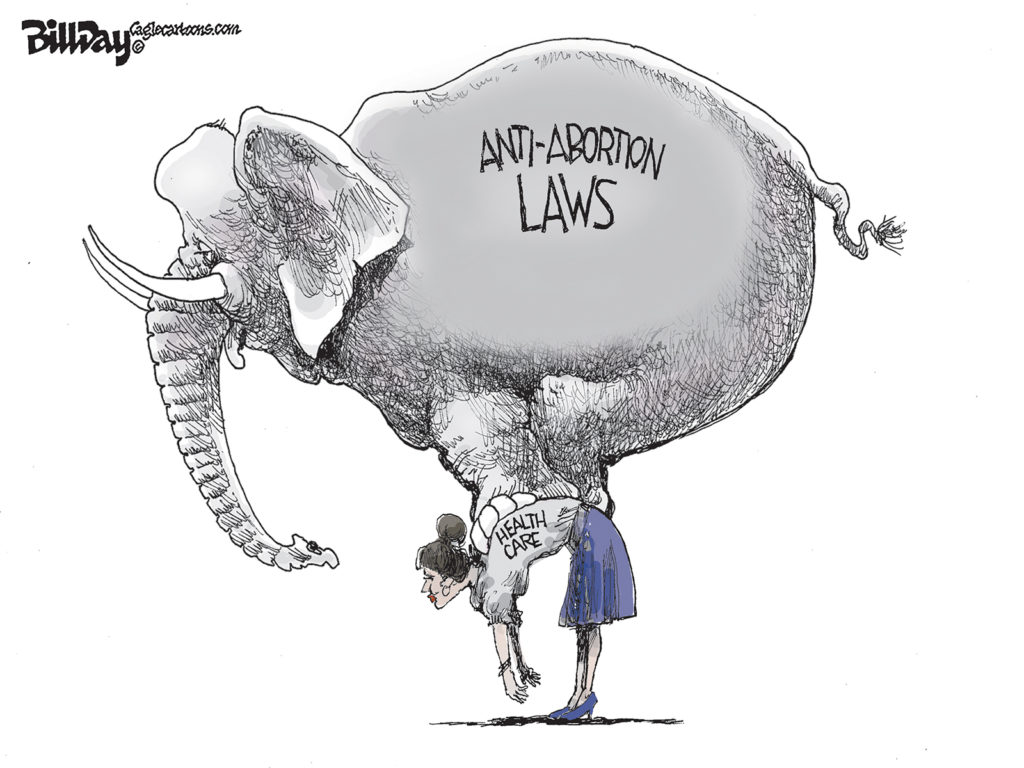
Kidnapped Women, A Bill Day Cartoon

by Bill Day. Memphian Bill Day is two-time winner of the RFK Journalism Award in Cartooning. His cartoons are syndicated internationally by Cagle Cartoons. Cartoons Archive →

Photograph by Amie Vanderford

More Images

This ongoing series of photographs is intended to show the daily lives of these single mothers in order to invoke recognition of their similarities to all mothers, along with understanding and empathy from the viewer of the strengths that these single mothers possess within the challenging situations they face. My hope is that newfound empathy with these mothers’ lives will give people some pause before they condemn single mothers when discussing issues such as welfare and other politically charged hot buttons.

  • Subscribe to Posts via Email

    You can get Smart City Memphis posts right in your e-mail box. Just sign up below to begin receiving them.


  • RSS

    • Friday Fun: Self-driving automobile + Bus + Taxi = Otobuxi

    • Q&A with Hernan Navarro: Lima’s El Metropolitano BRT

    • Should the speed limit on arterial roads increase?

    • Promoting ridesharing for the daily commute in Mumbai

    • iBus, a new BRT changing the transport landscape in Indore, India

    • Architect of possible dreams

  • RSS

    • The Economic and Educational Value of Retrofitting Schools

    • Greening Cities with Better Bike Lanes

    • Texas and Bangladesh: Tragedies of Placeless Economics

    • Urban Ideology in Obama’s Brand of Regionalism

    • The DIY Disaster Plan

    • Healthy Communities at the Placemaking Leadership Council

  • RSS

    • Brussels Does Not Take Kindly To People Messing With Its Peeing Boy Statue

    • When Gun Control Fails: Best #Cityreads of the Week

    • Engineering Feat of the Day: A 7-Million Pound Building on 40-Foot Stilts

    • Does Living Near Fast Food Restaurants Increase Your Risk of Obesity?

    • New Hampshire Town Sues Parking Meter Vigilantes

    • Terrifying Images of the Damage Wrought by the Texas Tornadoes

  • Search Posts

  • About Smart City Memphis

    This is Smart City Consulting's blog and its purpose is to connect the dots and provide perspective on events, issues, and policies shaping Memphis and its future. Smart City Memphis was named one of the most intriguing blogs in the U.S. by the Pew Partnership for Civic Change, it was voted the best Memphis blog in About.com's Reader's Choice Awards, and The (Memphis) Commercial Appeal wrote: "Smart City Memphis provides some of the most well-thought-out thinking about Memphis' past, present, and future you'll find anywhere." Our blog's editor is Tom Jones, principal at Smart City Consulting and an editorial contributor at Memphis magazine, where he writes the monthly column, City Journal. Submit blog posts, ideas, suggestions, and emails to tjones@smartcityconsulting.com.
  • Archives

    • May 2013 (18)
    • April 2013 (34)
    • March 2013 (27)
    • February 2013 (31)
    • January 2013 (30)
    • December 2012 (29)
    • November 2012 (31)
    • October 2012 (33)
    • September 2012 (29)
    • August 2012 (33)
    • July 2012 (26)
    • June 2012 (33)
    • May 2012 (33)
    • April 2012 (31)
    • March 2012 (37)
    • February 2012 (32)
    • January 2012 (35)
    • December 2011 (29)
    • November 2011 (30)
    • October 2011 (34)
    • September 2011 (33)
    • August 2011 (39)
    • July 2011 (36)
    • June 2011 (41)
    • May 2011 (36)
    • April 2011 (57)
    • March 2011 (39)
    • February 2011 (45)
    • January 2011 (56)
    • December 2010 (44)
    • November 2010 (30)
    • October 2010 (28)
    • September 2010 (24)
    • August 2010 (22)
    • July 2010 (23)
    • June 2010 (34)
    • May 2010 (28)
    • April 2010 (32)
    • March 2010 (35)
    • February 2010 (31)
    • January 2010 (43)
    • December 2009 (49)
    • November 2009 (17)
    • October 2009 (24)
    • September 2009 (23)
    • August 2009 (18)
    • July 2009 (22)
    • June 2009 (28)
    • May 2009 (23)
    • April 2009 (23)
    • March 2009 (26)
    • February 2009 (25)
    • January 2009 (36)
    • December 2008 (15)
    • November 2008 (22)
    • October 2008 (21)
    • September 2008 (25)
    • August 2008 (23)
    • July 2008 (32)
    • June 2008 (27)
    • May 2008 (35)
    • April 2008 (26)
    • March 2008 (25)
    • February 2008 (29)
    • January 2008 (33)
    • December 2007 (20)
    • November 2007 (19)
    • October 2007 (32)
    • September 2007 (25)
    • August 2007 (25)
    • July 2007 (26)
    • June 2007 (16)
    • May 2007 (21)
    • April 2007 (25)
    • March 2007 (18)
    • February 2007 (16)
    • January 2007 (17)
    • December 2006 (16)
    • November 2006 (14)
    • October 2006 (18)
    • September 2006 (21)
    • August 2006 (20)
    • July 2006 (20)
    • June 2006 (17)
    • May 2006 (12)
    • April 2006 (19)
    • March 2006 (20)
    • February 2006 (23)
    • January 2006 (16)
    • December 2005 (23)
    • November 2005 (21)
    • October 2005 (23)
    • September 2005 (19)
    • August 2005 (27)
    • July 2005 (23)
    • June 2005 (16)
    • 0 (2)
  • Categories

  • Contributors

    • Aaron Shafer
    • Andrew Trippel
    • Anthony Siracusa
    • Barry Chase
    • Brad Leon
    • Brian Stephens
    • CEOs for Cities
    • Charles Santo
    • Chris Sanders
    • Crosstown Collaborative
    • David Williams
    • Doug Imig
    • Elizabeth Alley
    • Elizabeth Lemmonds
    • Emily Trenholm
    • Eric Mathews
    • Gene Pearson
    • Gene Pearson and Louise Mercuro
    • George Lord
    • Greg Thompson
    • Gwyn Fisher
    • Janet Boscarino
    • Jim Strickland
    • Jimmie Covington
    • John Kirkscey
    • John Lawrence
    • Jonathan Flynt
    • Josh Whitehead
    • Julie Ellis
    • Kenya Bradshaw
    • Laura Adams
    • Leah Wells
    • Louise Mercuro, AICP
    • Lurene Cachola Kelley
    • Margot McNeeley
    • Mark James
    • Matt Farr
    • Matt Timberlake
    • Melissa Petersen
    • Natashia Gregoire
    • Ray Brown
    • Rev. Steve Montgomery
    • Robert Bain
    • SCM
    • Scott L. Newstok
    • Smart City Memphis
    • Smart City Radio
    • Steve Bares
    • Steve Lockwood
    • Susan Adler Thorp
    • Tom Jones
    • Tomeka Hart
    • Tommy Pacello
    • Women Unite
    • Zach Hoyt

© 20111-2013 Smart City Memphis. All rights reserved.

  • Register
  • Log in
  • RSS
  • Smart City Radio
  • Smart City Consulting