
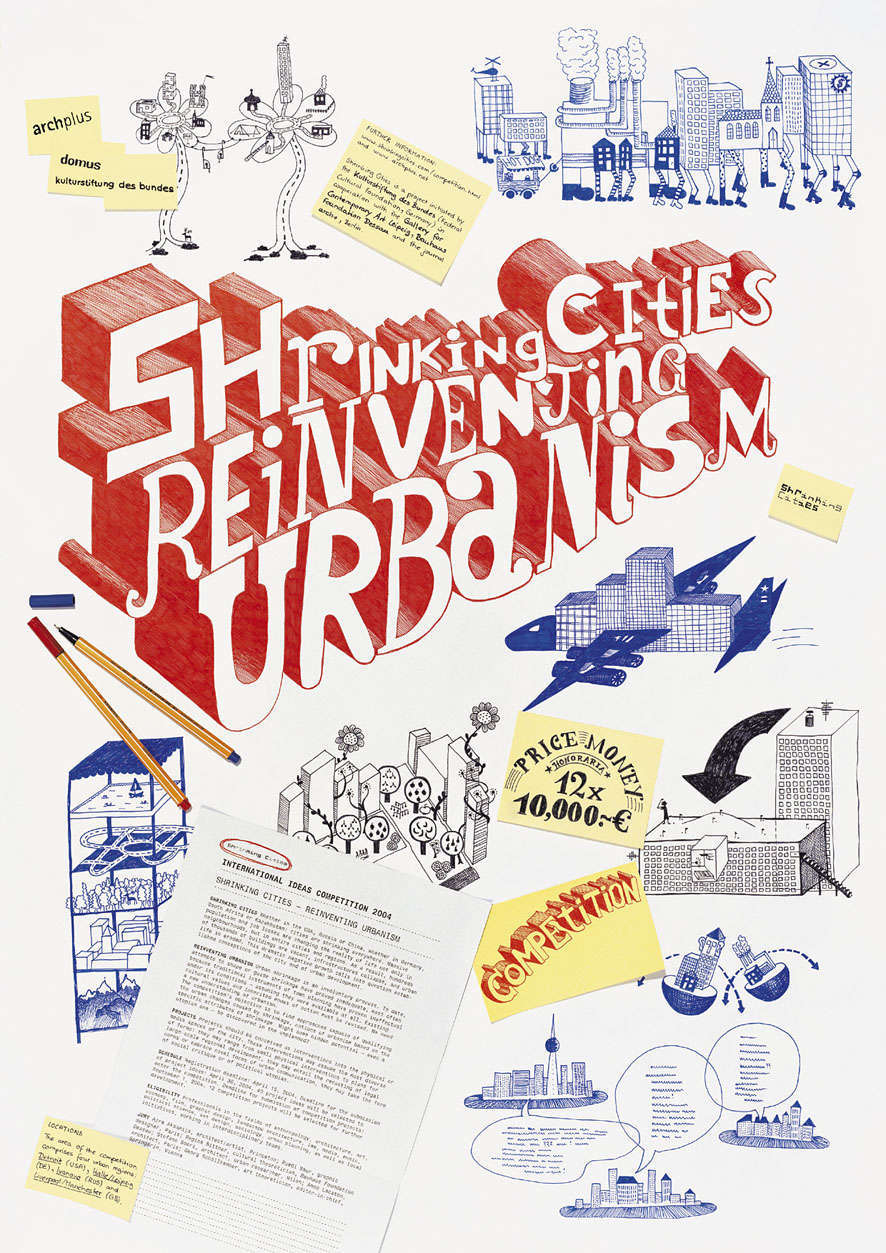
If Memphis was a real estate business, we would say that it suffers from a low occupancy rate.
If we ran a shopping center with this problem, we could spend some money making it more attractive and offering special leases, we could lose money and suck it up, or we could raise rents, but if we did, it could lead to our tenants leaving.
The same goes for Memphis. We can spend a lot of money on big-time projects like an NBA arena, Beale Street Landing and Shelby Farms Park in hopes of keeping our taxpayers in the city and attracting more. We can respond to a decrease in people by an increase in revenues in the form of property taxes, but it results in an exodus of families.
A friend of ours offered a lesson for us. Faced with similar scenarios, he made his shopping center smaller. He consolidated the stores that are still successful and ran a smaller, more efficient and more profitable operation.
Tough Times
So, here’s the question: if businesses can downsize, if nonprofit agencies and private institutions can downsize, if the military can downsize, why can’t cities like ours?
We’ve written about Memphis as a shrinking city frequently in the past couple of years, and to summarize, here’s the premise: we delude ourselves into thinking that annexation is the answer to all that ails us when in fact it simply masks the 28% drop in population in the central city in the past 35 years and we deliver the same services over a larger area and with roughly the same budgets and personnel.
Back behind the annexation in the central city, there’s the same number of water lines, sewers and streets to be repaired and policed, the same number of neighborhoods but even more serious problems to confront. Meanwhile, despite the annexation, more people leave and the downward spiral continues on.
Aggravating the problem is a simple fact of life: the decline across Memphis is not equally distributed. There are census tracts with less than 50% of the population who lived there in 1970. With the expansion of area and concentrated poverty left in its wake, urban life itself deteriorates. There aren’t enough people to keep the grocery store in the neighborhood open, vacant lots become havens for criminal activity, and the neighborhood feels less safe and becomes less livable and inviting.
Misery Loves Company
It’s a self-reenforcing cycle. The problems become more than symptoms of serious challenges. They actually become the source for them.
We have plenty of company. During the 20 years between 1970 and 1990, one third of all U.S. cities lost population. And yet, what is strange about our shrinking city is its location.
Most cities undergoing these changes are Midwestern industrial cities, notably Detroit, St. Louis, and Cleveland. And while Memphis has propped up its population through annexation, like these Midwestern cities, our density has been cut in half.
Cleveland has 3,300 acres of vacant land within its city limits and 12,000-15,000 vacant buildings. That’s why city government there is demolishing up to 2,000 houses a year.
Breaking The Cycle
According to Terry Schwartz, senior planner at the Kent State Cleveland Urban Design Collaborative, said recently on Smart City: “Our goal is to find productive uses for managing, for holding, and for extracting value out of this growing portfolio of vacancy that’s within the city. The rhetoric of shrinking cities is that there is nothing to say that Cleveland or Toledo or Pittsburgh or St. Louis can’t be a good city with a smaller population.
“But the challenge we face is that the vitality, the vibrancy, the density of the city is really scattered, and also in some ways a phrase might be ‘like perforated.’ You have these pockets of strength and growth and what we think of as a convention city, but in between, there are these vast and growing voids where it’s harder and harder to get conventional real estate development to take root.”
Shrinking cities are faced with hard choices. Like Youngstown, they may decide which neighborhood are abandoned because it’s simply too costly to deliver services to them. To accelerate the abandonment already under way, there would need to be incentives to relocate people to neighborhoods that can still be saved.
There’s even discussion of special land-use policies and zero occupancy zoning, which would lead to the elimination of city services. It might sound insensitive, but it’s no less insensitive than the conditions in which our cities in these neighborhoods live now and the pretense of providing public services to neighborhoods which are only glimmers of their former selves.
Bigger May Not Be Better
In Cleveland, they are creating a citywide plan of core investment areas where real estate development and economic development, population growth and stabilization are most likely to occur. Based on market typologies, they are the places of the greatest strength within the city.
We’re not suggesting that Memphis has reached such a crisis point, but we ought to start planning for it. If trends continue and nothing happens to change the trajectory of our region, conditions in these neighborhoods will only get harsher and more untenable, not to mention, unaffordable, and the population of the traditional city will continue to fall.
But there’s another option: deannexation. Some economists suggest that large tracts of land that no longer have to pay city taxes could attract development that would otherwise avoid them like the plague. Perhaps, it could result in decreased costs to the city and increased revenues. Best of all, it might attract people back into the urban area, and perhaps, lured by lower taxes, some of them would be the middle income families we are hemorrhaging.
We know all this runs counter to Americans’ obsession with bigger and bigger as the definition of success. Perhaps, just perhaps, success isn’t measured in larger and larger population. Absent a tax-sharing arrangement or a major overhaul of our tax system, it’s hard to see a way that the population of the “old” city of Memphis will stabilize anytime soon.
Getting The Focus Right
Most of all, we’re not saying that shrinking Memphis would be the magic answer to solving our city’s problems, but it would allow us to target our energy, our efforts and our resources to an area that allows for more efficient deployment of city services.
It’s unlikely that Memphis will ever see a return to the population within the beltway that it once had, but it just may be our best chance of stabilizing things long enough to triage our problems.

This is a topic some of us (planning, real estate, ULI nerd-types) have tried to discuss a number of times but it breaks down quickly because it is so hard to stomach. Here are a few sticking points I’ve heard.
A) While we like the Better Not Bigger philosophy, how do we make the cultural shift and admit out loud that we are happy to be smaller? This is counter to everything ever said before.
B) How do we prioritize which neighborhoods shrink or disappear? Does Poplar and Ridgeway become downtown because it’s now best positioned for success? Or do inner city neighborhoods get saved because they have suffered the longest at the hands of expansion?
C) What services get cut? We have always tried to be everything for everyone. No one wants to lose their thing. For instance, are senior centers important to maintain when water-mains are busting? Are we going to unthinkably close schools or unthinkably force development around underutilized ones?
My favorite… If you tally up all the hospital beds in Memphis, Shelby County and the region, we have more than a community our size needs… so, why not close the Med instead of propping it up? To keep Methodist from abandoning the inner city too? So the other supposedly non-profit hospitals won’t be mad? In a shrinking city, important things have to shrink.
Sometimes we think that real estate and market force data could and should drive decisions, if politics were removed. But we have also found that interpretation of the market data is seen differently depending on what side of shrink-line you stand. This is harder than it sounds at first.
deannex, say Raleigh? Cordova? How about Vance/Lauderdale?
and then what?
Is the County supposed to step up and provide essential services to these areas? will the schools revert to County schools?
a better option is the ‘Savannah/grassland’ zoning overlay-where the land is gradually cleared through a massive fire training program and tire removal incentives.
Introduce some deer, gazelles or pit bulls or what have you, and let the natives hunt. Even charge for safaris…
🙂
Deannexing is actually pretty interesting. I know we fought the tiny-town battle and at the time I wanted Memphis to be able to control its future growth path… and largely still do. Also think consolidation is a pretty good idea. But what if Whitehaven and Frayser/Raleigh and Cordova, for instance, were deannexed or perhaps their own towns? They could have their own councils and provide their own services that fit their community’s needs. Their representatives would be aligned to the priorities of the area and close to the people. Memphis’s representatives could concentrate on its core inside the 240-loop maybe? Maybe that form of competition is better than the form of splitting up the pie we have now?
The idea of annexation/de-annexation has always been a fascination of mine. David Rusk’s book, Cities without Suburbs, has greatly influenced my view of metropolitan growth issues. Rusk’s basic view is that cities that are allowed to expand via annexation are fiscally healthier than those that are “hemmed in” by suburban municipalities. He compares several statistics showing how “elastic” cities (often in the South and West) are better off than “inelastic cities” (often in the Northeast and Midwest). Of course, he does not mention the fact that other factors (post-industrialization, the great Sunbelt migration, etc.) may also have to do with Southern and Western cities’ health.
By Ruskian standards, Memphis should be doing fine. An extremely elastic city that has utilized annexation over the decades to grow its tax base and maintain its population, the city is also in a county with relatively few suburban municipalities. It is a rare situation indeed in 2010 to find half of a metropolitan area’s population residing in its central city; but in fact, that is the case here in Memphis. My graduate thesis 10 years ago compared how well the services Memphis and her six suburban sisters in Shelby County provided to their citizens with relatively low tax rates as compared to Cincinnati and her 36 suburban sisters with (much) higher tax rates.
With all of that said, it does seem to me that there may be a limit to what Robert C. Wood called “Gargantua” in his seminal 1958 article on this subject. Can a city grow too big? Does it end up cannibalizing other areas already within its borders? What if it de-annexed some areas? Will the temptation to downzone properties in these newly de-annexed suburbs push coveted commercial and office space back to the central city? To tell you the truth, we are forging into new territory, and these questions have never really been fully answered. I look forward to engaging in this discussion and looking keenly at what our Midwestern brethren (Cleveland, Youngstown, Flint, for instance) discover as they forge ahead.