Here’s our early Christmas wish: that the lame duck U.S. Attorney’s office leave its investigative file involving Memphis Mayor Willie W. Herenton for its successor.
We hear that there are some spirited discussions taking place in the federal prosecutor’s office about the timing and extend of any action. While some zealous career attorneys feel that action should be taken now, they are simply wrong. Hopefully, they can do what is not only in the best interests of justice, but in the best interests of Memphis.
With the indictment of former MLGW president Joseph Lee, the U.S. Attorney’s office proved the truth in the old adage about its ability to indict a ham sandwich. And while Mr. Lee was hardly a ham sandwich, the entire case seemed to be nothing less than bologna.
That’s strike one against action by a U.S. Attorney that is not only a lame duck but an interim lame duck at that. The Lee debacle tainted the office’s reputation with political overtones, and as a result, any grand jury action taken as a result of this U.S. Attorney would immediately be suspect.
Strike Two
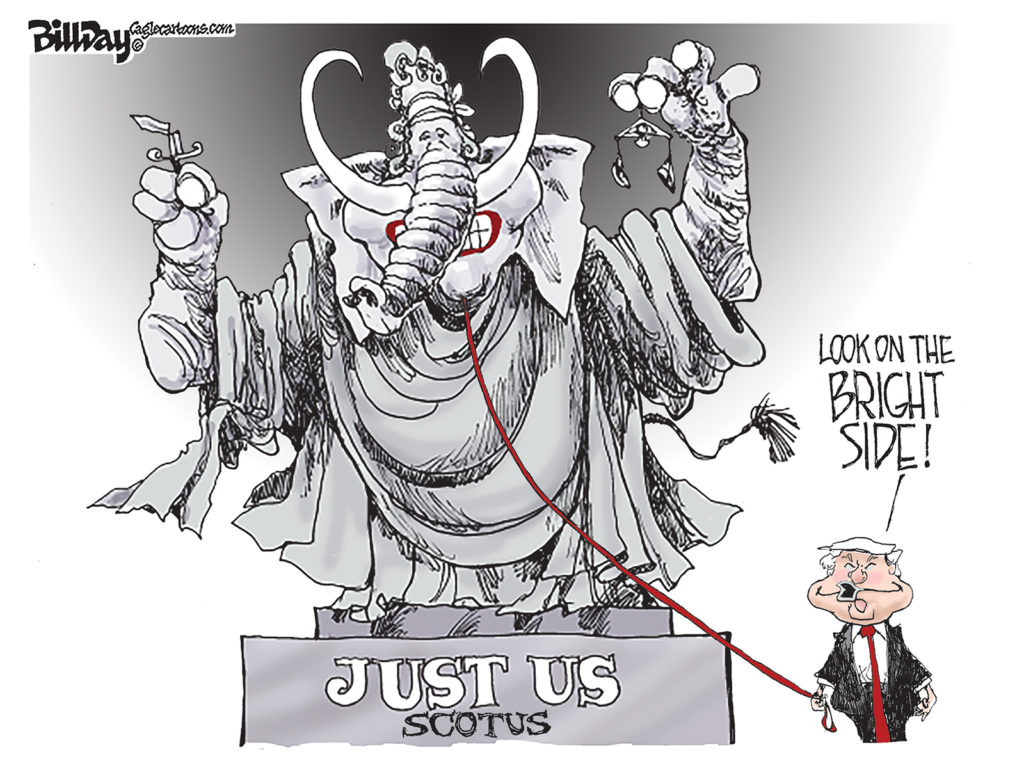
Then, there’s strike two – the national image-bruising taken by the revelations of how much politics has in fact played in the decisions of the Department of Justice – from who to indict to the removal of U.S. Attorneys who didn’t move aggressively to indict Democrats.
In injecting a Karl Rove view of justice into the decision-making of federal prosecutions, the Bush Department of Justice calls into question any actions that it would now take. New claims continue to surface, such as recent disclosures in the politically-tinged bribery case brought against former Alabama Governor Don Siegelman, a Democrat.
Already, he was appealing his conviction on the basis of political motivations in his indictment, and the U.S. Court of Appeals for the 11th Circuit seemed to agree. It ordered him released after nine months in federal prison because of “substantial questions” about his trial. That was before the recent report that the U.S. Attorney in the case, who had recused herself under pressure because of her marriage to an adviser to Mr. Siegelman’s Republican opponent; however, it is now clear that she remained involved in the case, emailing directives to her staff members.
At any rate, the politicization of the justice system raises questions on all kinds of fronts, including some about whether the investigations of a number of prominent African-American big city mayors were tied to a Republican political agenda.
Strike Three
Then, there’s strike three – the volatile divisiveness that would be created by action by a U.S Attorney on his way out (an interim one to boot), and it should call on the lawyers in the office to act with an abundance of caution. The truth is that most of the attorneys in the office will remain there when the new U.S. Attorney appointed by the Obama Administration takes the oath of office, not to mention that the FBI agents handling the investigation will remain as well.
In other words, the investigative file should be left for the new U.S. Attorney’s action. These allegedly non-partisan members of the system will be there to advocate their positions and present their cases.
To do otherwise opens up controversy and throws gas on a simmering fire in many parts of the city that stems from the widespread belief at the grassroots that the “Tennessee Waltz” was aimed at decimating the African-American leadership that Memphis had in Nashville.
Here, rumors move through the black community that the federal government is out to destroy any powerful African-American politician. Meanwhile, whites repeat rumors that all Democratic elected officials (translation: black elected officials) are on the take.
Too Many Questions
Why does all of this matter? Unless lines of trust are stronger and there is a belief in the innate fairness of justice, Memphis will be a wounded city limping into a global economy in which its divisiveness prevents any hope of success. But, more fundamentally, until lines of trust are stronger, we fail at the basics of American democracy.
As long as African-Americans see racism in events like the Tennessee Waltz and white people complain that the African-American community is paranoid, we create a civic brand of quicksand that slowly pulls all of Memphis under, and at precisely the time that together, we need to be staking out a strong competitive place in the global economy.
Here’s the thing: Prosecutors are the most powerful officials in the criminal justice system – even more than judges. “The charging and plea bargaining power they exercise almost predetermines the outcome of most criminal cases. Over 95 percent of all criminal cases are resolved by a guilty plea,” according to American University professor Angela Davis.
Consider a person arrested for having a quantity of drugs on them. Depending on the amount, the prosecutor can charge simple possession (a misdemeanor), or possession with intent to distribute (a felony which in most jurisdictions means a mandatory prison sentence). So it’s the prosecutor, through his charge and plea bargaining powers, who really decides prison time for the defendant.
Win-Win-Win
The most serious system-wide issue, argues Davis in her book, “Arbitrary Justice: The Power of the American Prosecutor,” isn’t the isolated, fairly rare case of a prosecutor coercing witnesses, fabricating evidence, or consciously targeting racial minorities. Rather, it’s the lack of controls on, or accountability for, the every-day decisions of prosecutors. Their legal responsibility isn’t just to represent the state in seeking convictions; it’s to pursue justice. But too often, Davis asserts, prosecutors exercise their discretion “haphazardly at worst and arbitrarily at best, resulting in inequitable treatment of both victims and defendants.”
There’s the “win-win-win” ethos in many prosecutors’ offices — elected prosecutors and their staffs out to show how tough they are on crime, or how eager to impose harsh penalties in heinous cases (especially when there’s strong media interest, or photogenic victims). Sometimes prosecutors overcharge grossly so they can wring heavier plea bargains out of defendants.
Views on class and race, even unconsciously, lead prosecutors to make shoot-from-the-hip decisions easily at odds with true justice, Davis asserts. She also pinpoints how appointed U.S. Attorneys, pursuing the country’s “war on drugs,” have focused relentlessly on convicting and incarcerating even small-time neighborhood drug dealers and their girlfriends and family members, especially from inner-city neighborhoods, even on the scantiest of evidence. Federal drug prosecutions tripled between 1981 and 1990.
Oversight
Under our system, all officials wielding government power should be and are subject to checks — but we’ve ended up, Davis asserts, “giving prosecutors a pass” — no effective control by voters, legislatures, or the judiciary itself. Voters have little idea of how prosecutors are actually handling cases. Legislatures (and Congress) pay scant attention beyond frequently bolstering prosecution powers.
In a government structure where “checks and balances” is the watchword, there is none on prosecutors, and it’s why Professor Davis proposes outside review processes for prosecutorial decisions. The idea is that an outside eye could discourage arbitrary, hard-to-justify choices by prosecutors without chilling the essential, fair law enforcement we all depend on prosecutors to perform.