Smart City Memphis
 

Sign up or Login

No Crisis Can Pave Over Roadbuilders’ Influence

by Smart City Memphis (RSS) | October 26th, 2008 12:38pm CST

You can never underestimate the power of the roadbuilding industry.

While University of Memphis President Shirley Raines is forced to cut a budget that long ago lost any fat in it, while the state shortchanges our community’s schools with BEP funding, while sprawl is busting the budgets of Tennessee’s urban governments and while Tennessee ranks as one of the states with the most highway lanes per person, the Tennessee Legislature has appointed a special committee to worry about how to build more roads.

Incredible.

Money For Road Builders

Of all the priorities of state government that deserve more attention and more money, it’s hard to understand why highways right now are even in the top 20. For way too long, state government has acted like its obligation is to enrich the roadbuilding industry. In that world, there will never be enough highways, and the traffic engineers – who depend on more roads for their incomes – and the politicians – who depend on the roadbuilding industry for so many campaign contributions – will always find justification for more lanes that have to be built.

So, for that reason, it’s really no surprise that a “study committee” has been created by the Tennessee Legislature to consider ways to increase funding for highway construction and maintenance. They may even talk about other transportation issues – they may even utter the treaded p-word, public transit – but in the end, it’s primarily theater to pump more money into laying more asphalt.

It’s all so preordained that state legislators don’t even attempt to mask the fact that for them, state transportation policy equals more highway construction. After all, one of the state’s most powerful lobbies – roadbuilders – and the largesse that flows into campaign coffers make the conclusions of such committees foregone for years.

Politics Trumps Public Interest

If there’s ever been a poster child for how cavalierly the public interest can be set aside by Tennessee legislators for personal political opportunism, it is their obsession with more and more lanes of roadways. In the process, there’s little debate about how this attitude has fueled sprawl across Tennessee, especially in major urban areas, and how a wiser focus on sustainability – with transportation policy leading the way – could create a better way of life in our state.

Tennessee Department of Transportation Gerald Nicely has done an admirable job of dragging his operations into this century, because for decades, it was widely accepted that TDOT’s role was to do whatever the roadbuilders wanted. At least, he’s been able to create some sensitivity to environmental issues, context sensitive design and light rail (although we despair that the plan is to connect Nashville and Chattanooga to Atlanta, doing nothing for the most economically desperate grand division of Tennessee – West Tennessee).

Despite Commissioner Nicely’s efforts, he has been unable to transform the cultural attitudes of his bureaucracy or to make much of a dent on the road-happy members of the state legislature. As a result, there’s always pressure to build more roads, and there’s always one more report saying that we need $15 billion to deal with the transportation and utilities needs of Tennessee.

Special Interests

Too often, however, these needs are not determined by an independent, third party expert, but by people who benefit from the construction of new roads. It’s really shouldn’t be a surprise that engineers, roadbuilders and the special interest groups like the Tennessee County Highway Officials can always find new projects to build.

However, the words of former design director of the National Endowment of the Arts Jeff Speak, speaking in Memphis earlier this year, still rings in our ears: “Build Memphis for humans, not just for cars. Don’t leave the design of your city to highway engineers.”

The same goes for the state. Here, we need only look at the incredulous design of Walnut Grove Road entering into the west side of Shelby Farms Park to understand the wisdom of his words, but we can see it also across Tennessee where highway engineers have been given freedom to create a state with too many lanes on too many highways.

Misplaced Priorities

Of course, any questions about this are met immediately with justifications based on economic development and safety. That said, Tennessee’s struggling economy has fundamental structural problems that deserve the attention now given to roads. Meanwhile, safety would improve if highways had fewer lanes. Studies have proven to every one but roadbuilders that wider roads result in higher speeds which cause more accidents, and yet, state transportation plans continue to act as if adding lanes is a panacea.

Despite all this, we have a 20-member task force in Nashville now wringing their hands over the fact that our state spends only about $2 billion a year in our traditional patronage to roadbuilders. If you question it, there is the ready answer that state-levied taxes on gasoline are designated for roads, and $900 million in federal Highway Trust Funds can’t be spent any other way.

But that’s clever deceit. These dedicated taxes were of course set up by legislators in either Nashville or Washington. Back here in our state, why should roads get dedicated tax sources rather than higher education? Just because we have gas taxes, why should they only go to transportation?

Tomorrow: Part Two – More Important Priorities Like Higher Education

Tags: Uncategorized

Categories: Uncategorized

Comments RSS Feed

Tweet

Comments are closed.

Our Fracking Congress

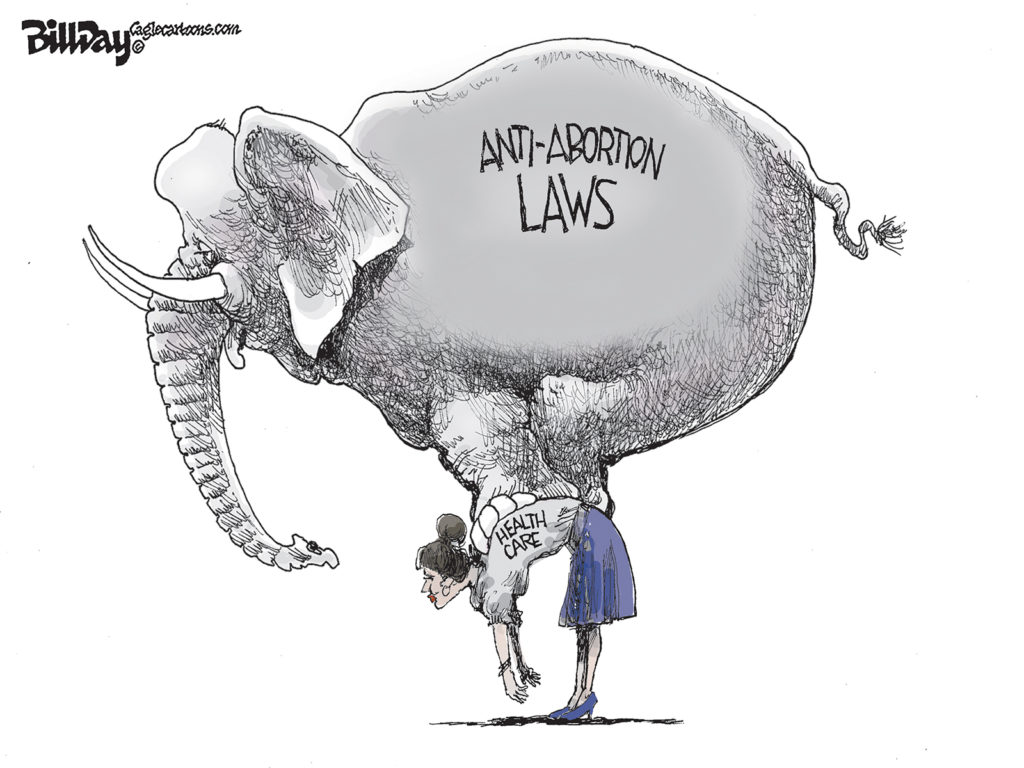
by Bill Day. Memphian Bill Day is two-time winner of the RFK Journalism Award in Cartooning. His cartoons are syndicated internationally by Cagle Cartoons. Cartoons Archive →

Photograph by Amie Vanderford

More Images

Memphian Amie Vanderford is a photographer for peace and justice. Her portfolio includes photographs from Peru, Zimbabwe, Nepal, Indian, and her hometown.

  • Subscribe to Posts via Email

    You can get Smart City Memphis posts right in your e-mail box. Just sign up below to begin receiving them.


  • RSS

    • New Videos: Stories of Auto-Rickshaws in India

    • Sustainable Urban Transport in India: Role of the Auto-Rickshaw Sector

    • New Competition: Encouraging Youth to Rethink Public Transportation

    • Paris to Allow Cyclists to Run Red Lights

    • Research Recap, February 6: Urban Happiness, Electric Highways, Cooperative ITS

    • Living Without a Car in Bogotá: Day 12

  • RSS

    • The Changing Face of Housing

    • How Seville’s Hidden Treasures Became the World’s Largest Glued Wood Structure

    • Four Pioneering Examples of Sustainable Refurbishment from Around the World

    • Do You Have an Idea for our Urban World? 21 Cities, 90 Million Citizens are Interested

    • #CycleSafe – Eight Achievable Steps for Creating Cities fit for Cycling

    • Bogotá Citizens Take to Youtube to Criticize the Transmilenio BRT System

  • RSS

    • Disturbing Video of the Day: Cloud of Filth Emanates from Bus Seat

    • Scenes From Europe's Frozen Cities

    • One Month in Beijing = Smoking 5 Cigarettes

    • This Week in Bans: 'Gay Lifestyles' Outlawed in St. Petersburg, Russia

    • Azerbaijan's Plans for a One Kilometer-Tall Skyscraper

    • Postcard From Venice

  • Search Posts

  • About Smart City Memphis

    This is the blog by Smart City Consulting and its opinions are informed by our work in Memphis and other cities on a variety of issues affecting urban success. Smart City Memphis was named one of the most intriguing blogs in the U.S. by the Pew Partnership for Civic Change. Our intent is to "connect the dots" on events, issues, and policies that shape Memphis and its future, and to frame Memphis issues in a national context. The blog's editor is Tom Jones, principal at Smart City Consulting and an editorial contributor at Memphis magazine, where he writes the monthly column, City Journal. Send blog posts, ideas, suggestions, and emails to tjones@smartcityconsulting.com.
  • Archives

    • February 2012 (11)
    • January 2012 (35)
    • December 2011 (29)
    • November 2011 (30)
    • October 2011 (34)
    • September 2011 (33)
    • August 2011 (39)
    • July 2011 (36)
    • June 2011 (41)
    • May 2011 (36)
    • April 2011 (57)
    • March 2011 (39)
    • February 2011 (45)
    • January 2011 (56)
    • December 2010 (44)
    • November 2010 (30)
    • October 2010 (28)
    • September 2010 (24)
    • August 2010 (22)
    • July 2010 (23)
    • June 2010 (34)
    • May 2010 (28)
    • April 2010 (32)
    • March 2010 (35)
    • February 2010 (31)
    • January 2010 (43)
    • December 2009 (49)
    • November 2009 (17)
    • October 2009 (24)
    • September 2009 (23)
    • August 2009 (18)
    • July 2009 (22)
    • June 2009 (28)
    • May 2009 (23)
    • April 2009 (23)
    • March 2009 (26)
    • February 2009 (25)
    • January 2009 (36)
    • December 2008 (15)
    • November 2008 (22)
    • October 2008 (21)
    • September 2008 (25)
    • August 2008 (23)
    • July 2008 (32)
    • June 2008 (27)
    • May 2008 (35)
    • April 2008 (26)
    • March 2008 (25)
    • February 2008 (29)
    • January 2008 (33)
    • December 2007 (20)
    • November 2007 (19)
    • October 2007 (32)
    • September 2007 (25)
    • August 2007 (25)
    • July 2007 (26)
    • June 2007 (16)
    • May 2007 (21)
    • April 2007 (25)
    • March 2007 (18)
    • February 2007 (16)
    • January 2007 (17)
    • December 2006 (16)
    • November 2006 (14)
    • October 2006 (18)
    • September 2006 (21)
    • August 2006 (20)
    • July 2006 (20)
    • June 2006 (17)
    • May 2006 (12)
    • April 2006 (19)
    • March 2006 (20)
    • February 2006 (23)
    • January 2006 (16)
    • December 2005 (23)
    • November 2005 (21)
    • October 2005 (23)
    • September 2005 (19)
    • August 2005 (27)
    • July 2005 (23)
    • June 2005 (16)
    • 0 (2)
  • Categories

  • Contributors

    • Aaron Shafer
    • Andrew Trippel
    • Anthony Siracusa
    • Barry Chase
    • Brad Leon
    • Brian Stephens
    • CEOs for Cities
    • Charles Santo
    • Chris Sanders
    • David Williams
    • Doug Imig
    • Elizabeth Alley
    • Emily Trenholm
    • Eric Mathews
    • Gene Pearson
    • Gene Pearson and Louise Mercuro
    • Greg Thompson
    • Gwyn Fisher
    • Janet Boscarino
    • Jim Strickland
    • Jimmie Covington
    • John Kirkscey
    • John Lawrence
    • Jonathan Flynt
    • Josh Whitehead
    • Julie Ellis
    • Kenya Bradshaw
    • Laura Adams
    • Leah Wells
    • Louise Mercuro, AICP
    • Lurene Cachola Kelley
    • Margot McNeeley
    • Matt Farr
    • Matt Timberlake
    • Melissa Petersen
    • Natashia Gregoire
    • Ray Brown
    • Rev. Steve Montgomery
    • Robert Bain
    • SCM
    • Scott L. Newstok
    • Smart City Memphis
    • Smart City Radio
    • Steve Bares
    • Steve Lockwood
    • Susan Adler Thorp
    • Tom Jones
    • Tomeka Hart
    • Tommy Pacello
    • Women Unite
    • Zach Hoyt

© 2012 Smart City Memphis. All rights reserved.

  • Register
  • Log in
  • RSS
  • Smart City Radio
  • Smart City Consulting