Smart City Memphis
 

Sign up or Login

A New Year’s Resolution To Be Intolerant When It Counts — About Our Civic Dysfunction

by Smart City Memphis (RSS) | December 30th, 2007 5:02pm CDT

Tweet

Memphis is always tough on tolerance, but it’s been an especially bad year for a virtue that’s defining cities looking to succeed in the global economy.

Even if you are uncomfortable talking about a city’s moral values, there’s also a reason anchored in enlightened self-interest: Tolerance is a critical competitive advantage for cities today, particularly as they work to attract and retain college-educated young workers.

That’s because two out of three of these people – the gold standard for the knowledge-based economy – pick where they live before they pick where they work, and they say that they want to live in a city where each can “live the life that I want to lead.”

The Pot Boils Over

Incidentally, the percentage of women who say they want to live in this kind of city is slightly larger than the percentage of men, a fact made more important by the fact that women are now 20 percent more likely to be college-educated than men. In that regard, economic growth today is powered by the 25-34 year-old college-educated demographic, but cities getting on the front of the wave also have are figuring out ways to attract women in particular.

But we digress. The point of this year to us is that if had set out to send the most negative messages to the rest of the country and to the target demographic, chalk 2007 up as a total success. It was a year when Memphis’ toxic displays of intolerance – now a regular staple of our civic and political life – burst in the national media time after time.

The Kwanzaa tempest in the Memphis teapot that closed the year seemed almost the perfect punctuation for a year in which intolerance was a overpowering theme. Unfortunately, the conflict over the African-American cultural celebration attracted more national attention to what appears to be Memphis’ flirtation with self-destruction.

Vituperations

Of course, publicity of this kind was in great supply in the past 12 months, particularly during the venomous election for city mayor, a race that featured the most overtly racial pandering in modern times. Meanwhile, in City Council meetings, some members repeatedly poisoned the atmosphere with racial invectives against people appearing before them, to the point that one council member called the head of a city-county agency a bigot, despite the person’s lifetime of work for civil rights.

Not to be outdone, on the county side of the street, a couple of equally belligerent commissioners tossed around racial epithets, oblivious to the corrosive atmosphere they were creating for reasoned discussed. Then, there was troubling undercurrent of anti-Semitism that has existed since the election of U.S. Rep. Steve Cohen and that fed the anti-gay screed by some scripturally-deprived Baptist preachers opposed to his support for hate crime legislation.

All in all, it’s a troubling commentary on Memphis’ inability to come to grips with the simplest of principles – live and let live. Rather, we are capable of jumping on the mildest of disagreements to launch into the kind of vitriol that undermines any sense of civility in our community. (The media’s codependency with this culture of crassness is a constant indictment of their leadership for a better city.)

Dysfunction

A few days ago, we were talking with a psychiatrist friend about dysfunctional families and the difficulty that its members have in breaking away from the abusiveness and antagonism that are their constant companions. Ironically, in the midst of a destructive relationship, members fear – and fight – any change to things.

The problems are twofold: one, the family members think all families are like theirs, and two, the dysfunction becomes familiar and comfortable albeit it hostile and painful.

In this environment, communications is raw and attacks are common, and communications has been used as a weapon so long that family members can no longer interpret each other’s dispassionately or react proportionally. Instead, every one is forced to take sides in every disagreement, escalating every issue into a controversy that bursts the family at its seams.

Resisting Change

As he talked, we forgot for a moment that he was describing dysfunctional families. We thought he was describing Memphis.

But we didn’t tell him. Instead, we asked: What does someone do to change things?

He said that it’s no easy or quick. The people who use the dysfunction to have power resist change the most. They immediately feel threatened and set up roadblocks and obstacles. We thought of some old guard political leaders.

What To Do

If people are serious about changing things, he said, there are several things they have to do:

1) They have to realize that one person’s not in charge of another person’s life, and every one has the right to make their own choices free of attack;

2) They have to quit fighting old battles, because there are no winners, because every one loses;

3) They have to identify what they want to happen and then change their behavior to make it happen; and

4) They simply refuse to respond to the dysfunction or engage in the old combative ways of communicating.

Paying Attention

Most of all, for change to happen, it requires constant attention to positive behaviors and improvements in relationships, until the people who try to perpetuate the dysfunction find no reward or power in it.

Perhaps, there’s no better New Year’s resolution for Memphis than for each of us to pledge to find our own ways to change our dysfunctional civic family.

Maybe, before it’s over, we can actually attract some national attention for our ability to transcend our differences and abandon the bomb-throwing behavior that attracts national attention.

Competing In A New World

As we said, it’s much more than simple decency (although that would be reason enough). Rather, it’s an economic necessity.

In a world of multitudinous ethnic groups, an assortment of religions, different sexual orientations and collections of cultures, a city that can’t respect its own differences can never connect – or compete – in a world whose overwhelming characteristic is its diversity.

Or put another way, a city that is open, inclusive and tolerant has the best chance of competing for the kinds of jobs – and workers – that matter most in a knowledge-based economy.

That’s why we think if Memphis is going to adopt a new bumper sticker slogan as part of our latest economic growth plan, it’s this: Tolerance: our most important competitive advantage.


Tags: Uncategorized

Categories: Uncategorized

Comments RSS Feed

Comments are closed.

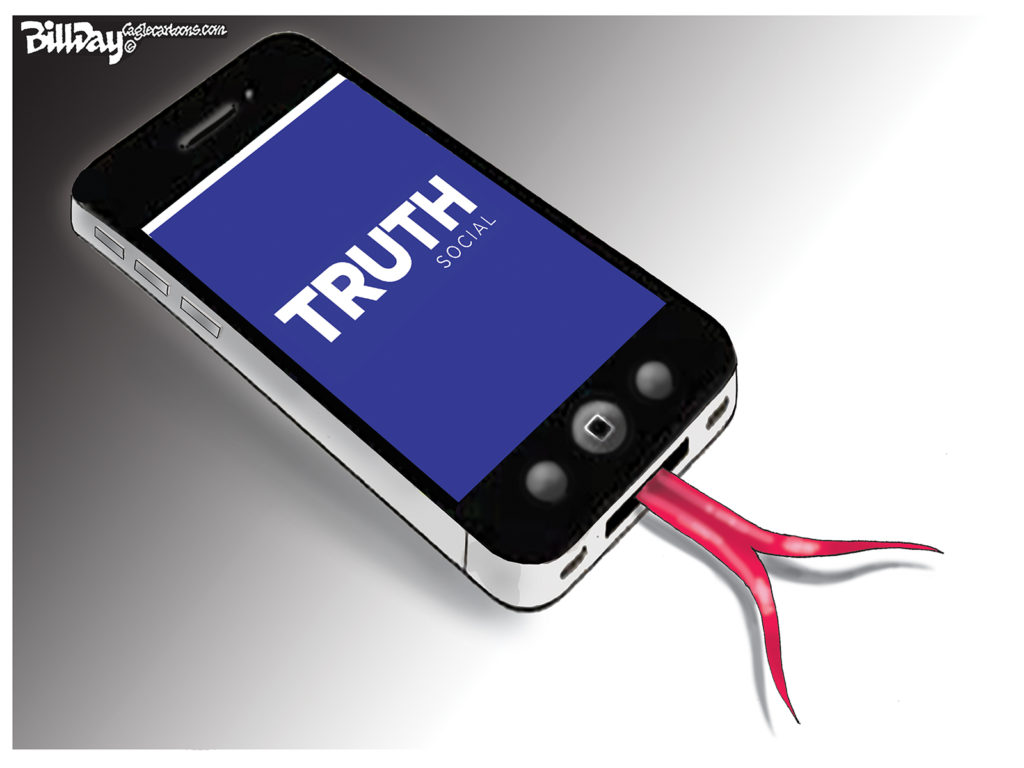
OKLA Home A, A Bill Day Cartoon

by Bill Day. Memphian Bill Day is two-time winner of the RFK Journalism Award in Cartooning. His cartoons are syndicated internationally by Cagle Cartoons. Cartoons Archive →

Photograph by Amie Vanderford

More Images

This ongoing series of photographs is intended to show the daily lives of these single mothers in order to invoke recognition of their similarities to all mothers, along with understanding and empathy from the viewer of the strengths that these single mothers possess within the challenging situations they face. My hope is that newfound empathy with these mothers’ lives will give people some pause before they condemn single mothers when discussing issues such as welfare and other politically charged hot buttons.

  • Subscribe to Posts via Email

    You can get Smart City Memphis posts right in your e-mail box. Just sign up below to begin receiving them.


  • RSS

    • A Los Angeles cycling highway?

    • All aboard: Engaging the public on transport projects

    • Weaving people back into the urban fabric

    • How clean is the air we breathe in cities?

    • Friday Fun: Self-driving automobile + Bus + Taxi = Otobuxi

    • Q&A with Hernan Navarro: Lima’s El Metropolitano BRT

  • RSS

    • San Francisco’s Uber-Complicated Taxi Industry

    • New Ventilation System Keeps Buildings Fresh But Warm

    • Eight Guidelines to Keep Creativity at the Heart of Cities

    • Infographic: Cities Embracing the Green Revolution

    • The Economic and Educational Value of Retrofitting Schools

    • Greening Cities with Better Bike Lanes

  • RSS

    • This Is What the Scar From a Tornado Looks Like Through a Suburban Town

    • How Waze Became the Hottest Map App Around

    • The Feds Are Fighting Forest Fires Wrong

    • What We Know So Far About the Skagit River Bridge Collapse

    • Will Brick-and-Mortar Stores Find New Life ... as Datacenters?

    • The Case for Caution When It Comes to Building Streetcars

  • Search Posts

  • About Smart City Memphis

    This is Smart City Consulting's blog and its purpose is to connect the dots and provide perspective on events, issues, and policies shaping Memphis and its future. Smart City Memphis was named one of the most intriguing blogs in the U.S. by the Pew Partnership for Civic Change, it was voted the best Memphis blog in About.com's Reader's Choice Awards, and The (Memphis) Commercial Appeal wrote: "Smart City Memphis provides some of the most well-thought-out thinking about Memphis' past, present, and future you'll find anywhere." Our blog's editor is Tom Jones, principal at Smart City Consulting and an editorial contributor at Memphis magazine, where he writes the monthly column, City Journal. Submit blog posts, ideas, suggestions, and emails to tjones@smartcityconsulting.com.
  • Archives

    • May 2013 (24)
    • April 2013 (34)
    • March 2013 (27)
    • February 2013 (31)
    • January 2013 (30)
    • December 2012 (29)
    • November 2012 (31)
    • October 2012 (33)
    • September 2012 (29)
    • August 2012 (33)
    • July 2012 (26)
    • June 2012 (33)
    • May 2012 (33)
    • April 2012 (31)
    • March 2012 (37)
    • February 2012 (32)
    • January 2012 (35)
    • December 2011 (29)
    • November 2011 (30)
    • October 2011 (34)
    • September 2011 (33)
    • August 2011 (39)
    • July 2011 (36)
    • June 2011 (41)
    • May 2011 (36)
    • April 2011 (57)
    • March 2011 (39)
    • February 2011 (45)
    • January 2011 (56)
    • December 2010 (44)
    • November 2010 (30)
    • October 2010 (28)
    • September 2010 (24)
    • August 2010 (22)
    • July 2010 (23)
    • June 2010 (34)
    • May 2010 (28)
    • April 2010 (32)
    • March 2010 (35)
    • February 2010 (31)
    • January 2010 (43)
    • December 2009 (49)
    • November 2009 (17)
    • October 2009 (24)
    • September 2009 (23)
    • August 2009 (18)
    • July 2009 (22)
    • June 2009 (28)
    • May 2009 (23)
    • April 2009 (23)
    • March 2009 (26)
    • February 2009 (25)
    • January 2009 (36)
    • December 2008 (15)
    • November 2008 (22)
    • October 2008 (21)
    • September 2008 (25)
    • August 2008 (23)
    • July 2008 (32)
    • June 2008 (27)
    • May 2008 (35)
    • April 2008 (26)
    • March 2008 (25)
    • February 2008 (29)
    • January 2008 (33)
    • December 2007 (20)
    • November 2007 (19)
    • October 2007 (32)
    • September 2007 (25)
    • August 2007 (25)
    • July 2007 (26)
    • June 2007 (16)
    • May 2007 (21)
    • April 2007 (25)
    • March 2007 (18)
    • February 2007 (16)
    • January 2007 (17)
    • December 2006 (16)
    • November 2006 (14)
    • October 2006 (18)
    • September 2006 (21)
    • August 2006 (20)
    • July 2006 (20)
    • June 2006 (17)
    • May 2006 (12)
    • April 2006 (19)
    • March 2006 (20)
    • February 2006 (23)
    • January 2006 (16)
    • December 2005 (23)
    • November 2005 (21)
    • October 2005 (23)
    • September 2005 (19)
    • August 2005 (27)
    • July 2005 (23)
    • June 2005 (16)
    • 0 (2)
  • Categories

  • Contributors

    • Aaron Shafer
    • Andrew Trippel
    • Anthony Siracusa
    • Barry Chase
    • Brad Leon
    • Brian Stephens
    • CEOs for Cities
    • Charles Santo
    • Chris Sanders
    • Crosstown Collaborative
    • David Williams
    • Doug Imig
    • Elizabeth Alley
    • Elizabeth Lemmonds
    • Emily Trenholm
    • Eric Mathews
    • Gene Pearson
    • Gene Pearson and Louise Mercuro
    • George Lord
    • Greg Thompson
    • Gwyn Fisher
    • Janet Boscarino
    • Jim Strickland
    • Jimmie Covington
    • John Kirkscey
    • John Lawrence
    • Jonathan Flynt
    • Josh Whitehead
    • Julie Ellis
    • Kenya Bradshaw
    • Laura Adams
    • Leah Wells
    • Louise Mercuro, AICP
    • Lurene Cachola Kelley
    • Margot McNeeley
    • Mark James
    • Matt Farr
    • Matt Timberlake
    • Melissa Petersen
    • Natashia Gregoire
    • Ray Brown
    • Rev. Steve Montgomery
    • Robert Bain
    • SCM
    • Scott L. Newstok
    • Smart City Memphis
    • Smart City Radio
    • Steve Bares
    • Steve Lockwood
    • Susan Adler Thorp
    • Tom Jones
    • Tomeka Hart
    • Tommy Pacello
    • Women Unite
    • Zach Hoyt

© 20111-2013 Smart City Memphis. All rights reserved.

  • Register
  • Log in
  • RSS
  • Smart City Radio
  • Smart City Consulting