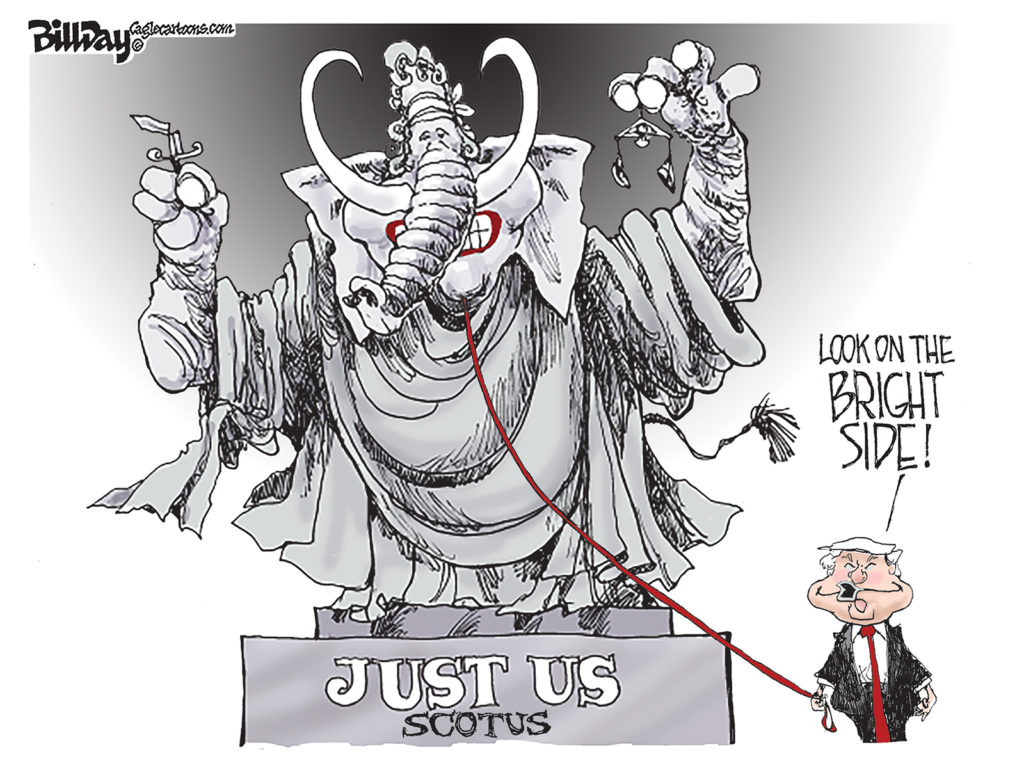

One of the best things about going to college is that we’re asked questions that lead us to see life in new ways and to ask our own provocative questions so we can make the best possible choices for ourselves.
But, while these kinds of questions might be asked in the classrooms of Lemoyne-Owen College, they sure aren’t asked when it comes to the college itself.
Then, we only ask how it can survive. Perhaps it’s time to ask if it should.
Rescue Missions
It may sound callous, but because these regular rescue missions concentrate on the survival of Lemoyne-Owen College and never on its potential for excellence, it’s hard to get excited about the almost $4 million in tax money being funneled into the college by City of Memphis Government and Memphis City Schools.
In a city where African-American powerlessness has been a crippling problem, it’s as if the conversation isn’t ever really about Lemoyne-Owen College at all, but treated as a symbolic vote that proves that times have changed in Memphis. As a result, somehow, Lemoyne-Owen College’s finances are patched up and it lurches along until its next financial crisis occurs.
Regrettably, it always does.
Political Rhetoric
Some of the comments made by its advocates are reminiscent of the days when we were told that it was our civic duty to buy tickets to lure an NFL team, but no one ever bothered to give us a compelling reason why it mattered to us as consumers. Now, we’re not told what benefits we receive from Lemoyne-Owen College, but instead, Memphis City Council is told by Robert Lipscomb – City of Memphis CFO and chairman of the college’s board – that if Lemoyne-Owen College closes, it’s “the worst indictment of our leadership.”
It’s just not true. If the college closes, it is not because of anything that was done wrong by this city or its leaders. After all, none of them made decisions about the college’s finances or its future that led to the latest revenue shortfall.
It seems to us that if the college can’t seem to find a successful niche in the marketplace, much less a marketplace that’s majority African-American, it seems to say more about the college than it does about City Council.
More Questions Than Answers
Of course, all of this begs the most obvious question: why is it the responsibility of Memphis City Council to spend public funds to bail out a private college, not to mention one with connections to the United Church of Christ and Baptist denominations?
But the separation of church and state issue is unlikely to be raised in the rhetorically overheated environment characterized by Councilman Rickey Peete, who quickly played the race card and called for his colleagues to “look beyond race and petty politics.”
Meanwhile, Memphis City Schools is channeling around $750,000 to Lemoyne-Owen College on the implausible premise that it, rather than University of Memphis, the primary source of teachers and educational research in this part of the world, can deliver the kind of special training that will produce higher quality teachers for city schools. In fact, as it appears now, Lemoyne-Owen College will have to raid the University of Memphis College of Education to get participants for the Memphis City Schools-financed program.
Finding A Vision
If taxpayers are already paying to have teachers trained at a public university, it’s hard to grasp the logic of paying twice so a private college can do it too. (In fact, if Memphis City Schools is really motivated by a need to create a new, innovative program rather than just finding a way to funnel money to the college, why not send out a RFP to all the colleges and universities in the region and see what it gets back?) Based on the Memphis City Schools’ funding model for its Lemoyne-Owen College program, it appears that it could almost afford to have the teachers trained at Duke University.
This is not to say that historically black colleges and universities don’t play important roles in higher education. After all, there are more than 100 HBCUs, and about 40 percent of all African-American college graduates come from these schools. What’s disturbing that Lemoyne-Owen College can’t manage to get into the top half of them.
That’s why we say the real question that needs to be answering before our cold, hard public cash is transfused into the college is this: “Does Lemoyne-Owen College have the potential to move into the top tier of HBCUs in the U.S.?”
Serial Financial Woes
If the answer is no, it seems that the market does know best, and that (not lack of civic leadership) is the reason for its serial financial woes. If the answer is yes, someone should unveil a more ambitious vision and what it would cost and how we can get it done. No options for the future should be ruled out, including Lemoyne-Owen College becoming a public institution affiliated with University of Memphis.
To suggest that City Council leadership and Memphis citizens are failing because they refuse to mobilize around the recurring triage for the college just doesn’t hold water. Instead, this should be treated as the moment of truth – and for truth: if the public is being asked for its tax money, it deserves to know what’s being done to make sure this bailout doesn’t happen again and how the college is going to achieve its real potential.
Much has changed in Memphis since 1968 when Owen College and Lemoyne College – two church schools – merged to become its present incarnation. Back then, the number of African-American teachers at University of Memphis could be counted on one hand, and the number of African-American students was shamefully low.
Time Change
It was in this context that historically black colleges and universities – particularly those in the South – came to play such a key role in the education of African-Americans and in the creation of the black middle class. And yet, it’s worth remembering that today, University of Memphis is educating about five times more African-American students than Lemoyne-Owen College.
This is not to suggest that HBCUs do not have important contributions to make. Research has shown that equally important, in addition to education, these colleges and universities have been places for the mentoring, social networks and personal growth that connect graduates with the jobs market. These social networks and personal connections are often key touchstones for white graduates, and in this way, HBCUs replicated this role.
Like many of these colleges and universities, Lemoyne-Owen College has a singularly impressive history, and all of us owe them – and it – a debt of gratitude. But if we are to owe Lemoyne-Owen College a debt of our tax money, it can’t be content to rest on its third-rate reputation.
After all, Lemoyne-Owen College has noncompetitive admissions, accepting essentially any one who applies, and most of them with ACT scores similar to Southwest Tennessee Community College. In other words, this conversation about the future of Lemoyne-Owen College should begin with the acknowledgement that it’s no Spelman, no Howard, no Morehouse, no Hampton, no Tuskegee and no Fisk.
Other HBCUs
After all, when was the last time you’ve heard anything like the following said about Lemoyne-Owen College?
• Morehouse men average well over 1000 on their SATs and more than 40 percent of its graduates pursue graduate and professional studies.
• Hampton turns away more than 50 percent of its applicants, and the median SAT is more than 950. Hampton students won an engineering design competition sponsored by Disney.
• Florida A&M has more black National Merit scholars on campus than Harvard University. It turns away about 40 percent of all applicants and has an exchange program with universities in China.
• Bill Cosby gave Fisk $1.3 million. More than 50 percent of Fisk grads continue their education after their graduations.
• At Tuskegee, summer internships are available at IBM and AT&T, and nearly 70 percent of its students get degrees.
• Howard is called the black Harvard, with about 65 percent of graduates going to professional and grad schools.
• Xavier has excellent health-related programs, and 18 percent of its students get into medical and dental schools.
• North Carolina A&T received an $8 million grant to establish an aerospace research center.
The Ebony Tower
We’re not Pollyannish enough to believe that Lemoyne-Owen College can quickly become part of what’s been called the “ebony tower,” the select historically black college and universities that make up the African-American ivy league.
But it can be done. Case in point: Clark Atlanta University.
Created 20 years ago through the merger of two historically black colleges, it shook off a reputation for easy admissions and now accepts about half of the students who apply. With a focus on engineering and science and the aggressive pursuit of federal grants, the university has risen from average to being frequently mentioned as one of the best HBCUs.
It Takes More
All of this is to say that it’s not impossible for Lemoyne-Owen College to become one of the nation’s best, but it’s going to take more than infusions of crisis-related funding and volumes of political rhetoric about failed leadership and petty politics. In fact, if anything, this approach to addressing the college’s future does nothing but devalue it, relegating it to nothing more than a political pawn rather than a center of quality education.
Before City Council votes on what is purported to be the $3 million answer, it ought to at least ask the $64 question: does LeMoyne-Owen College really have a future that deserves our confidence, much less our money?