Smart City Memphis
 

Sign up or Login

Memphis City Schools Gets Low Marks In Communications 101

by Smart City Memphis (RSS) | December 11th, 2006 6:10pm CDT

Tweet

As a general rule, governments and public agencies do relatively poor jobs of communicating.

Unfortunately, that’s especially true for Memphis City Schools, and it’s regrettable, because if there’s any public entity who needs to be good at communicating effectively with the public, it should be the one that on average spends about $95,000 an hour, 24/365.

This is on our minds today, because as we lamented yesterday, the city district often finds itself on the losing side in the battle for positive public perceptions when conflict arises with Shelby County Schools.

It’s a shame, because winning the hearts and minds of county taxpayers should be a priority for the city district. And most frustrating of all, there is some good news that deserves to be heard.

The Mantra

Superintendent Carol Johnson’s mantra is Every Day, Every Child, College Bound, and although she gets some pushback from some who think vocational education deserves equal billing, she’s right on target. The skills and knowledge needed to enter college are the same ones that are needed whatever decision students make about their future.

There’s no question that the most powerful weapon that Memphis City Schools has is its superintendent, but so far, she’s been unable to translate her popularity into improved public opinions about city schools. As a result, the prevailing public opinion is largely this: nothing has changed, and worse, there’s really nothing that can be done to improve things.

The opinions are buttressed by the culture of the district, resistance by some administrators and principals to support her ideas, and a lack of confidence that her programs will bear fruit. Regardless of these, Memphis City Schools itself is guilty of failing to be as assertive as it needs to be to send the message to the public that things are changing.

No area of government generates more reports, more statistics, and more measurements than public education, and that’s certainly true for an urban district like Memphis City Schools.

Some Good News For A Change

Here’s just a couple of hopeful statistics that we think should be shared with the public to combat the persistent feeling of helplessness:

· Memphis City Schools does better than the other three metro districts in Tennessee in educating African-American students.

· Memphis City Schools has cut the dropout rate 23 percent in two years.

At a time when Dr. Johnson is hammering home her message, some supporting documentation would go a long way toward influencing the opinion of the public who foots the bills for schools. Actually, in our minds, there would be value in mounting what would be tantamount to a political campaign, because in truth, Memphis City Schools is fighting for the public’s vote of confidence. And, if Memphis is to reduce the number of people leaving the city, there’s nothing that would be more persuasive than convincing the public that schools are improving.

TCAP Averages

For example, in our reading of the TCAP results, Memphis City Schools’ two-year average of African-American students who are proficient and advanced is higher than the average of Knox, Nashville/Davidson, and Hamilton Counties. Specifically, the Memphis district leads the state in reading for K-8 and 9-12 – 81% and 86% respectively. Meanwhile, the cumulative average of the other three metro areas was 77.7% and 82.3%, and even taken separately, none of the other districts surpassed Memphis. That’s an impressive statistic to us, particularly in light of the fact that the other metro areas have consolidated school systems, so their scores include suburban African-Americans who generally score higher than their urban counterparts.

In math, the average for Memphis City Schools was only marginally better than the average of the three other metros, but it was still better. When the districts were taken separately, Knox County bested Memphis in 9-12 math.

As for the dropout rate, the Tennessee Department of Education Report Card reports that the Memphis City Schools’ cohort dropout rate has declined from 19.8 percent in 2004 to 15 percent this year. When the public costs for students who drop out of school – seen in incarceration, social services, workforce training and more – weighs down budgets of the public sector, there’s nothing more important that Memphis City Schools can do than get more students to their graduation exercises. After all, if every child is to be college bound, first, we have to get them to graduation.

It’s not our intent to be Pollyannish about the challenges facing Memphis City Schools and its students, but it is our intent to argue that the district needs to be more forceful and strategic in painting a more accurate portrait of the learning that’s taking place here today. And it begins by coming to grips with the political context in which all of this plays out.


Tags: Uncategorized

Categories: Uncategorized

Comments RSS Feed

Comments are closed.

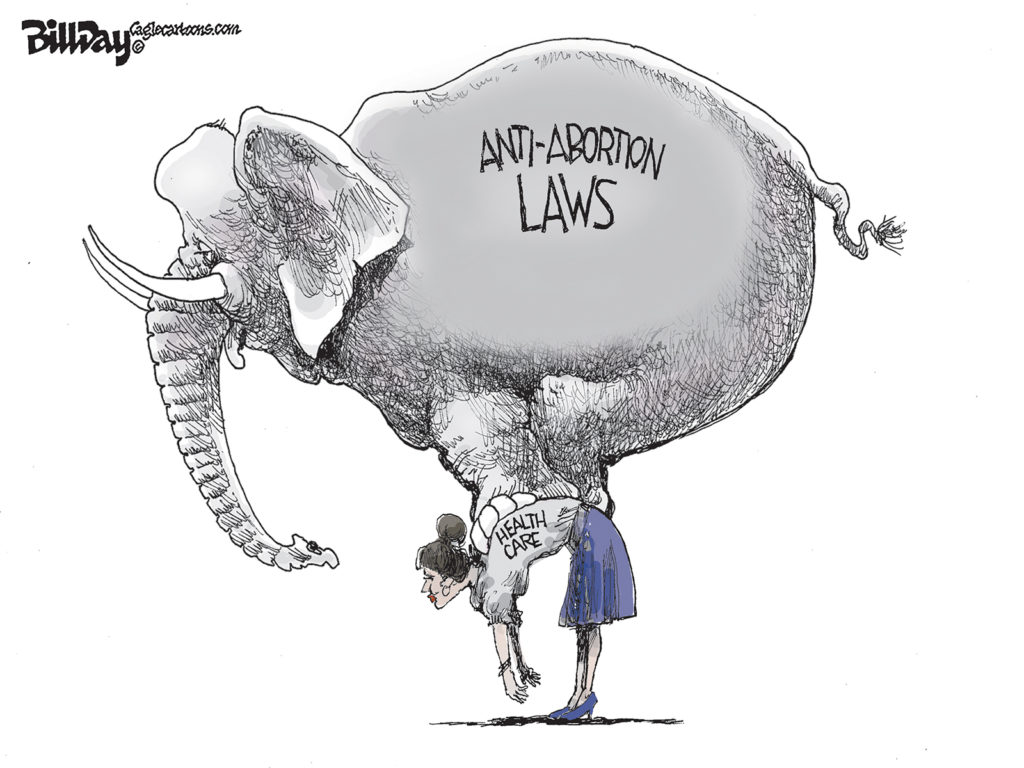
Aquaphant, A Bill Day Cartoon

by Bill Day. Memphian Bill Day is two-time winner of the RFK Journalism Award in Cartooning. His cartoons are syndicated internationally by Cagle Cartoons. Cartoons Archive →

Photograph by Amie Vanderford

More Images

Memphian Amie Vanderford is a photographer for peace and justice. Her portfolio includes photographs from Peru, Zimbabwe, Nepal, Indian, and her hometown.

  • Subscribe to Posts via Email

    You can get Smart City Memphis posts right in your e-mail box. Just sign up below to begin receiving them.


  • RSS

    • Fazilka Ecocabs Offers New Paradigm for Non-Motorized Transport in Indian Cities

    • China Transportation Briefing: Filling the Finance Gap

    • TheCityFix Picks, May 4: Spare the Air, Honoring Bloomberg, BRT Experience

    • BRT Experience, Day 1: Simple yet Captivating Marketing

    • BRT Experience, Day 1: Women-Only Access on Metrobus

    • We’re Hiring! Apply to Be TheCityFix Blogger

  • RSS

    • Microcities: The Rise of the Mini Home and the Walkable Neighbourhood

    • Crucible of Innovation, Memeplex of Modernity: Why Cities are Where ‘Ideas Have Sex’

    • Could Less Material Wealth Make us Happier?

    • Megacities: Eight Ideas from #citytalk for Developing Future Cities

    • Microcities: Five of the World’s ‘Smallest’ Cities

    • Megacities: Five of the World’s ‘Biggest’ Cities

  • RSS

    • An Urban Garden for Your Bus Stop

    • Want to Shame a Terrible Parker? There's an App for That

    • A Weekend Rodeo Commemorates World War I

    • What Really Matters for Increasing Transit Ridership

    • The Right Way to Zone for Transit-Oriented Development

    • Mapping Global Water Stress

  • Search Posts

  • About Smart City Memphis

    This is Smart City Consulting's blog and its purpose is to connect the dots and provide perspective on events, issues, and policies shaping Memphis and its future. Smart City Memphis was named one of the most intriguing blogs in the U.S. by the Pew Partnership for Civic Change, it was voted the best Memphis blog in About.com's Reader's Choice Awards, and The (Memphis) Commercial Appeal wrote: "Smart City Consulting provides some of the most well-thought-out thinking about Memphis' past, present, and future you'll find anywhere." Our blog's editor is Tom Jones, principal at Smart City Consulting and an editorial contributor at Memphis magazine, where he writes the monthly column, City Journal. Submit blog posts, ideas, suggestions, and emails to tjones@smartcityconsulting.com.
  • Archives

    • May 2012 (21)
    • April 2012 (31)
    • March 2012 (37)
    • February 2012 (32)
    • January 2012 (35)
    • December 2011 (29)
    • November 2011 (30)
    • October 2011 (34)
    • September 2011 (33)
    • August 2011 (39)
    • July 2011 (36)
    • June 2011 (41)
    • May 2011 (36)
    • April 2011 (57)
    • March 2011 (39)
    • February 2011 (45)
    • January 2011 (56)
    • December 2010 (44)
    • November 2010 (30)
    • October 2010 (28)
    • September 2010 (24)
    • August 2010 (22)
    • July 2010 (23)
    • June 2010 (34)
    • May 2010 (28)
    • April 2010 (32)
    • March 2010 (35)
    • February 2010 (31)
    • January 2010 (43)
    • December 2009 (49)
    • November 2009 (17)
    • October 2009 (24)
    • September 2009 (23)
    • August 2009 (18)
    • July 2009 (22)
    • June 2009 (28)
    • May 2009 (23)
    • April 2009 (23)
    • March 2009 (26)
    • February 2009 (25)
    • January 2009 (36)
    • December 2008 (15)
    • November 2008 (22)
    • October 2008 (21)
    • September 2008 (25)
    • August 2008 (23)
    • July 2008 (32)
    • June 2008 (27)
    • May 2008 (35)
    • April 2008 (26)
    • March 2008 (25)
    • February 2008 (29)
    • January 2008 (33)
    • December 2007 (20)
    • November 2007 (19)
    • October 2007 (32)
    • September 2007 (25)
    • August 2007 (25)
    • July 2007 (26)
    • June 2007 (16)
    • May 2007 (21)
    • April 2007 (25)
    • March 2007 (18)
    • February 2007 (16)
    • January 2007 (17)
    • December 2006 (16)
    • November 2006 (14)
    • October 2006 (18)
    • September 2006 (21)
    • August 2006 (20)
    • July 2006 (20)
    • June 2006 (17)
    • May 2006 (12)
    • April 2006 (19)
    • March 2006 (20)
    • February 2006 (23)
    • January 2006 (16)
    • December 2005 (23)
    • November 2005 (21)
    • October 2005 (23)
    • September 2005 (19)
    • August 2005 (27)
    • July 2005 (23)
    • June 2005 (16)
    • 0 (2)
  • Categories

  • Contributors

    • Aaron Shafer
    • Andrew Trippel
    • Anthony Siracusa
    • Barry Chase
    • Brad Leon
    • Brian Stephens
    • CEOs for Cities
    • Charles Santo
    • Chris Sanders
    • David Williams
    • Doug Imig
    • Elizabeth Alley
    • Emily Trenholm
    • Eric Mathews
    • Gene Pearson
    • Gene Pearson and Louise Mercuro
    • Greg Thompson
    • Gwyn Fisher
    • Janet Boscarino
    • Jim Strickland
    • Jimmie Covington
    • John Kirkscey
    • John Lawrence
    • Jonathan Flynt
    • Josh Whitehead
    • Julie Ellis
    • Kenya Bradshaw
    • Laura Adams
    • Leah Wells
    • Louise Mercuro, AICP
    • Lurene Cachola Kelley
    • Margot McNeeley
    • Mark James
    • Matt Farr
    • Matt Timberlake
    • Melissa Petersen
    • Natashia Gregoire
    • Ray Brown
    • Rev. Steve Montgomery
    • Robert Bain
    • SCM
    • Scott L. Newstok
    • Smart City Memphis
    • Smart City Radio
    • Steve Bares
    • Steve Lockwood
    • Susan Adler Thorp
    • Tom Jones
    • Tomeka Hart
    • Tommy Pacello
    • Women Unite
    • Zach Hoyt

© 2012 Smart City Memphis. All rights reserved.

  • Register
  • Log in
  • RSS
  • Smart City Radio
  • Smart City Consulting