Smart City Memphis
 

Sign up or Login

How To Reform Zoning And Government In One Fell Swoop

by Smart City Memphis (RSS) | September 23rd, 2006 7:19am CDT

Tweet

Reform.

It’s one of those words used so often by politicians that it’s almost lost all meaning. It’s right up there with world-class, state-of-the-art, public-private partnership, new paradigm, and summit. For once, reform is precisely the right word to describe the new development code now being written for Memphis and Shelby County.

That’s because the new Unified Development Code is about more than good land use. More to the point, it is about good government.

That’s precisely why the next six months will see hard-fought resistance from the entrenched special interests who have all but owned the local zoning apparatus for more than a decade. They control the process to the point that one boasted that on any given day, he could deliver seven votes (a majority) in either local legislative body, another has co-signed car loans and given rides on his private jet to elected officials, and both have been involved in real estate dealings with the same politicians who vote on their zoning cases.

The Catch

Therein lies the Catch-22. This new way making land use decisions requires the approval of the Memphis City Council and Shelby County Board of Commissioners.

Sometime in the middle of next year, these 26 legislators will be asked to pass the new Unified Development Code (www.dpd.duncanplan.com) being written by nationally respected planners Lee Einswiler and Colin Scaff of Austin for the Memphis and Shelby County Office of Planning and Development. The new Code would reform what is most wrong with the present system, replacing the current politicized process with one where politicians set policy and professional planners decide on zoning requests.

The subverting of the present system stems largely from the misuse of PUD’s (Planned Use Development) and the takeover of the Land Use Control Board by developers. Designed to replace existing zoning districts with innovative development, PUD’s were intended to be rare and allowed because of important public benefits, such as increasing open space or protecting the environment.

Instead, in Memphis and Shelby County, unlike the rest of the nation, PUD’s are the rule, not the exception, and normally, the underlying zoning isn’t even changed, so there is land with agricultural zoning that is covered with cookie cutter development.

Subverting The System

To make matters worse, local PUD applications are treated as special exemptions, because that section of the law has weaker requirements for notifying the public and neighborhood groups. Their clout was weakened even more in the mid-1990’s when the Mayors Herenton and Rout – ignoring pleas by neighborhoods for more representation – oaded up the public board that votes first on zoning applications, the Land Use Control Board, with employees, friends and even relatives of developers, to the point where today, of the 12 board members and alternates, only one reprseents neighborhoods.

With this dominance by developers, within a year, the percentage of times the board overturned its own professional staff’s recommendations about PUDs climbed to 70 percent.

Creations of Memphis and Shelby County’s fatally flawed zoning process is all around us. The sewer extension to the Gray’s Creek basin was driven by politics and built without a plan in place. The plan for Germantown Parkway was never adopted as official government policy and amendments began before the ink was dry, giving birth to seemingly endless succession of derivative strip malls and traffic-clogged streets. Future Hickory Hills cover the landscape of the unincorporated areas of Shelby County, where they are testament to politically-based zoning that allows a quality of housing so poor that it requires reinvestment before mortgages are paid.

Meanwhile, construction of Highway 385 on the eastern fringe of Shelby County nears completion, and incredibly, once again, there is no plan for schools, commercial development or neighborhoods.

The Difference

So, what difference could the new Unified Development Code make?

* It would correct the questionable governance issues in the system now.

* It would throw out cookie cutter rules that tend to urbanize the suburbs and suburbanize the city.

* It would give incentives for mixed income, mixed age and mixed use neighborhoods so people can age in place.

* It would remove disincentives for investing in the urban core.

* It would create more open space and preserves trees. It would give incentives for higher densities that support retail, churches, and services.

* It would encourage development that is less auto-oriented and more walkable.

A Reform Vote

In other words, it is a revolutionary idea for Memphis and Shelby County, ending an era of “slash and burn” profiteering and swinging the pendulum strongly toward smart growth and good government.

It may be hard for some City Council and Board of Commissioners to reform local system and wean themselves from the steady stream of campaign contributions that flows from the development industry, but it’s a vote for reform that every neighborhood group will be watching.


Tags: Uncategorized

Categories: Uncategorized

Comments RSS Feed

Comments are closed.

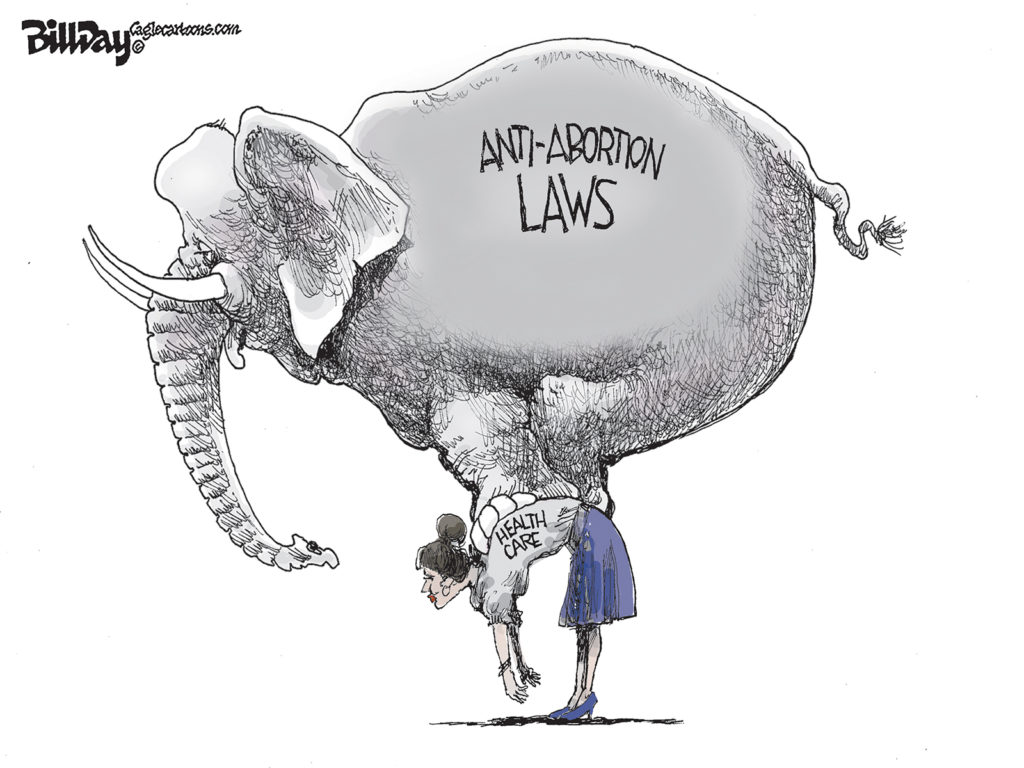
Aquaphant, A Bill Day Cartoon

by Bill Day. Memphian Bill Day is two-time winner of the RFK Journalism Award in Cartooning. His cartoons are syndicated internationally by Cagle Cartoons. Cartoons Archive →

Photograph by Amie Vanderford

More Images

Memphian Amie Vanderford is a photographer for peace and justice. Her portfolio includes photographs from Peru, Zimbabwe, Nepal, Indian, and her hometown.

  • Subscribe to Posts via Email

    You can get Smart City Memphis posts right in your e-mail box. Just sign up below to begin receiving them.


  • RSS

    • Fazilka Ecocabs Offers New Paradigm for Non-Motorized Transport in Indian Cities

    • China Transportation Briefing: Filling the Finance Gap

    • TheCityFix Picks, May 4: Spare the Air, Honoring Bloomberg, BRT Experience

    • BRT Experience, Day 1: Simple yet Captivating Marketing

    • BRT Experience, Day 1: Women-Only Access on Metrobus

    • We’re Hiring! Apply to Be TheCityFix Blogger

  • RSS

    • Microcities: The Rise of the Mini Home and the Walkable Neighbourhood

    • Crucible of Innovation, Memeplex of Modernity: Why Cities are Where ‘Ideas Have Sex’

    • Could Less Material Wealth Make us Happier?

    • Megacities: Eight Ideas from #citytalk for Developing Future Cities

    • Microcities: Five of the World’s ‘Smallest’ Cities

    • Megacities: Five of the World’s ‘Biggest’ Cities

  • RSS

    • An Urban Garden for Your Bus Stop

    • Want to Shame a Terrible Parker? There's an App for That

    • A Weekend Rodeo Commemorates World War I

    • What Really Matters for Increasing Transit Ridership

    • The Right Way to Zone for Transit-Oriented Development

    • Mapping Global Water Stress

  • Search Posts

  • About Smart City Memphis

    This is Smart City Consulting's blog and its purpose is to connect the dots and provide perspective on events, issues, and policies shaping Memphis and its future. Smart City Memphis was named one of the most intriguing blogs in the U.S. by the Pew Partnership for Civic Change, it was voted the best Memphis blog in About.com's Reader's Choice Awards, and The (Memphis) Commercial Appeal wrote: "Smart City Consulting provides some of the most well-thought-out thinking about Memphis' past, present, and future you'll find anywhere." Our blog's editor is Tom Jones, principal at Smart City Consulting and an editorial contributor at Memphis magazine, where he writes the monthly column, City Journal. Submit blog posts, ideas, suggestions, and emails to tjones@smartcityconsulting.com.
  • Archives

    • May 2012 (21)
    • April 2012 (31)
    • March 2012 (37)
    • February 2012 (32)
    • January 2012 (35)
    • December 2011 (29)
    • November 2011 (30)
    • October 2011 (34)
    • September 2011 (33)
    • August 2011 (39)
    • July 2011 (36)
    • June 2011 (41)
    • May 2011 (36)
    • April 2011 (57)
    • March 2011 (39)
    • February 2011 (45)
    • January 2011 (56)
    • December 2010 (44)
    • November 2010 (30)
    • October 2010 (28)
    • September 2010 (24)
    • August 2010 (22)
    • July 2010 (23)
    • June 2010 (34)
    • May 2010 (28)
    • April 2010 (32)
    • March 2010 (35)
    • February 2010 (31)
    • January 2010 (43)
    • December 2009 (49)
    • November 2009 (17)
    • October 2009 (24)
    • September 2009 (23)
    • August 2009 (18)
    • July 2009 (22)
    • June 2009 (28)
    • May 2009 (23)
    • April 2009 (23)
    • March 2009 (26)
    • February 2009 (25)
    • January 2009 (36)
    • December 2008 (15)
    • November 2008 (22)
    • October 2008 (21)
    • September 2008 (25)
    • August 2008 (23)
    • July 2008 (32)
    • June 2008 (27)
    • May 2008 (35)
    • April 2008 (26)
    • March 2008 (25)
    • February 2008 (29)
    • January 2008 (33)
    • December 2007 (20)
    • November 2007 (19)
    • October 2007 (32)
    • September 2007 (25)
    • August 2007 (25)
    • July 2007 (26)
    • June 2007 (16)
    • May 2007 (21)
    • April 2007 (25)
    • March 2007 (18)
    • February 2007 (16)
    • January 2007 (17)
    • December 2006 (16)
    • November 2006 (14)
    • October 2006 (18)
    • September 2006 (21)
    • August 2006 (20)
    • July 2006 (20)
    • June 2006 (17)
    • May 2006 (12)
    • April 2006 (19)
    • March 2006 (20)
    • February 2006 (23)
    • January 2006 (16)
    • December 2005 (23)
    • November 2005 (21)
    • October 2005 (23)
    • September 2005 (19)
    • August 2005 (27)
    • July 2005 (23)
    • June 2005 (16)
    • 0 (2)
  • Categories

  • Contributors

    • Aaron Shafer
    • Andrew Trippel
    • Anthony Siracusa
    • Barry Chase
    • Brad Leon
    • Brian Stephens
    • CEOs for Cities
    • Charles Santo
    • Chris Sanders
    • David Williams
    • Doug Imig
    • Elizabeth Alley
    • Emily Trenholm
    • Eric Mathews
    • Gene Pearson
    • Gene Pearson and Louise Mercuro
    • Greg Thompson
    • Gwyn Fisher
    • Janet Boscarino
    • Jim Strickland
    • Jimmie Covington
    • John Kirkscey
    • John Lawrence
    • Jonathan Flynt
    • Josh Whitehead
    • Julie Ellis
    • Kenya Bradshaw
    • Laura Adams
    • Leah Wells
    • Louise Mercuro, AICP
    • Lurene Cachola Kelley
    • Margot McNeeley
    • Mark James
    • Matt Farr
    • Matt Timberlake
    • Melissa Petersen
    • Natashia Gregoire
    • Ray Brown
    • Rev. Steve Montgomery
    • Robert Bain
    • SCM
    • Scott L. Newstok
    • Smart City Memphis
    • Smart City Radio
    • Steve Bares
    • Steve Lockwood
    • Susan Adler Thorp
    • Tom Jones
    • Tomeka Hart
    • Tommy Pacello
    • Women Unite
    • Zach Hoyt

© 2012 Smart City Memphis. All rights reserved.

  • Register
  • Log in
  • RSS
  • Smart City Radio
  • Smart City Consulting