Smart City Memphis
 

Sign up or Login

Civic Involvement As A Corporate Asset

by Smart City Memphis (RSS) | July 29th, 2006 12:10pm CST

From Otis White’s Urban Notebook at www.governing.com. He is featured weekly on our syndicated radio program Smart City:

Not all things were better in the past, but one thing in cities was genuinely better 30 years ago: business leadership, particularly among big companies. Alas, today’s cities are filled with branch offices of large corporations that never participate in chambers of commerce, rarely offer more than token support for United Way campaigns, and never, ever dirty their hands with local politics. So it’s surprising to learn that there are a few large corporations that actually push their executives to participate in civic work. Even more surprising: IBM is one.

Why is that surprising? Because IBM has every excuse for distancing itself from the communities it does business in. It is a multinational corporation without ties to any particular region of the country (it is headquartered in suburban New York but has operations everywhere). While it does business with lots of governments, it isn’t primarily a government contractor, so it has little need to curry favor with localities. Nor is it part of a regulated industry, like a bank or utility, and thus dependent on the whims of politicians.

And its executives, like those of most large companies, are a nomadic lot. (The old joke was that IBM stood for “I’ve Been Moved.”) Add it up: No close ties to any region, no need to curry favor with politicians, a peripatetic group of executives, and you’d figure IBM would be among the least involved of companies. But you’d be wrong.

According to IBM, 60 of its executives in the U.S. are on United Way boards and 53 are on local or statewide chambers of commerce. Subtract community relations and government affairs officials, and you still find a surprising number of what corporations call “business-unit executives” (those who run departments related to services or products) on community boards (50 on United Way boards, 36 on chamber boards). Example: Lee Torrance, top executive in the Atlanta office, is on the Atlanta chamber and United Way boards and involved with Habitat for Humanity and the Atlanta Ballet. Another: Don Jue, director of operations for 20 Western states, sits on the Los Angeles chamber board, the Urban League board, the L.A. Sports Council and the Asian Pacific American Legal Center board.

This isn’t by accident, IBM officials say. The company has targeted 23 metro areas in the U.S. for local involvement by its executives, because these places have large company operations, a large group of clients or are seen as important future markets. (These regions range from Burlington, Vt., to New York.) The company requires top executives in these regions to be sure the company is represented on important civic boards and active in good causes. Finally, it makes “external relations” (translation: community involvement) part of these executives’ annual performance reviews.

But if the “how” of IBM’s community involvement is clear, the “why” is more mysterious. IBMers say it’s part of the corporate culture, something that goes back to its earliest days nearly a century ago. Employees like it, company officials say. And it’s good for business, part of the “base of integrity that gives people trust in doing business with IBM over and over,” says Ann W. Cramer, director of corporate community relations for North America.

Could other large companies do the same? Sure. Why don’t they? Because civic involvement isn’t seen as central to these companies’ business. Thus, when most big companies get involved in communities, they do so by sending PR executives or government-affairs people, officials whose work is seen as incidental to the company’s real business. This, then, is what makes IBM’s approach so remarkable. Its use of business-unit executives for most of its civic work shows that, to Big Blue at least, community involvement isn’t just marketing, it’s a corporate asset. And that’s an idea worth cheering.


Tags: Uncategorized

Categories: Uncategorized

Comments RSS Feed

Tweet

Comments are closed.

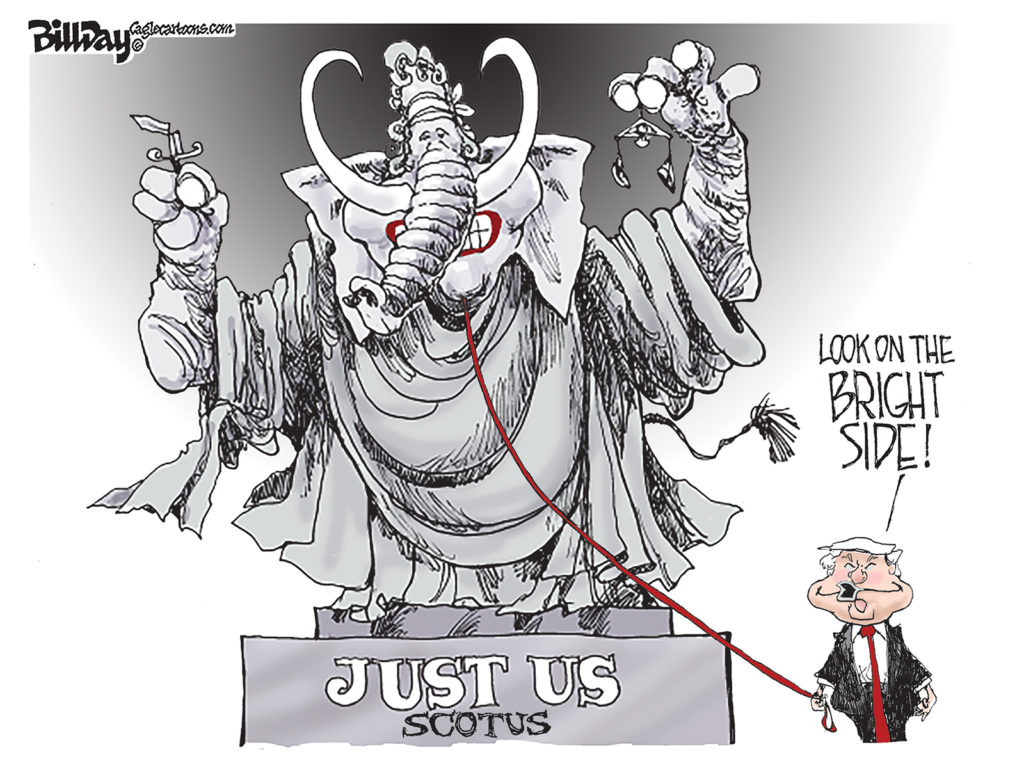
Our Fracking Congress

by Bill Day. Memphian Bill Day is two-time winner of the RFK Journalism Award in Cartooning. His cartoons are syndicated internationally by Cagle Cartoons. Cartoons Archive →

Photograph by Amie Vanderford

More Images

Memphian Amie Vanderford is a photographer for peace and justice. Her portfolio includes photographs from Peru, Zimbabwe, Nepal, Indian, and her hometown.

  • Subscribe to Posts via Email

    You can get Smart City Memphis posts right in your e-mail box. Just sign up below to begin receiving them.


  • RSS

    • New Videos: Stories of Auto-Rickshaws in India

    • Sustainable Urban Transport in India: Role of the Auto-Rickshaw Sector

    • New Competition: Encouraging Youth to Rethink Public Transportation

    • Paris to Allow Cyclists to Run Red Lights

    • Research Recap, February 6: Urban Happiness, Electric Highways, Cooperative ITS

    • Living Without a Car in Bogotá: Day 12

  • RSS

    • The Changing Face of Housing

    • How Seville’s Hidden Treasures Became the World’s Largest Glued Wood Structure

    • Four Pioneering Examples of Sustainable Refurbishment from Around the World

    • Do You Have an Idea for our Urban World? 21 Cities, 90 Million Citizens are Interested

    • #CycleSafe – Eight Achievable Steps for Creating Cities fit for Cycling

    • Bogotá Citizens Take to Youtube to Criticize the Transmilenio BRT System

  • RSS

    • Disturbing Video of the Day: Cloud of Filth Emanates from Bus Seat

    • Scenes From Europe's Frozen Cities

    • One Month in Beijing = Smoking 5 Cigarettes

    • This Week in Bans: 'Gay Lifestyles' Outlawed in St. Petersburg, Russia

    • Azerbaijan's Plans for a One Kilometer-Tall Skyscraper

    • Postcard From Venice

  • Search Posts

  • About Smart City Memphis

    This is the blog by Smart City Consulting and its opinions are informed by our work in Memphis and other cities on a variety of issues affecting urban success. Smart City Memphis was named one of the most intriguing blogs in the U.S. by the Pew Partnership for Civic Change. Our intent is to "connect the dots" on events, issues, and policies that shape Memphis and its future, and to frame Memphis issues in a national context. The blog's editor is Tom Jones, principal at Smart City Consulting and an editorial contributor at Memphis magazine, where he writes the monthly column, City Journal. Send blog posts, ideas, suggestions, and emails to tjones@smartcityconsulting.com.
  • Archives

    • February 2012 (11)
    • January 2012 (35)
    • December 2011 (29)
    • November 2011 (30)
    • October 2011 (34)
    • September 2011 (33)
    • August 2011 (39)
    • July 2011 (36)
    • June 2011 (41)
    • May 2011 (36)
    • April 2011 (57)
    • March 2011 (39)
    • February 2011 (45)
    • January 2011 (56)
    • December 2010 (44)
    • November 2010 (30)
    • October 2010 (28)
    • September 2010 (24)
    • August 2010 (22)
    • July 2010 (23)
    • June 2010 (34)
    • May 2010 (28)
    • April 2010 (32)
    • March 2010 (35)
    • February 2010 (31)
    • January 2010 (43)
    • December 2009 (49)
    • November 2009 (17)
    • October 2009 (24)
    • September 2009 (23)
    • August 2009 (18)
    • July 2009 (22)
    • June 2009 (28)
    • May 2009 (23)
    • April 2009 (23)
    • March 2009 (26)
    • February 2009 (25)
    • January 2009 (36)
    • December 2008 (15)
    • November 2008 (22)
    • October 2008 (21)
    • September 2008 (25)
    • August 2008 (23)
    • July 2008 (32)
    • June 2008 (27)
    • May 2008 (35)
    • April 2008 (26)
    • March 2008 (25)
    • February 2008 (29)
    • January 2008 (33)
    • December 2007 (20)
    • November 2007 (19)
    • October 2007 (32)
    • September 2007 (25)
    • August 2007 (25)
    • July 2007 (26)
    • June 2007 (16)
    • May 2007 (21)
    • April 2007 (25)
    • March 2007 (18)
    • February 2007 (16)
    • January 2007 (17)
    • December 2006 (16)
    • November 2006 (14)
    • October 2006 (18)
    • September 2006 (21)
    • August 2006 (20)
    • July 2006 (20)
    • June 2006 (17)
    • May 2006 (12)
    • April 2006 (19)
    • March 2006 (20)
    • February 2006 (23)
    • January 2006 (16)
    • December 2005 (23)
    • November 2005 (21)
    • October 2005 (23)
    • September 2005 (19)
    • August 2005 (27)
    • July 2005 (23)
    • June 2005 (16)
    • 0 (2)
  • Categories

  • Contributors

    • Aaron Shafer
    • Andrew Trippel
    • Anthony Siracusa
    • Barry Chase
    • Brad Leon
    • Brian Stephens
    • CEOs for Cities
    • Charles Santo
    • Chris Sanders
    • David Williams
    • Doug Imig
    • Elizabeth Alley
    • Emily Trenholm
    • Eric Mathews
    • Gene Pearson
    • Gene Pearson and Louise Mercuro
    • Greg Thompson
    • Gwyn Fisher
    • Janet Boscarino
    • Jim Strickland
    • Jimmie Covington
    • John Kirkscey
    • John Lawrence
    • Jonathan Flynt
    • Josh Whitehead
    • Julie Ellis
    • Kenya Bradshaw
    • Laura Adams
    • Leah Wells
    • Louise Mercuro, AICP
    • Lurene Cachola Kelley
    • Margot McNeeley
    • Matt Farr
    • Matt Timberlake
    • Melissa Petersen
    • Natashia Gregoire
    • Ray Brown
    • Rev. Steve Montgomery
    • Robert Bain
    • SCM
    • Scott L. Newstok
    • Smart City Memphis
    • Smart City Radio
    • Steve Bares
    • Steve Lockwood
    • Susan Adler Thorp
    • Tom Jones
    • Tomeka Hart
    • Tommy Pacello
    • Women Unite
    • Zach Hoyt

© 2012 Smart City Memphis. All rights reserved.

  • Register
  • Log in
  • RSS
  • Smart City Radio
  • Smart City Consulting