Smart City Memphis
 

Sign up or Login

The IDB Parallel Universe

by Smart City Memphis (RSS) | May 26th, 2006 1:56pm CST

Government officials and agencies have an aversion to admitting they’ve made a mistake, but no agency is more tone deaf than the Memphis and Shelby County Industrial Development Board.

Case in point. Yesterday, on the same day that Shelby County Mayor A C Wharton was in Nashville, engaged in hard-nosed negotiations to get more revenues for his cash-strapped government, the IDB is at the same time giving away $820,000 in taxes for two more questionable applicants.

Being stubborn is one thing, but the board’s actions have long since reached the stage of irresponsibility. Not only does its continued rubber stamping of tax freezes fly in the face of the opinions of most taxpayers, but it’s just simply bad public policy. Period.

Unfortunately, in recent months, there has been a lot more talk about reining in the board’s authority than action. Normally, talk is cheap, but not in this case. While city and county governments debate what should be done, the IDB simply goes on its way, with each approval adding to the $50 million a year in taxes already waived in Memphis and Shelby County.

Meanwhile, in Nashville, the county’s mayor has to suffer the indignities of going to Capitol Hill, hat in hand, to plead for the state’s largesse in granting him a new tax on development. In the end, he is able to get $5 million this year, or roughly the equivalent of 10 percent of the total amount being waived by tax freezes annually.

An Oblivious IDB

The IDB meanwhile acts as if it’s oblivious to the way that it is compounding the financial woes of city and county governments. It is so single-minded that it sees no broader responsibilities to the community, such as using tax freezes only when absolutely necessary to close a deal for quality jobs in a targeted industry.

Yesterday, the board gave preliminary approval to two more pedestrian applicants – one with a habit for posting losses and another in the habit of paying welfare wages. The new jobs created by the companies actually drag down the per capita income of Shelby County, because the average salary of one company was $32,000 and salaries at the other company average $22,880, both below the county’s per capita income of $34,000.

So, clearly, it’s not the strength of the salaries that got their taxes waived. Rather, it must have been the capital investments of $4.2 million and $2.1 million, once again making the point that the PILOT program is a real estate development program masquerading as economic development.

The company paying the average wages of $22,880, Knox St. Clair, a supplier of interior doors and windows, is paying so little that its 32 new employees will be eligible for food stamps and human services on the day they start their new jobs. In other words, taxpayers are not only subsidizing the company’s bottom line with the tax freezes, but we may also be subsidizing it by providing its employees public assistance, public health and human services programs.

These kinds of tax freezes say volumes about the IDB’s long-term vision of Memphis and Shelby County as a center for the low-wage, low-skill jobs that it so easily approves. It certainly didn’t engender any great feelings of pride for us when an official with one of the companies took his tax freeze and praised Memphis’ “highly-skilled distribution workforce.” That, in a phrase, is the legacy of the IDB.

Low-wage Jobs

In effect, the low-wage jobs being given tax freezes have hidden costs, and as we’ve suggested before, the evaluation for all tax freezes should include all public costs, not only of roads and interchanges, but public health care costs, utility subsidies and housing assistance for low-wage employees.

In Minneapolis, for example, companies seeking business incentives must provide the names of all programs to which they are applying, profiles of their workforce, projections of future wages and the total cost of public assistance for their workers.

Amazing as it sounds, there is no effort to connect decisions about PILOTs to a more comprehensive, overall plan and to place the emphasis on areas where the existing infrastructure had already been paid for by local taxpayers. As a result, PILOTs approved by the IDB cause local government to spend more money to build roads, bridges and sewers, however, these factors aren’t considered in the evaluation process.

That’s why we have made our own recommendation. Every PILOT should have a “fiscal note” that tells not only the amount of taxes being waived, but any other costs that will have to be incurred by taxpayers, whether it is for a new road or food stamps for workers.

Investments

Decisions about tax freezes shouldn’t be made in isolation, and if we are to act as investors, we are entitled to know the entire investment that we are making in each company.

The heart of our economic development policy should be increased opportunity, better jobs and bigger paychecks. Tax incentives should be aimed at achieving all three objectives, because if government is a party to a process that puts its own citizens in low-wage, dead end jobs, it is not just bad public policy. It is the most cynical kind of public policy.

That’s why it’s disheartening that the common sense recommendations of the consultants who studied the tax freeze programs continue to languish five months after they were issued and business as usual continues.

At the end of the day, the recommendations go a long way to putting the emphasis on tax freezes where it belongs – back on an understanding that this is the public’s money, and it must be invested wisely and in a more targeted way.


Tags: Uncategorized

Categories: Uncategorized

Comments RSS Feed

Tweet

Comments are closed.

Big East Tiger

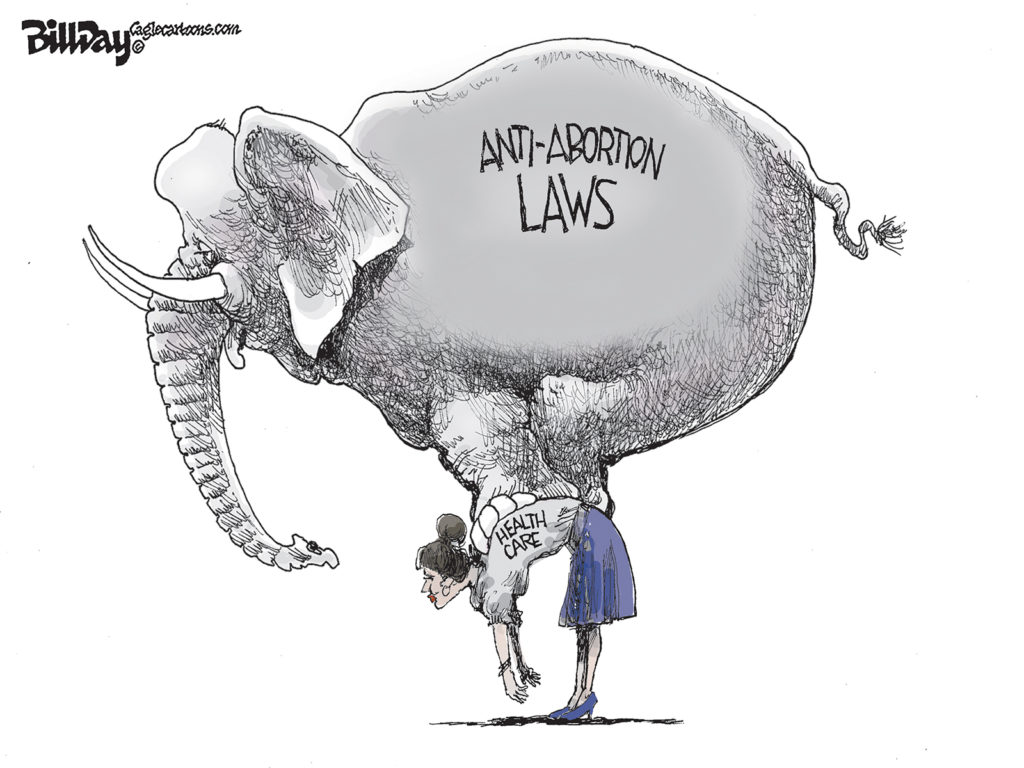
by Bill Day. Memphian Bill Day is two-time winner of the RFK Journalism Award in Cartooning. His cartoons are syndicated internationally by Cagle Cartoons. Cartoons Archive →

Photograph by Amie Vanderford

More Images

Memphian Amie Vanderford is a photographer for peace and justice. Her portfolio includes photographs from Peru, Zimbabwe, Nepal, Indian, and her hometown.

  • Subscribe to Posts via Email

    You can get Smart City Memphis posts right in your e-mail box. Just sign up below to begin receiving them.


  • RSS

    • New Competition: Encouraging Youth to Rethink Public Transportation

    • Paris to Allow Cyclists to Run Red Lights

    • Research Recap, February 6: Urban Happiness, Electric Highways, Cooperative ITS

    • Living Without a Car in Bogotá: Day 12

    • TheCityFix Picks, February 3: Brazilian BRT, Seaweed Biofuel, Electric Taxis in Bogota

    • Friday Fun: Harnessing the Braking Power of a Bike

  • RSS

    • How Seville’s Hidden Treasures Became the World’s Largest Glued Wood Structure

    • Four Pioneering Examples of Sustainable Refurbishment from Around the World

    • Do You Have an Idea for our Urban World? 21 Cities, 90 Million Citizens are Interested

    • #CycleSafe – Eight Achievable Steps for Creating Cities fit for Cycling

    • Bogotá Citizens Take to Youtube to Criticize the Transmilenio BRT System

    • Capitalism, Interdependence and the Urbanization of Latin America

  • RSS

    • Gross Picture of the Day: New York City's Ugliest Rat

    • East L.A. Denied Cityhood Once Again

    • DVD Release of Director's Cut of Ben Affleck's 'The Town' Gets Its Own Boston Street for Some Reason

    • What the Latest Data on Racial Inequality Doesn't Tell Us

    • How Huntsville Breeds Rocket Scientists

    • Postcard From London

  • Search Posts

  • About Smart City Memphis

    This is the blog by Smart City Consulting and its opinions are informed by our work in Memphis and other cities on a variety of issues affecting urban success. Smart City Memphis was named one of the most intriguing blogs in the U.S. by the Pew Partnership for Civic Change. Our intent is to "connect the dots" on events, issues, and policies that shape Memphis and its future, and to frame Memphis issues in a national context. The blog's editor is Tom Jones, principal at Smart City Consulting and an editorial contributor at Memphis magazine, where he writes the monthly column, City Journal. Send blog posts, ideas, suggestions, and emails to tjones@smartcityconsulting.com.
  • Archives

    • February 2012 (9)
    • January 2012 (35)
    • December 2011 (29)
    • November 2011 (30)
    • October 2011 (34)
    • September 2011 (33)
    • August 2011 (39)
    • July 2011 (36)
    • June 2011 (41)
    • May 2011 (36)
    • April 2011 (57)
    • March 2011 (39)
    • February 2011 (45)
    • January 2011 (56)
    • December 2010 (44)
    • November 2010 (30)
    • October 2010 (28)
    • September 2010 (24)
    • August 2010 (22)
    • July 2010 (23)
    • June 2010 (34)
    • May 2010 (28)
    • April 2010 (32)
    • March 2010 (35)
    • February 2010 (31)
    • January 2010 (43)
    • December 2009 (49)
    • November 2009 (17)
    • October 2009 (24)
    • September 2009 (23)
    • August 2009 (18)
    • July 2009 (22)
    • June 2009 (28)
    • May 2009 (23)
    • April 2009 (23)
    • March 2009 (26)
    • February 2009 (25)
    • January 2009 (36)
    • December 2008 (15)
    • November 2008 (22)
    • October 2008 (21)
    • September 2008 (25)
    • August 2008 (23)
    • July 2008 (32)
    • June 2008 (27)
    • May 2008 (35)
    • April 2008 (26)
    • March 2008 (25)
    • February 2008 (29)
    • January 2008 (33)
    • December 2007 (20)
    • November 2007 (19)
    • October 2007 (32)
    • September 2007 (25)
    • August 2007 (25)
    • July 2007 (26)
    • June 2007 (16)
    • May 2007 (21)
    • April 2007 (25)
    • March 2007 (18)
    • February 2007 (16)
    • January 2007 (17)
    • December 2006 (16)
    • November 2006 (14)
    • October 2006 (18)
    • September 2006 (21)
    • August 2006 (20)
    • July 2006 (20)
    • June 2006 (17)
    • May 2006 (12)
    • April 2006 (19)
    • March 2006 (20)
    • February 2006 (23)
    • January 2006 (16)
    • December 2005 (23)
    • November 2005 (21)
    • October 2005 (23)
    • September 2005 (19)
    • August 2005 (27)
    • July 2005 (23)
    • June 2005 (16)
    • 0 (2)
  • Categories

  • Contributors

    • Aaron Shafer
    • Andrew Trippel
    • Anthony Siracusa
    • Barry Chase
    • Brad Leon
    • Brian Stephens
    • CEOs for Cities
    • Charles Santo
    • Chris Sanders
    • David Williams
    • Doug Imig
    • Elizabeth Alley
    • Emily Trenholm
    • Eric Mathews
    • Gene Pearson
    • Gene Pearson and Louise Mercuro
    • Greg Thompson
    • Gwyn Fisher
    • Janet Boscarino
    • Jim Strickland
    • Jimmie Covington
    • John Kirkscey
    • John Lawrence
    • Jonathan Flynt
    • Josh Whitehead
    • Julie Ellis
    • Kenya Bradshaw
    • Laura Adams
    • Leah Wells
    • Louise Mercuro, AICP
    • Lurene Cachola Kelley
    • Margot McNeeley
    • Matt Farr
    • Matt Timberlake
    • Melissa Petersen
    • Natashia Gregoire
    • Ray Brown
    • Rev. Steve Montgomery
    • Robert Bain
    • SCM
    • Scott L. Newstok
    • Smart City Memphis
    • Smart City Radio
    • Steve Bares
    • Steve Lockwood
    • Susan Adler Thorp
    • Tom Jones
    • Tomeka Hart
    • Tommy Pacello
    • Women Unite
    • Zach Hoyt

© 2012 Smart City Memphis. All rights reserved.

  • Register
  • Log in
  • RSS
  • Smart City Radio
  • Smart City Consulting