Smart City Memphis
 

Sign up or Login

Changes For PILOT’s Should Include Reporting Entire Cost To Taxpayers

by Smart City Memphis (RSS) | February 20th, 2006 8:39pm CST

Emily Trenholm must sometimes feel like the tiredest member of the Donner Party. If she dozes off, there’s just too much that can happen.

As executive director of Community Development Council of Greater Memphis, Emily is apparently the designated community representative on the 13-member Mayors’ Joint PILOT Review Committee. She is surrounded by people who make their livings off the tax freezes they are are now asked to objectively evaluate.

Apparently, the political pressure to protect the PILOTs (payments-in-lieu-of-taxes) is so great that there isn’t much pretense of assembling a representative group to evaluate the changes recommended to the PILOT program by consultants. The call for the overhaul of the tax freeze program comes at a time when yearly property tax increases are the norm, but these PILOTs continue to mount, now waiving $60 million a year in city/county property and personalty taxes.

On the Mayors’ Joint PILOT Review Committee with Ms. Trenholm are the people who head up the public agencies who dole out the tax freezes, there are people from the economic development agencies who defend the tax freezes at all cost, there are a couple of beneficiaries of the program’s largesse and whose companies each have more than $2 million in waived taxes, and people whose professions are closely dependent on real estate development (which seems to be the real purpose of the PILOTs in the first place).

Then, there is Ms. Trenholm, representing an agency that lists one of its roles as making sure that the interests of community development are considered in policy decisions. This one looks like the ultimate test for her organization.

Last week, according to the latest article in the fine coverage by The Commercial Appeal’s Amos Maki, the PILOT consultants who recommending the reinvention of the tax freezes program finally were invited to present their findings.

Central to their recommendations is the belief that the PILOTs have become entitlements given to any one who can complete the application form. Michael Laube, principal of Nex Gen Advisors, said in the article: “You don’t need a program that’s one size fits all. Let’s change the system around where the key measure is what is needed for that development, how much is needed and when it is needed.”

That makes such eminently good sense that it would seem that it could be adopted by acclamation. But that’s never the case when the subject of tax freezes come up.

While it’s difficult to imagine why this committee appointed by the mayors was needed, especially since the authority to grant tax freezes rests with Shelby County Board of Commissioners and Memphis City Council, but when faced with a politically volatile situation, the appointment of a committee is always a reflex.

In the end, what is most needed in city and county governments is a new attitude. Their officials need to quit seeing themselves as supplicants and instead, see themselves as investors. That’s because in truth, that’s what they are. They represent a partnership between the taxpayers of this community and a business. Because we place a value on a company and its presence in our community and its positive impact, we choose to invest in it. Until officials see the difference in being an investor and being an beggar, we will continue to pursue low-wage, low-skill strategies that in the end will drag our region down.

The most interesting suggestion made by the consultants last week was that until land use decisions must be tied to economic development decisions. Now there is no connection, and as a result, we are constantly taking one step forward and two steps back.

That’s because PILOT decisions are made in a vacuum. Without an overall land use plan, companies simply choose to locate anywhere they please, including in areas where there is no transportation to link the employment base with the new jobs, where the infrastructure is inadequate and where public transit is nonexistent. This is seen in areas like Holmes Road and Hickory Hill, where essentially every warehouse in sight has a PILOT and is paying no taxes, but before the tax freezes were approved, there was no thought given to this being the best land use, to whether the area has adequate public transit or to whether there were sustainable transportation plans for the future.

Put simply, amazing as it sounds, there was never an effort that connects the decisions governing PILOTs to a more comprehensive, overall plan and to waive taxes in places where the existing infrastructure had already been paid for by local taxpayers. Too often, as a result of PILOTs approved by the Memphis and Shelby County Industrial Development Board, city and county governments then have to spend more money to build roads, bridges and sewers, but these factors weren’t considered in the evaluation process.

While changes are being considered to the PILOT process, here’s a recommendation from us. Every PILOT should have a fiscal note that tells not only the amount of taxes being waived, but any costs that will have to be incurred by the taxpayers through their local governments as a result of the PILOT. Tax freezes don’t operate in isolation, and if we are to act as investors, we need to know the size of the entire investment that we are making in each company.


Tags: Uncategorized

Categories: Uncategorized

Comments RSS Feed

Tweet

Comments are closed.

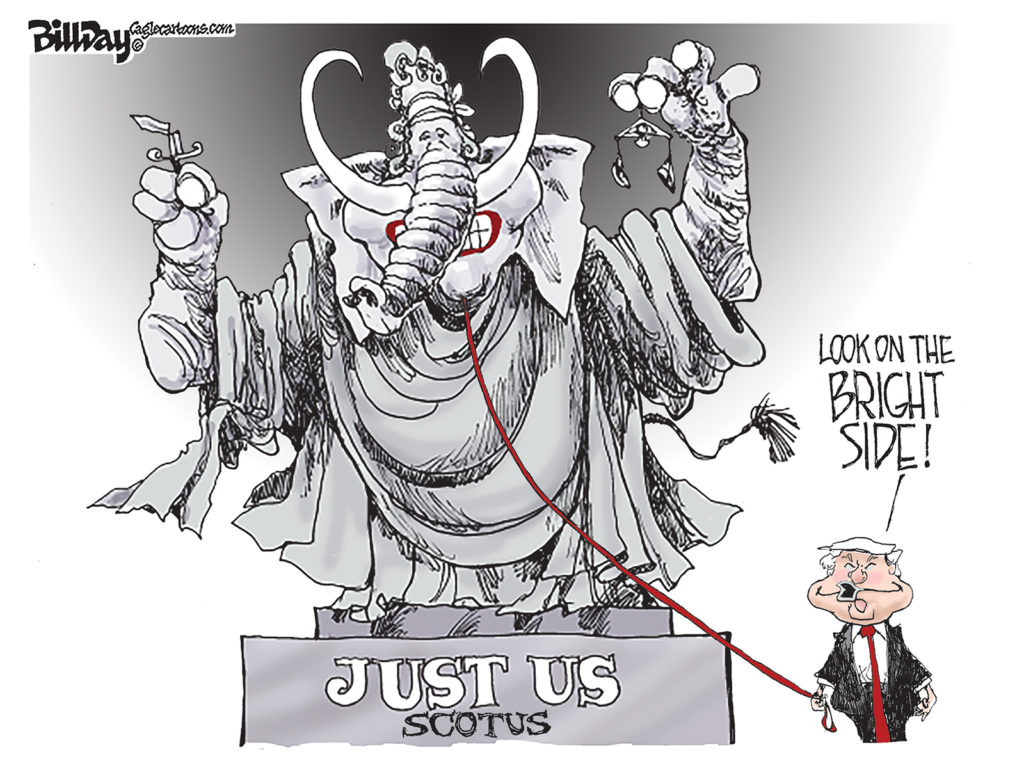
Our Fracking Congress

by Bill Day. Memphian Bill Day is two-time winner of the RFK Journalism Award in Cartooning. His cartoons are syndicated internationally by Cagle Cartoons. Cartoons Archive →

Photograph by Amie Vanderford

More Images

Memphian Amie Vanderford is a photographer for peace and justice. Her portfolio includes photographs from Peru, Zimbabwe, Nepal, Indian, and her hometown.

  • Subscribe to Posts via Email

    You can get Smart City Memphis posts right in your e-mail box. Just sign up below to begin receiving them.


  • RSS

    • New Videos: Stories of Auto-Rickshaws in India

    • Sustainable Urban Transport in India: Role of the Auto-Rickshaw Sector

    • New Competition: Encouraging Youth to Rethink Public Transportation

    • Paris to Allow Cyclists to Run Red Lights

    • Research Recap, February 6: Urban Happiness, Electric Highways, Cooperative ITS

    • Living Without a Car in Bogotá: Day 12

  • RSS

    • How Bogotá Inspired Sustainable Cities Across the Globe

    • The Changing Face of Housing

    • How Seville’s Hidden Treasures Became the World’s Largest Glued Wood Structure

    • Four Pioneering Examples of Sustainable Refurbishment from Around the World

    • Do You Have an Idea for our Urban World? 21 Cities, 90 Million Citizens are Interested

    • #CycleSafe – Eight Achievable Steps for Creating Cities fit for Cycling

  • RSS

    • In Toronto, a Major Victory for Light Rail

    • Postcard From Cologne

    • How To Make a Building Restoration Into a Hot Spot

    • Getting a Handel on Transit Crime

    • The Secret to a Successful Urban Stadium

    • Should Public Trees Bear Fruit?

  • Search Posts

  • About Smart City Memphis

    This is the blog by Smart City Consulting and its opinions are informed by our work in Memphis and other cities on a variety of issues affecting urban success. Smart City Memphis was named one of the most intriguing blogs in the U.S. by the Pew Partnership for Civic Change. Our intent is to "connect the dots" on events, issues, and policies that shape Memphis and its future, and to frame Memphis issues in a national context. The blog's editor is Tom Jones, principal at Smart City Consulting and an editorial contributor at Memphis magazine, where he writes the monthly column, City Journal. Send blog posts, ideas, suggestions, and emails to tjones@smartcityconsulting.com.
  • Archives

    • February 2012 (11)
    • January 2012 (35)
    • December 2011 (29)
    • November 2011 (30)
    • October 2011 (34)
    • September 2011 (33)
    • August 2011 (39)
    • July 2011 (36)
    • June 2011 (41)
    • May 2011 (36)
    • April 2011 (57)
    • March 2011 (39)
    • February 2011 (45)
    • January 2011 (56)
    • December 2010 (44)
    • November 2010 (30)
    • October 2010 (28)
    • September 2010 (24)
    • August 2010 (22)
    • July 2010 (23)
    • June 2010 (34)
    • May 2010 (28)
    • April 2010 (32)
    • March 2010 (35)
    • February 2010 (31)
    • January 2010 (43)
    • December 2009 (49)
    • November 2009 (17)
    • October 2009 (24)
    • September 2009 (23)
    • August 2009 (18)
    • July 2009 (22)
    • June 2009 (28)
    • May 2009 (23)
    • April 2009 (23)
    • March 2009 (26)
    • February 2009 (25)
    • January 2009 (36)
    • December 2008 (15)
    • November 2008 (22)
    • October 2008 (21)
    • September 2008 (25)
    • August 2008 (23)
    • July 2008 (32)
    • June 2008 (27)
    • May 2008 (35)
    • April 2008 (26)
    • March 2008 (25)
    • February 2008 (29)
    • January 2008 (33)
    • December 2007 (20)
    • November 2007 (19)
    • October 2007 (32)
    • September 2007 (25)
    • August 2007 (25)
    • July 2007 (26)
    • June 2007 (16)
    • May 2007 (21)
    • April 2007 (25)
    • March 2007 (18)
    • February 2007 (16)
    • January 2007 (17)
    • December 2006 (16)
    • November 2006 (14)
    • October 2006 (18)
    • September 2006 (21)
    • August 2006 (20)
    • July 2006 (20)
    • June 2006 (17)
    • May 2006 (12)
    • April 2006 (19)
    • March 2006 (20)
    • February 2006 (23)
    • January 2006 (16)
    • December 2005 (23)
    • November 2005 (21)
    • October 2005 (23)
    • September 2005 (19)
    • August 2005 (27)
    • July 2005 (23)
    • June 2005 (16)
    • 0 (2)
  • Categories

  • Contributors

    • Aaron Shafer
    • Andrew Trippel
    • Anthony Siracusa
    • Barry Chase
    • Brad Leon
    • Brian Stephens
    • CEOs for Cities
    • Charles Santo
    • Chris Sanders
    • David Williams
    • Doug Imig
    • Elizabeth Alley
    • Emily Trenholm
    • Eric Mathews
    • Gene Pearson
    • Gene Pearson and Louise Mercuro
    • Greg Thompson
    • Gwyn Fisher
    • Janet Boscarino
    • Jim Strickland
    • Jimmie Covington
    • John Kirkscey
    • John Lawrence
    • Jonathan Flynt
    • Josh Whitehead
    • Julie Ellis
    • Kenya Bradshaw
    • Laura Adams
    • Leah Wells
    • Louise Mercuro, AICP
    • Lurene Cachola Kelley
    • Margot McNeeley
    • Matt Farr
    • Matt Timberlake
    • Melissa Petersen
    • Natashia Gregoire
    • Ray Brown
    • Rev. Steve Montgomery
    • Robert Bain
    • SCM
    • Scott L. Newstok
    • Smart City Memphis
    • Smart City Radio
    • Steve Bares
    • Steve Lockwood
    • Susan Adler Thorp
    • Tom Jones
    • Tomeka Hart
    • Tommy Pacello
    • Women Unite
    • Zach Hoyt

© 2012 Smart City Memphis. All rights reserved.

  • Register
  • Log in
  • RSS
  • Smart City Radio
  • Smart City Consulting