Smart City Memphis
 

Sign up or Login

The BioWorks Foundation Offers Important Lessons in Economic Development

by Smart City Memphis (RSS) | January 5th, 2006 6:43pm CDT

Tweet


When Steve Bares talks, we should listen.

As head of the Memphis BioWorks Foundation, he is making things happen, effectively and methodically creating a major new industry for Memphis’ future.

That’s why his recent comments to The Commercial Appeal about a study of 50 cities caught our eye. While others were crowing about the study results that said Memphis is a “good deal” for biotech companies, because we ranked as the seventh least costly place for biotech companies to operate, Mr. Bares kept his eye on the ball.

Yes, low operating costs are a factor in attracting companies to Memphis, but he cautioned, “You can’t win by being the cheapest. You take the compliments where you can find them, but it’s going to take more than that to compete.”

For example, he explained, a city can be a cheap place to live, but that doesn’t mean people will move there, because it must have a quality of life that attracts new jobs, new people and new companies.

“We can’t compete by cheapest alone,” Mr. Bares said. “It is filling that gap…providing the infrastructure, the workforce and entrepreneurship…that’s the hole we have to fill.”

Halleleujah. Now that’s one of the most enlightened comments we’ve heard in months about what should be the economic development priorities of the Memphis region.

Most impressively, this is not just rhetoric. The BioWorks Foundation has based its vision, its plan and its action on lofty ambitions, and most importantly, on creating a quality city, quality workers and quality facilities. In this way, it’s one of the rarest organizations in a city that historically sells itself proudly on how cheap we are, how cheap our labor is and how cheap our land is.

Sadly, the cities that are succeeding in today’s highly competitive global economy are doing just the opposite. They are making investments in quality — better workers, high-quality universities, an enriching quality of life and efficient, economical public services.

If we continue to sell ourselves on our cheapness, it is a race to the bottom. There is no way that as the global playing field becomes flatter and flatter that we can be cheaper than third world nations.

Our competitive edge must be based on a highly-skilled workforce and an infrastructure that links our businesses efficiently and seamlessly to the global marketplace.

It not a coincidence that the most expensive U.S. biotechnology cities in the study were San Jose, San Francisco, Middlesex/Somerset/Hunterdon, NJ, Princeton, NJ, Boston, New Haven and Philadelphia, are also leaders in the biotechnology industry. They are leaders because they invest in quality and workers and companies want to move there.

The cities sharing top billing for their cheapness with Memphis are Sioux Falls, Shreveport, Norman, OK, Birmingham, New Orleans and Indianapolis. That doesn’t sound like the list of peer cities that we want to be included in, and our pride in being in such a list taps into a feeling of unworthiness that undergirds much of our civic psyche.

That feeling is thankfully not part of the BioWorks Foundation, and although it’s best known for imploding the old Baptist Hospital, it has quietly developed the most impressive business vision in Memphis since FedEx was created.

In staking out Memphis’ claim to the biotech industry with its companies valued at $225 billion, the way that the Foundation is doing its work also offers lessons to our economic development experts. Rather than the BioWorks Foundation is leveraging our city’s unique strengths to create a distinctive niche for the future. Among those strengths are our position as leaders in orthopedics and musculoskeletal implants, St. Jude Children’s Research Hospital and FedEx and its place as the inventor of global commerce.

And most of all, the BioWorks Foundation – unlike many cities – resisted the temptation to build the future on a green field policy. Instead, it chose to transform the old Baptist Hospital site into a world-class research park in an urban setting. The Foundation opted to stay in Midtown, where it founded the Memphis Academy for Science and Engineering, where it has supported the redevelopment of Lamar Terrace, where it has partnered in training programs with Southwest Tennessee Community College and where it has joined with University of Tennessee Health Sciences Center to attract major national grants and to commercialize research.

When completed, the economic impact of the biotech district is projected to be about $2 billion and create new jobs at all skill and pay levels. And most of all, it’s doing it by selling Memphis as a quality place to live and work, and that may be the most important product of all.


Tags: Uncategorized

Categories: Uncategorized

Comments RSS Feed

Comments are closed.

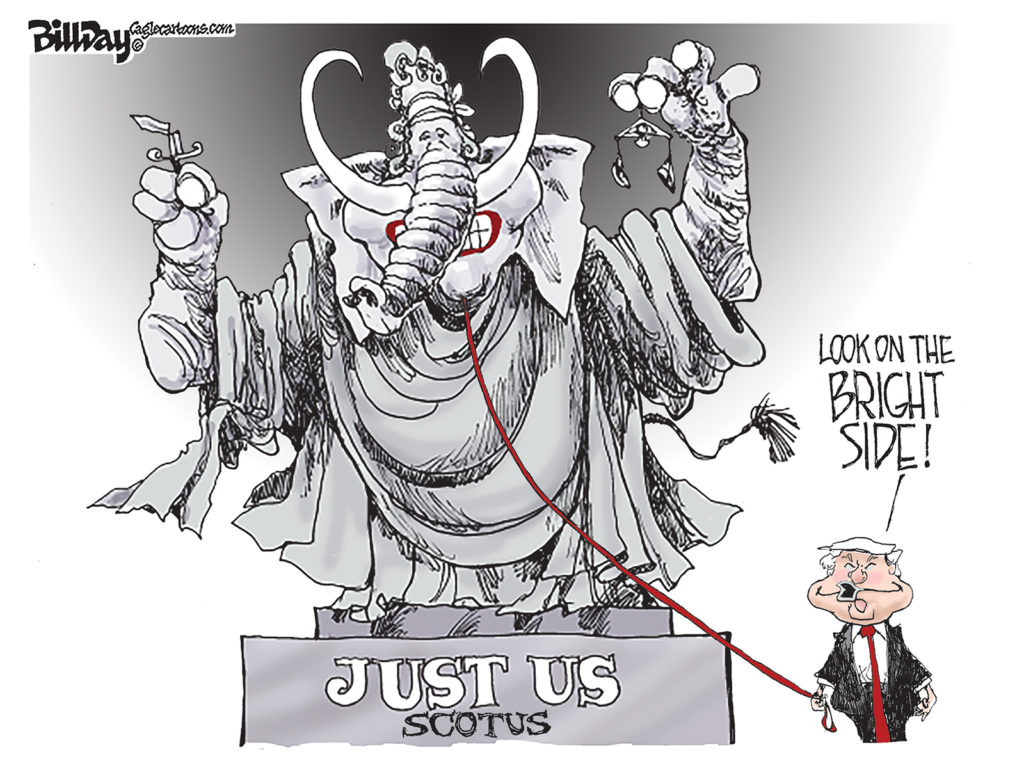
Equality Eagle, A Bill Day Cartoon

by Bill Day. Memphian Bill Day is two-time winner of the RFK Journalism Award in Cartooning. His cartoons are syndicated internationally by Cagle Cartoons. Cartoons Archive →

Photograph by Amie Vanderford

More Images

Memphian Amie Vanderford is a photographer for peace and justice. Her portfolio includes photographs from Peru, Zimbabwe, Nepal, Indian, and her hometown.

  • Subscribe to Posts via Email

    You can get Smart City Memphis posts right in your e-mail box. Just sign up below to begin receiving them.


  • RSS

    • China Transportation Briefing: Filling the Finance Gap

    • TheCityFix Picks, May 4: Spare the Air, Honoring Bloomberg, BRT Experience

    • BRT Experience, Day 1: Simple yet Captivating Marketing

    • BRT Experience, Day 1: Women-Only Access on Metrobus

    • We’re Hiring! Apply to Be TheCityFix Blogger

    • The New Kid on the Block: Metrobus Opens Line 4 in Mexico City

  • RSS

    • Could Less Material Wealth Make us Happier?

    • Megacities: Eight Ideas from #citytalk for Developing Future Cities

    • Microcities: Five of the World’s ‘Smallest’ Cities

    • Megacities: Five of the World’s ‘Biggest’ Cities

    • Human and Social Capital Takes the Bus

    • Events and the City: Bringing Fun to a Built Environment Near You

  • RSS

    • Problem Of the Day: Rio's Hotel Shortage

    • This Week in Bans: Massachusetts City Plagued by Horrible Saxophonist

    • Why Aren't Cities Littered With Dead Pigeons?

    • An Object That Domesticates Ivy

    • Navigating Europe's Most Congested City by Bike

    • Charlie Chaplin Goes to the Beach

  • Search Posts

  • About Smart City Memphis

    This is Smart City Consulting's blog and its purpose is to connect the dots and provide perspective on events, issues, and policies shaping Memphis and its future. Smart City Memphis was named one of the most intriguing blogs in the U.S. by the Pew Partnership for Civic Change, it was voted the best Memphis blog in About.com's Reader's Choice Awards, and The (Memphis) Commercial Appeal wrote: "Smart City Consulting provides some of the most well-thought-out thinking about Memphis' past, present, and future you'll find anywhere." Our blog's editor is Tom Jones, principal at Smart City Consulting and an editorial contributor at Memphis magazine, where he writes the monthly column, City Journal. Submit blog posts, ideas, suggestions, and emails to tjones@smartcityconsulting.com.
  • Archives

    • May 2012 (19)
    • April 2012 (31)
    • March 2012 (37)
    • February 2012 (32)
    • January 2012 (35)
    • December 2011 (29)
    • November 2011 (30)
    • October 2011 (34)
    • September 2011 (33)
    • August 2011 (39)
    • July 2011 (36)
    • June 2011 (41)
    • May 2011 (36)
    • April 2011 (57)
    • March 2011 (39)
    • February 2011 (45)
    • January 2011 (56)
    • December 2010 (44)
    • November 2010 (30)
    • October 2010 (28)
    • September 2010 (24)
    • August 2010 (22)
    • July 2010 (23)
    • June 2010 (34)
    • May 2010 (28)
    • April 2010 (32)
    • March 2010 (35)
    • February 2010 (31)
    • January 2010 (43)
    • December 2009 (49)
    • November 2009 (17)
    • October 2009 (24)
    • September 2009 (23)
    • August 2009 (18)
    • July 2009 (22)
    • June 2009 (28)
    • May 2009 (23)
    • April 2009 (23)
    • March 2009 (26)
    • February 2009 (25)
    • January 2009 (36)
    • December 2008 (15)
    • November 2008 (22)
    • October 2008 (21)
    • September 2008 (25)
    • August 2008 (23)
    • July 2008 (32)
    • June 2008 (27)
    • May 2008 (35)
    • April 2008 (26)
    • March 2008 (25)
    • February 2008 (29)
    • January 2008 (33)
    • December 2007 (20)
    • November 2007 (19)
    • October 2007 (32)
    • September 2007 (25)
    • August 2007 (25)
    • July 2007 (26)
    • June 2007 (16)
    • May 2007 (21)
    • April 2007 (25)
    • March 2007 (18)
    • February 2007 (16)
    • January 2007 (17)
    • December 2006 (16)
    • November 2006 (14)
    • October 2006 (18)
    • September 2006 (21)
    • August 2006 (20)
    • July 2006 (20)
    • June 2006 (17)
    • May 2006 (12)
    • April 2006 (19)
    • March 2006 (20)
    • February 2006 (23)
    • January 2006 (16)
    • December 2005 (23)
    • November 2005 (21)
    • October 2005 (23)
    • September 2005 (19)
    • August 2005 (27)
    • July 2005 (23)
    • June 2005 (16)
    • 0 (2)
  • Categories

  • Contributors

    • Aaron Shafer
    • Andrew Trippel
    • Anthony Siracusa
    • Barry Chase
    • Brad Leon
    • Brian Stephens
    • CEOs for Cities
    • Charles Santo
    • Chris Sanders
    • David Williams
    • Doug Imig
    • Elizabeth Alley
    • Emily Trenholm
    • Eric Mathews
    • Gene Pearson
    • Gene Pearson and Louise Mercuro
    • Greg Thompson
    • Gwyn Fisher
    • Janet Boscarino
    • Jim Strickland
    • Jimmie Covington
    • John Kirkscey
    • John Lawrence
    • Jonathan Flynt
    • Josh Whitehead
    • Julie Ellis
    • Kenya Bradshaw
    • Laura Adams
    • Leah Wells
    • Louise Mercuro, AICP
    • Lurene Cachola Kelley
    • Margot McNeeley
    • Mark James
    • Matt Farr
    • Matt Timberlake
    • Melissa Petersen
    • Natashia Gregoire
    • Ray Brown
    • Rev. Steve Montgomery
    • Robert Bain
    • SCM
    • Scott L. Newstok
    • Smart City Memphis
    • Smart City Radio
    • Steve Bares
    • Steve Lockwood
    • Susan Adler Thorp
    • Tom Jones
    • Tomeka Hart
    • Tommy Pacello
    • Women Unite
    • Zach Hoyt

© 2012 Smart City Memphis. All rights reserved.

  • Register
  • Log in
  • RSS
  • Smart City Radio
  • Smart City Consulting