Smart City Memphis
 

Sign up or Login

Memphis Tax Structure Becomes Even More Regressive

by Smart City Memphis (RSS) | January 18th, 2006 11:46pm CDT

Tweet

The latest study of 51 cities – the largest in each state and the District of Columbia – shows that Memphis is moving to the head of the list. Unfortunately, it’s the head of the list of the cities with the most unfair tax structures in the nation.

A few weeks ago, we wrote about the meticulously documented annual survey by the Office of Revenue Analysis for the District of Columbia on the fairness of these representative cities’ tax rates and tax burdens. In the previous year’s index of progressivity (read fairness for those of us not given to economist’s jargon), Memphis had the fourth worst tax structure on the list, with only Cheyenne, Seattle, Sioux Falls and Las Vegas ranked lower than us.

This year, however, we’ve moved even closer to the lead in the dubious category of having the most unfair tax structure. We’ve now leapt over Seattle and are only three places from the bottom. Only Sioux Falls and Las Vegas beat us out on tax inequity.

Evidence of the our current tax structure’s unfairness is stark:

• The average tax burden in Memphis for families of four earning $25,000 is 7.2 percent of their total income.

• For a family earning $50,000, the amount of the income paid in taxes is 6.4 percent, and those with incomes of $75,000 pay 6.5 percent.

• Memphis families earning $100,000 pay 6.1 percent, and remarkably, families earning $150,000 pay the least – 5.8 percent.

Put simply, the tax burden for higher income families is substantially less than families earning only one-sixth as much. In other words, under regressivity in the dictionary, it would say, see Memphis.

In fact, since last year, the percentage of income for the $25,000 family actually edged up .2 percent, while the $150,000 family moved down .2 percent.

By the way, the average tax burden for the 51 cities paints a graphic portrait of our tax structure’s inequities – 7.1 percent at $25,000; 8.3 percent at $50,000; 9.2 percent at $75,000; and 9.3 percent at $100,000 and $150,000. In other words, the amount you pay is based on your ability to pay, a fundamental precept of progressive, or fairest, tax systems.

That’s why the most progressive tax structures don’t tax lower-income, working families at the same rate as wealthy families. Memphis doesn’t even rise to this level playing field, where every one pays the same percentage. Instead, it gives a bonus to the highest-income families by reducing the amount they pay, when compared to lower-income families, by 1.4 percent.

For perspective, consider that the 5.8 percent in Memphis for families earning $150,000 compares with the following rates: Philadelphia, 12.7 percent; Providence, 12.2 percent; Baltimore, 11.8 percent; Atlanta, 11.2 percent; Columbus, 11 percent; Louisville, 10.4 percent; Little Rock, 9.6 percent, and so on.

“The three cities with the least progressive state and local tax systems are Las Vegas, Nevada; Sioux Falls, South Dakota; and Memphis, Tennessee,” concluded the 56-page report. “In Sioux Falls and Memphis, the sales and use tax burden is substantially above the 51-city average.”

In analyzing the tax burden of District of Columbia residents, the report concluded that the problem there happens because the city “does not have the authority to tax nonresident income earned within its borders. Nonresidents earn about 2/3 of all income in the District of Columbia.” While the district’s dilemma is obviously more dramatic than ours, the same principle applies, because about 20 percent of the $2.2 billion earned here is by nonresidents, who pay no part of their income to support the infrastructure that creates the jobs they hold.

The study points out that Memphis has the highest sales tax rate of the 51 cities. Unspoken is the risk attached to this high dependency on sales tax revenues, because, as we learned, a sudden drop in these revenues can wreak havoc on a governmental budget.

What’s all of this mean? It means that until Memphis does something to make income a source of tax revenues, it will continue to be more and more regressive. As it gets more regressive, it will spur more migration out of Memphis, which will stimulate more tax increases, which will produce even more regressivity, and more flight, and so on and so forth.

While there are some ideas being advocated to broaden the source of revenues – such an adequate facilities fees and impact fees – they are only band-aids on a badly wounded tax structure. It is this structure that in the end is the real crisis in Memphis and deserves thoughtful analysis and new policy options for improving it.

Of course, the only thing more challenging than our regressive tax structure is finding someone with the political courage to tackle real tax reform and the restructuring of our entire tax structure.

In the future, we shouldn’t listen to any tax proposals without asking the core question: What is being done to take of the problem, rather than just addressing its symptoms.


Tags: Uncategorized

Categories: Uncategorized

Comments RSS Feed

Comments are closed.

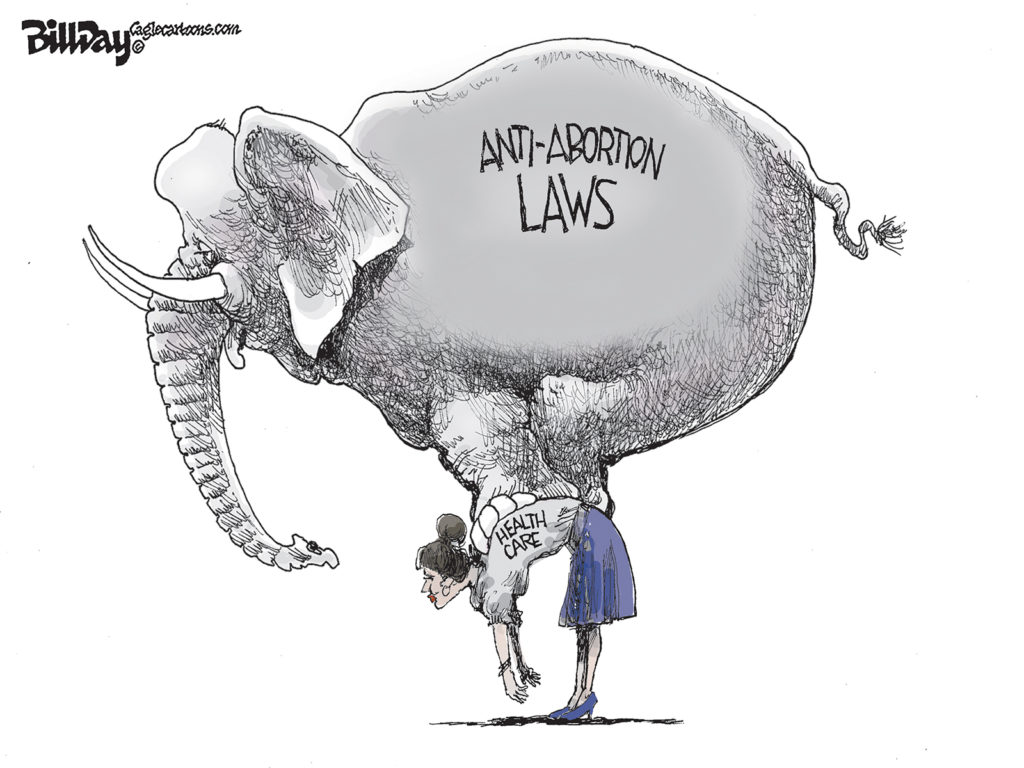
Equality Eagle, A Bill Day Cartoon

by Bill Day. Memphian Bill Day is two-time winner of the RFK Journalism Award in Cartooning. His cartoons are syndicated internationally by Cagle Cartoons. Cartoons Archive →

Photograph by Amie Vanderford

More Images

Memphian Amie Vanderford is a photographer for peace and justice. Her portfolio includes photographs from Peru, Zimbabwe, Nepal, Indian, and her hometown.

  • Subscribe to Posts via Email

    You can get Smart City Memphis posts right in your e-mail box. Just sign up below to begin receiving them.


  • RSS

    • China Transportation Briefing: Filling the Finance Gap

    • TheCityFix Picks, May 4: Spare the Air, Honoring Bloomberg, BRT Experience

    • BRT Experience, Day 1: Simple yet Captivating Marketing

    • BRT Experience, Day 1: Women-Only Access on Metrobus

    • We’re Hiring! Apply to Be TheCityFix Blogger

    • The New Kid on the Block: Metrobus Opens Line 4 in Mexico City

  • RSS

    • Could Less Material Wealth Make us Happier?

    • Megacities: Eight Ideas from #citytalk for Developing Future Cities

    • Microcities: Five of the World’s ‘Smallest’ Cities

    • Megacities: Five of the World’s ‘Biggest’ Cities

    • Human and Social Capital Takes the Bus

    • Events and the City: Bringing Fun to a Built Environment Near You

  • RSS

    • Problem Of the Day: Rio's Hotel Shortage

    • This Week in Bans: Massachusetts City Plagued by Horrible Saxophonist

    • Why Aren't Cities Littered With Dead Pigeons?

    • An Object That Domesticates Ivy

    • Navigating Europe's Most Congested City by Bike

    • Charlie Chaplin Goes to the Beach

  • Search Posts

  • About Smart City Memphis

    This is Smart City Consulting's blog and its purpose is to connect the dots and provide perspective on events, issues, and policies shaping Memphis and its future. Smart City Memphis was named one of the most intriguing blogs in the U.S. by the Pew Partnership for Civic Change, it was voted the best Memphis blog in About.com's Reader's Choice Awards, and The (Memphis) Commercial Appeal wrote: "Smart City Consulting provides some of the most well-thought-out thinking about Memphis' past, present, and future you'll find anywhere." Our blog's editor is Tom Jones, principal at Smart City Consulting and an editorial contributor at Memphis magazine, where he writes the monthly column, City Journal. Submit blog posts, ideas, suggestions, and emails to tjones@smartcityconsulting.com.
  • Archives

    • May 2012 (19)
    • April 2012 (31)
    • March 2012 (37)
    • February 2012 (32)
    • January 2012 (35)
    • December 2011 (29)
    • November 2011 (30)
    • October 2011 (34)
    • September 2011 (33)
    • August 2011 (39)
    • July 2011 (36)
    • June 2011 (41)
    • May 2011 (36)
    • April 2011 (57)
    • March 2011 (39)
    • February 2011 (45)
    • January 2011 (56)
    • December 2010 (44)
    • November 2010 (30)
    • October 2010 (28)
    • September 2010 (24)
    • August 2010 (22)
    • July 2010 (23)
    • June 2010 (34)
    • May 2010 (28)
    • April 2010 (32)
    • March 2010 (35)
    • February 2010 (31)
    • January 2010 (43)
    • December 2009 (49)
    • November 2009 (17)
    • October 2009 (24)
    • September 2009 (23)
    • August 2009 (18)
    • July 2009 (22)
    • June 2009 (28)
    • May 2009 (23)
    • April 2009 (23)
    • March 2009 (26)
    • February 2009 (25)
    • January 2009 (36)
    • December 2008 (15)
    • November 2008 (22)
    • October 2008 (21)
    • September 2008 (25)
    • August 2008 (23)
    • July 2008 (32)
    • June 2008 (27)
    • May 2008 (35)
    • April 2008 (26)
    • March 2008 (25)
    • February 2008 (29)
    • January 2008 (33)
    • December 2007 (20)
    • November 2007 (19)
    • October 2007 (32)
    • September 2007 (25)
    • August 2007 (25)
    • July 2007 (26)
    • June 2007 (16)
    • May 2007 (21)
    • April 2007 (25)
    • March 2007 (18)
    • February 2007 (16)
    • January 2007 (17)
    • December 2006 (16)
    • November 2006 (14)
    • October 2006 (18)
    • September 2006 (21)
    • August 2006 (20)
    • July 2006 (20)
    • June 2006 (17)
    • May 2006 (12)
    • April 2006 (19)
    • March 2006 (20)
    • February 2006 (23)
    • January 2006 (16)
    • December 2005 (23)
    • November 2005 (21)
    • October 2005 (23)
    • September 2005 (19)
    • August 2005 (27)
    • July 2005 (23)
    • June 2005 (16)
    • 0 (2)
  • Categories

  • Contributors

    • Aaron Shafer
    • Andrew Trippel
    • Anthony Siracusa
    • Barry Chase
    • Brad Leon
    • Brian Stephens
    • CEOs for Cities
    • Charles Santo
    • Chris Sanders
    • David Williams
    • Doug Imig
    • Elizabeth Alley
    • Emily Trenholm
    • Eric Mathews
    • Gene Pearson
    • Gene Pearson and Louise Mercuro
    • Greg Thompson
    • Gwyn Fisher
    • Janet Boscarino
    • Jim Strickland
    • Jimmie Covington
    • John Kirkscey
    • John Lawrence
    • Jonathan Flynt
    • Josh Whitehead
    • Julie Ellis
    • Kenya Bradshaw
    • Laura Adams
    • Leah Wells
    • Louise Mercuro, AICP
    • Lurene Cachola Kelley
    • Margot McNeeley
    • Mark James
    • Matt Farr
    • Matt Timberlake
    • Melissa Petersen
    • Natashia Gregoire
    • Ray Brown
    • Rev. Steve Montgomery
    • Robert Bain
    • SCM
    • Scott L. Newstok
    • Smart City Memphis
    • Smart City Radio
    • Steve Bares
    • Steve Lockwood
    • Susan Adler Thorp
    • Tom Jones
    • Tomeka Hart
    • Tommy Pacello
    • Women Unite
    • Zach Hoyt

© 2012 Smart City Memphis. All rights reserved.

  • Register
  • Log in
  • RSS
  • Smart City Radio
  • Smart City Consulting