Smart City Memphis
 

Sign up or Login

The Local Tax Problem Won’t Be Solved By Putting Band-aids On Gaping Structural Wounds

by Smart City Memphis (RSS) | November 22nd, 2005 2:23am CDT

Tweet

Soon, we will enter yet another budget season for local government, and once again, there will be the regular hue and cry about the tax rate, bonded indebtedness, fund balances and the need for public sacrifice. But for the first time, there’s hope that local government will finally talk about fixing what’s really wrong — our broken tax structure.

The dilemma for Memphis and Shelby County is that while new sources of revenue, such as impact fees and adequate facilities taxes, are helpful in balancing budgets, they are only short-term solutions. There is no long-term answer until a new tax structure is created to remove the present inequity and unfairness.

In a studied 51-city analysis released last year by the Office of Revenue Analysis for the District of Columbia Government, Memphis is among the half dozen cities which have the most regressive tax structure. In the meticulously documented report, the analysts looked at the tax burden for the largest city in each of the 50 states and Washington, D.C.

Only a few cities fared worse than Memphis. Our city’s taxes are regressive at their core, meaning that low-income families pay a larger share of their incomes in taxes than high-income families.

That’s because local government has an overreliance on property taxes and sales taxes, when compared to other governments across the U.S. With no real options except the two primary tax sources allowed by state law, city and county governments are left with two inequitable places for more revenues – the regressive sales tax or the regressive property tax.

While local efforts to expand tax sources are well-intended, in the end, the current tax structure is so badly flawed that even new sources are just stopgap answers that don’t address the real inequities in the system.

The 2004 study analyzed the tax burden for families with average incomes of $25,000, $50,000, $75,000, $100,000 and $150,000. The assumptions for the study were that each family has four members and owns a single family home within the city limits.

The average tax burden for the 51 cities across the U.S. was 7.3 percent for families earning $25,000; 8.3 percent for families earning $50,000; 9.1 percent earning $75,000; and 9.2 percent at the $100,000 and $150,000 levels. In other words, most cities have a tax structure that responds to a person’s “ability to pay.”

Memphis does just the opposite. The more a family earns, the less it pays. The family earning $25,000 pays 7.0 percent, right in line with the average for the 51 cities.

But, the family earning $50,000 doesn’t pay more; it pays less – 6.2 percent. A family earning $75,000 pays 6.3 percent, one-third less than the national average; and the $100,000 income family pays 5.9 percent and the family earning $150,000 pays 5.6 percent.

In other words, in the higher income brackets, Memphis taxpayers are paying a smaller percentage of their income in taxes than families making one-fourth as much. These Memphis high-income families are paying roughly 40 per cent less than the average of 51 cities.

Under the heading of tax fairness, the only major cities doing worse than Memphis are Houston, Las Vegas and Jacksonville, and they are only marginally worse. In most of the major cities in the analysis, higher income families paid much more than Memphis. For example, in Louisville, higher income families paid 10.7% of their income in taxes; in Washington, DC, 10.8%; in Portland, 12.7%; in Atlanta, 11.3%; in Baltimore, 11.8%; in Providence, 13.4%; and in New York City, 14.8%.

OK, we admit that at this point, we’re battling with our wonkish tendencies, so let’s try to put as simply as possible: the Memphis tax structure is patently unfair and regressive, and nothing short of building a new one will solve the problem.

Of course, as usual, the political challenge is to see if there is any one with the courage to advance such an idea in an election year. This time, Commissioner John Willingham’s has, introducing his Shelby County Fairness Program as a way to correct present inequities in the tax system.

His plan does it by enacting a payroll tax on every one working in Shelby County, aiming at the about 65,000 people who drive in from outside Shelby County to work here every day.

The goals of his plan, as stated in his proposal, are to:

1) reduce and abolish taxes

2) restore an advantage to taxpayer-owned businesses

3) pay down the county’s debt

4) make Shelby County competitive with its neighbors without issuing more PILOTs

5) provide meaningful financial contributions to state government and the seven municipal governments in Shelby County.

The rewards of reforming the local tax structure is the elimination of the widely hated wheel tax; the lowering of the county property tax by 25 percent; and the elimination of the local option sales tax (reducing the county rate to 7 percent). In addition, the plan calls for a 10-year ban on any tax increases, and sets a high bar for payroll tax increases by allowing them only as a result of public referendum.

It’s a gutsy proposal, coming so close to the election season, but finally, it gets the real tax issue on the table – the need to reinvent the county tax structure.

Commissioner Willingham is a Republican with a strong populist streak, and he’ll need to develop a grassroots way to communicate the proposal to the public. But his toughest audience will probably be his own party, which has gravitated toward the no-tax pledges over the years that have contributed to the county’s catastrophic budgetary picture.

Hopefully, his proposal will encourage serious debate on the critical need for a progressive local tax structure, but most of all, it should make sure that every idea or suggestion is viewed through a single lens: Does it correct the structural tax problem that is a drag on the local economy and an unfair burden on most local taxpayers?


Tags: Uncategorized

Categories: Uncategorized

Comments RSS Feed

Comments are closed.

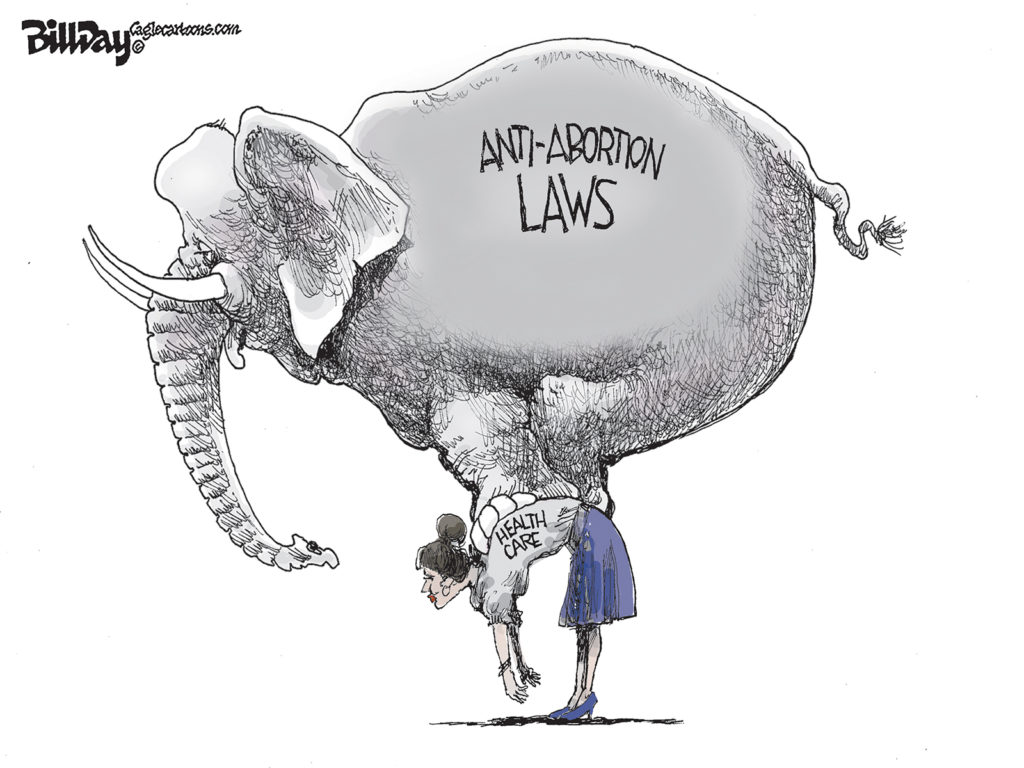
Green Tea, A Bill Day Cartoon

by Bill Day. Memphian Bill Day is two-time winner of the RFK Journalism Award in Cartooning. His cartoons are syndicated internationally by Cagle Cartoons. Cartoons Archive →

Photograph by Amie Vanderford

More Images

This ongoing series of photographs is intended to show the daily lives of these single mothers in order to invoke recognition of their similarities to all mothers, along with understanding and empathy from the viewer of the strengths that these single mothers possess within the challenging situations they face. My hope is that newfound empathy with these mothers’ lives will give people some pause before they condemn single mothers when discussing issues such as welfare and other politically charged hot buttons.

  • Subscribe to Posts via Email

    You can get Smart City Memphis posts right in your e-mail box. Just sign up below to begin receiving them.


  • RSS

    • Friday Fun: A Los Angeles cycling highway?

    • All aboard: Engaging the public on transport projects

    • Weaving people back into the urban fabric

    • How clean is the air we breathe in cities?

    • Friday Fun: Self-driving automobile + Bus + Taxi = Otobuxi

    • Q&A with Hernan Navarro: Lima’s El Metropolitano BRT

  • RSS

    • San Francisco’s Uber-Complicated Taxi Industry

    • New Ventilation System Keeps Buildings Fresh But Warm

    • Eight Guidelines to Keep Creativity at the Heart of Cities

    • Infographic: Cities Embracing the Green Revolution

    • The Economic and Educational Value of Retrofitting Schools

    • Greening Cities with Better Bike Lanes

  • RSS

    • Why You May Not Be Seeing Many 17-Year Brood II Cicadas

    • Replica of the Day: Building the Simpsons' Springfield in Florida

    • Toronto Mayor Rob Ford: 'I Do Not Use Crack Cocaine'

    • Flags for the Fallen

    • This Is What the Scar From a Tornado Looks Like Through a Suburban Town

    • How Waze Became the Hottest Map App Around

  • Search Posts

  • About Smart City Memphis

    This is Smart City Consulting's blog and its purpose is to connect the dots and provide perspective on events, issues, and policies shaping Memphis and its future. Smart City Memphis was named one of the most intriguing blogs in the U.S. by the Pew Partnership for Civic Change, it was voted the best Memphis blog in About.com's Reader's Choice Awards, and The (Memphis) Commercial Appeal wrote: "Smart City Memphis provides some of the most well-thought-out thinking about Memphis' past, present, and future you'll find anywhere." Our blog's editor is Tom Jones, principal at Smart City Consulting and an editorial contributor at Memphis magazine, where he writes the monthly column, City Journal. Submit blog posts, ideas, suggestions, and emails to tjones@smartcityconsulting.com.
  • Archives

    • May 2013 (24)
    • April 2013 (34)
    • March 2013 (27)
    • February 2013 (31)
    • January 2013 (30)
    • December 2012 (29)
    • November 2012 (31)
    • October 2012 (33)
    • September 2012 (29)
    • August 2012 (33)
    • July 2012 (26)
    • June 2012 (33)
    • May 2012 (33)
    • April 2012 (31)
    • March 2012 (37)
    • February 2012 (32)
    • January 2012 (35)
    • December 2011 (29)
    • November 2011 (30)
    • October 2011 (34)
    • September 2011 (33)
    • August 2011 (39)
    • July 2011 (36)
    • June 2011 (41)
    • May 2011 (36)
    • April 2011 (57)
    • March 2011 (39)
    • February 2011 (45)
    • January 2011 (56)
    • December 2010 (44)
    • November 2010 (30)
    • October 2010 (28)
    • September 2010 (24)
    • August 2010 (22)
    • July 2010 (23)
    • June 2010 (34)
    • May 2010 (28)
    • April 2010 (32)
    • March 2010 (35)
    • February 2010 (31)
    • January 2010 (43)
    • December 2009 (49)
    • November 2009 (17)
    • October 2009 (24)
    • September 2009 (23)
    • August 2009 (18)
    • July 2009 (22)
    • June 2009 (28)
    • May 2009 (23)
    • April 2009 (23)
    • March 2009 (26)
    • February 2009 (25)
    • January 2009 (36)
    • December 2008 (15)
    • November 2008 (22)
    • October 2008 (21)
    • September 2008 (25)
    • August 2008 (23)
    • July 2008 (32)
    • June 2008 (27)
    • May 2008 (35)
    • April 2008 (26)
    • March 2008 (25)
    • February 2008 (29)
    • January 2008 (33)
    • December 2007 (20)
    • November 2007 (19)
    • October 2007 (32)
    • September 2007 (25)
    • August 2007 (25)
    • July 2007 (26)
    • June 2007 (16)
    • May 2007 (21)
    • April 2007 (25)
    • March 2007 (18)
    • February 2007 (16)
    • January 2007 (17)
    • December 2006 (16)
    • November 2006 (14)
    • October 2006 (18)
    • September 2006 (21)
    • August 2006 (20)
    • July 2006 (20)
    • June 2006 (17)
    • May 2006 (12)
    • April 2006 (19)
    • March 2006 (20)
    • February 2006 (23)
    • January 2006 (16)
    • December 2005 (23)
    • November 2005 (21)
    • October 2005 (23)
    • September 2005 (19)
    • August 2005 (27)
    • July 2005 (23)
    • June 2005 (16)
    • 0 (2)
  • Categories

  • Contributors

    • Aaron Shafer
    • Andrew Trippel
    • Anthony Siracusa
    • Barry Chase
    • Brad Leon
    • Brian Stephens
    • CEOs for Cities
    • Charles Santo
    • Chris Sanders
    • Crosstown Collaborative
    • David Williams
    • Doug Imig
    • Elizabeth Alley
    • Elizabeth Lemmonds
    • Emily Trenholm
    • Eric Mathews
    • Gene Pearson
    • Gene Pearson and Louise Mercuro
    • George Lord
    • Greg Thompson
    • Gwyn Fisher
    • Janet Boscarino
    • Jim Strickland
    • Jimmie Covington
    • John Kirkscey
    • John Lawrence
    • Jonathan Flynt
    • Josh Whitehead
    • Julie Ellis
    • Kenya Bradshaw
    • Laura Adams
    • Leah Wells
    • Louise Mercuro, AICP
    • Lurene Cachola Kelley
    • Margot McNeeley
    • Mark James
    • Matt Farr
    • Matt Timberlake
    • Melissa Petersen
    • Natashia Gregoire
    • Ray Brown
    • Rev. Steve Montgomery
    • Robert Bain
    • SCM
    • Scott L. Newstok
    • Smart City Memphis
    • Smart City Radio
    • Steve Bares
    • Steve Lockwood
    • Susan Adler Thorp
    • Tom Jones
    • Tomeka Hart
    • Tommy Pacello
    • Women Unite
    • Zach Hoyt

© 20111-2013 Smart City Memphis. All rights reserved.

  • Register
  • Log in
  • RSS
  • Smart City Radio
  • Smart City Consulting