Smart City Memphis
 

Sign up or Login

Consolidation Is A Tough Sale On Its Best Days

by Smart City Memphis (RSS) | August 23rd, 2005 1:12am CDT

Tweet

With the prospects looming in coming weeks of a return to rhetoric in which the “c” word is hurled, it’s worth remembering the facts of consolidation, whatever your point of view.

Despite the pervasive belief that Memphis is somehow different than most cities in the country with our two-headed local government, the truth is that of the 3,034 counties in the U.S. and the 20,000 cities, only 35 have consolidated governments, and only nine of these are in the top 100 largest cities.

It’s amazing how widespread the confusion is. A few years ago, one of Memphis’ leading CEO’s was speaking to a Leadership Memphis class about what should be done to move our city ahead. One suggestion was to consolidate our governments so we could compete with Dallas, Atlanta and Houston. Of course, none of those three cities has consolidated governments, but nobody seemed to notice.

Another misperception is that more and more cities are chosing to consolidate. Actually, most major cities that consolidated did so in the 19th century and the first few years of the 20th. In fact, no city and county the size of Memphis and Shelby County have consolidated in the past 100 years.

Therein lies the starkest lesson about the difficulty in pursuing consolidation. In the past 80 years or so, there have been almost 150 consolidation referendums, and only 25 were approved, most of them for smaller cities. Even the widely reported consolidation of Louisville and Jefferson County in 2000 came after three previous votes had failed.

Meanwhile, in Tennessee, although we think Memphis is unique in having both a city and county government, Nashville is the exception, not the rule. No other metro area has a consolidated government. Besides Nashville, the only other consolidated governments in Tennessee are the metropolises of Lynchburg/Moore County and Hartsville/Trousdale County, and together, their population doesn’t equal Millington’s.

Since consolidation was allowed by the state legislature in 1953, consolidation votes have failed twice in Memphis. But we are not alone. Knoxville has voted down four consolidation charters, Chattanooga has turned consolidation down twice, and Nashville passed it in 1962 after turning it down in 1958.

In other words, on its best day, the consolidation of governments is a tough sell, and the outcome is more likely to be failure than success. That’s because Tennessee law sets the bar so high that only a few governments can vault it. The law says that for consolidation to take effect, it must be approved by voters within the largest city and by voters outside the largest city. In other words, there are two tallies kept, and if consolidation loses on either, it is defeated.

And because tens of thousands of Memphians have already voted with their feet and moved to the bulging cities of Germantown, Collierville and Bartlett, it defies common sense to suspect that they would now approve a large government dominated by the city they are trying to escape.

While it is tempting to sell consolidation as a way to reduce taxes, the track record in this regard is contradictory. But the argument that consolidation produces a unified vision for the community, its economic development policies and its priorities is undoubtedly true. That was a point made recently on Smart City (you can hear the interview at www.smartcityradio.com) when new Louisville Metro Mayor Jerry Abramson talked with Carol Coletta about the changes wrought by the new government.

In fact, Louisville is the poster child for consolidated government, as Abramson cut the combined workforce by 10 percent and righted a $40 million budget shortfall.

At the end of the day, however, the greatest benefits of consolidation are more intangible than tangible. It is seen in the new spirit that is unleashed in a city that modernizes its governmental structure. It is the feeling of hopefulness that is generated, the pride in being innovative and the powerful message about the city’s self-confidence and progress.

Ultimately, the primary test of consolidation here is whether it would reduce taxes for Memphians, who pay a disproportionate share of the tax burden in Shelby County – 100 percent of city taxes and about 70 percent of county taxes. This means that in joint operations like the health department, Office of Planning and Development and other joint agencies, Memphians pay a premium for services when compared to non-Memphians.

Whether consolidation is in the future for Memphis and Shelby County, the overriding public policy issue that needs to be addressed is the disincentive that exists to live in Memphis. Presently, Memphis taxpayers are called on to subsidize their own decline, tempted by their own governments to abandon older neighborhoods in favor of new ones, producing a decline in the quality of the urban infrastructure and creating an incalculable social cost – decline in sense of community, the inequality caused by the flight of wealth, the inefficient use of land for suburban sprawl and the redundancy in public investment.

This deserves the attention of every elected official who represents the citizens of Memphis, because with or with consolidation, there are ways to equalize the tax burden for Memphians by shifting services from the city’s tax base to the larger, more regional tax base of the county. In this way, the tax rate paid by Memphians could ultimately be only slightly more than the rate paid by Germantown and Collierville residents.

And if that day were ever to come, it would overshadow the benefits that could come with consolidation.


Tags: Uncategorized

Categories: Uncategorized

Comments RSS Feed

Comments are closed.

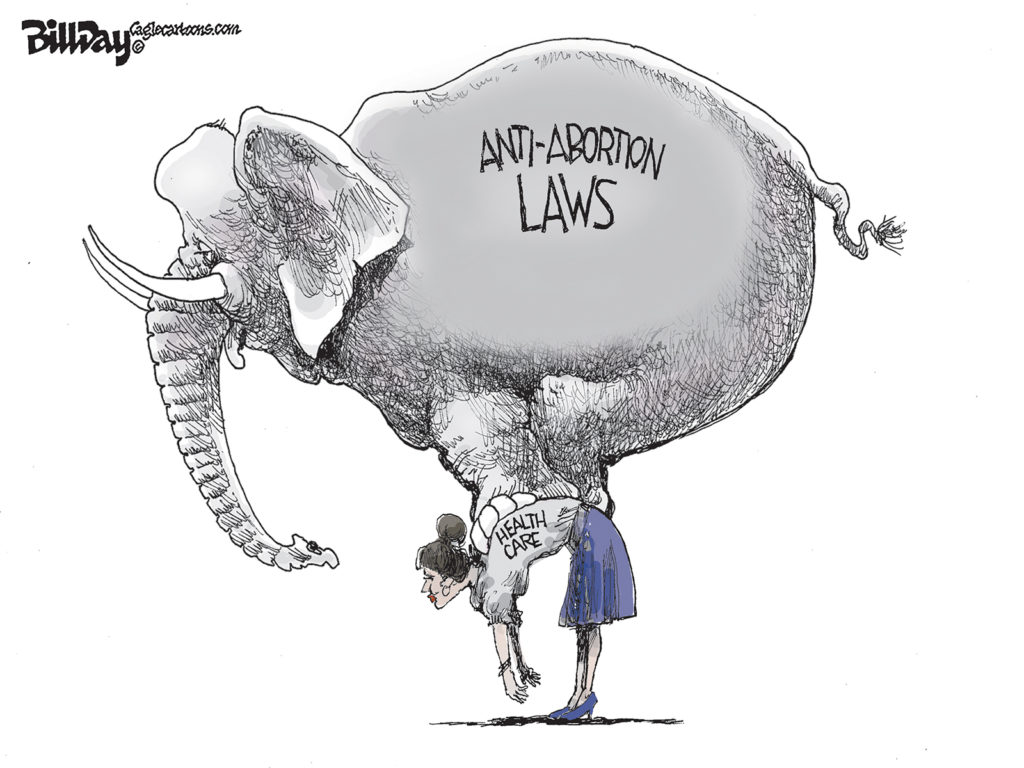
Equality Eagle, A Bill Day Cartoon

by Bill Day. Memphian Bill Day is two-time winner of the RFK Journalism Award in Cartooning. His cartoons are syndicated internationally by Cagle Cartoons. Cartoons Archive →

Photograph by Amie Vanderford

More Images

Memphian Amie Vanderford is a photographer for peace and justice. Her portfolio includes photographs from Peru, Zimbabwe, Nepal, Indian, and her hometown.

  • Subscribe to Posts via Email

    You can get Smart City Memphis posts right in your e-mail box. Just sign up below to begin receiving them.


  • RSS

    • China Transportation Briefing: Filling the Finance Gap

    • TheCityFix Picks, May 4: Spare the Air, Honoring Bloomberg, BRT Experience

    • BRT Experience, Day 1: Simple yet Captivating Marketing

    • BRT Experience, Day 1: Women-Only Access on Metrobus

    • We’re Hiring! Apply to Be TheCityFix Blogger

    • The New Kid on the Block: Metrobus Opens Line 4 in Mexico City

  • RSS

    • Could Less Material Wealth Make us Happier?

    • Megacities: Eight Ideas from #citytalk for Developing Future Cities

    • Microcities: Five of the World’s ‘Smallest’ Cities

    • Megacities: Five of the World’s ‘Biggest’ Cities

    • Human and Social Capital Takes the Bus

    • Events and the City: Bringing Fun to a Built Environment Near You

  • RSS

    • Problem Of the Day: Rio's Hotel Shortage

    • This Week in Bans: Massachusetts City Plagued by Horrible Saxophonist

    • Why Aren't Cities Littered With Dead Pigeons?

    • An Object That Domesticates Ivy

    • Navigating Europe's Most Congested City by Bike

    • Charlie Chaplin Goes to the Beach

  • Search Posts

  • About Smart City Memphis

    This is Smart City Consulting's blog and its purpose is to connect the dots and provide perspective on events, issues, and policies shaping Memphis and its future. Smart City Memphis was named one of the most intriguing blogs in the U.S. by the Pew Partnership for Civic Change, it was voted the best Memphis blog in About.com's Reader's Choice Awards, and The (Memphis) Commercial Appeal wrote: "Smart City Consulting provides some of the most well-thought-out thinking about Memphis' past, present, and future you'll find anywhere." Our blog's editor is Tom Jones, principal at Smart City Consulting and an editorial contributor at Memphis magazine, where he writes the monthly column, City Journal. Submit blog posts, ideas, suggestions, and emails to tjones@smartcityconsulting.com.
  • Archives

    • May 2012 (19)
    • April 2012 (31)
    • March 2012 (37)
    • February 2012 (32)
    • January 2012 (35)
    • December 2011 (29)
    • November 2011 (30)
    • October 2011 (34)
    • September 2011 (33)
    • August 2011 (39)
    • July 2011 (36)
    • June 2011 (41)
    • May 2011 (36)
    • April 2011 (57)
    • March 2011 (39)
    • February 2011 (45)
    • January 2011 (56)
    • December 2010 (44)
    • November 2010 (30)
    • October 2010 (28)
    • September 2010 (24)
    • August 2010 (22)
    • July 2010 (23)
    • June 2010 (34)
    • May 2010 (28)
    • April 2010 (32)
    • March 2010 (35)
    • February 2010 (31)
    • January 2010 (43)
    • December 2009 (49)
    • November 2009 (17)
    • October 2009 (24)
    • September 2009 (23)
    • August 2009 (18)
    • July 2009 (22)
    • June 2009 (28)
    • May 2009 (23)
    • April 2009 (23)
    • March 2009 (26)
    • February 2009 (25)
    • January 2009 (36)
    • December 2008 (15)
    • November 2008 (22)
    • October 2008 (21)
    • September 2008 (25)
    • August 2008 (23)
    • July 2008 (32)
    • June 2008 (27)
    • May 2008 (35)
    • April 2008 (26)
    • March 2008 (25)
    • February 2008 (29)
    • January 2008 (33)
    • December 2007 (20)
    • November 2007 (19)
    • October 2007 (32)
    • September 2007 (25)
    • August 2007 (25)
    • July 2007 (26)
    • June 2007 (16)
    • May 2007 (21)
    • April 2007 (25)
    • March 2007 (18)
    • February 2007 (16)
    • January 2007 (17)
    • December 2006 (16)
    • November 2006 (14)
    • October 2006 (18)
    • September 2006 (21)
    • August 2006 (20)
    • July 2006 (20)
    • June 2006 (17)
    • May 2006 (12)
    • April 2006 (19)
    • March 2006 (20)
    • February 2006 (23)
    • January 2006 (16)
    • December 2005 (23)
    • November 2005 (21)
    • October 2005 (23)
    • September 2005 (19)
    • August 2005 (27)
    • July 2005 (23)
    • June 2005 (16)
    • 0 (2)
  • Categories

  • Contributors

    • Aaron Shafer
    • Andrew Trippel
    • Anthony Siracusa
    • Barry Chase
    • Brad Leon
    • Brian Stephens
    • CEOs for Cities
    • Charles Santo
    • Chris Sanders
    • David Williams
    • Doug Imig
    • Elizabeth Alley
    • Emily Trenholm
    • Eric Mathews
    • Gene Pearson
    • Gene Pearson and Louise Mercuro
    • Greg Thompson
    • Gwyn Fisher
    • Janet Boscarino
    • Jim Strickland
    • Jimmie Covington
    • John Kirkscey
    • John Lawrence
    • Jonathan Flynt
    • Josh Whitehead
    • Julie Ellis
    • Kenya Bradshaw
    • Laura Adams
    • Leah Wells
    • Louise Mercuro, AICP
    • Lurene Cachola Kelley
    • Margot McNeeley
    • Mark James
    • Matt Farr
    • Matt Timberlake
    • Melissa Petersen
    • Natashia Gregoire
    • Ray Brown
    • Rev. Steve Montgomery
    • Robert Bain
    • SCM
    • Scott L. Newstok
    • Smart City Memphis
    • Smart City Radio
    • Steve Bares
    • Steve Lockwood
    • Susan Adler Thorp
    • Tom Jones
    • Tomeka Hart
    • Tommy Pacello
    • Women Unite
    • Zach Hoyt

© 2012 Smart City Memphis. All rights reserved.

  • Register
  • Log in
  • RSS
  • Smart City Radio
  • Smart City Consulting